🏧
The Emoji
ATM Sign
U+1F3E7 · :atm_sign:
Trend 28
Meaning layers
- interpretation
- Used to signal money-related situations — broke moments, flexing cash access, or ironically discussing financial struggle. Also used when referencing the grind or needing to make a withdrawal from the 'bank of real life.'
- tiktok usage
- Appears in money-related storytimes, broke era content, and financial literacy videos. Sometimes paired with 💀 when someone's account is empty.
- irony level
- 6 / 10
Platform meanings
- meaning
- Represents money moments — broke confessions, payday dances, financial tips, or ironic wealth commentary.
- trend usage
- Used in #broke era content, personal finance TikToks, and storytime videos about financial emergencies or wins.
- hashtags
- #brokegirl#paydayvibes#financialtok#moneycheck#atmmoment
- virality score
- 38 / 100
Cultural meanings
🇺🇸
Western / Gen-Z
Used ironically to express broke culture or sarcastically flex access to cash — often paired with 💀 for comedic effect in financial struggle narratives.
🇵🇰
Pakistan & India
Practically used to discuss ATM locations, especially in areas where machine availability is inconsistent; also used in fintech discussions about digital versus cash economies.
🌍
Middle East
Used functionally in travel and expat communities to locate ATMs; also appears in discussions about banking regulations and the shift toward cashless societies in Gulf states.
🌐
Global Neutral
Universally understood as a symbol for cash access and banking services; functions as a practical wayfinding and financial communication tool across languages.
🇧🇩
Bangladesh
Practically used to locate ATMs, particularly in urban areas where machine density varies; also signals discussions about mobile banking adoption versus traditional ATM use.
🇱🇰
Sri Lanka
Used in travel and local community groups to share ATM locations, particularly during periods of cash shortages or economic instability discussions.
🇨🇳
China
Rarely used in everyday communication due to dominance of WeChat Pay and Alipay — when used, it signals foreign tourist contexts or nostalgia for cash-based transactions.
🇯🇵
Japan
Still holds practical significance since Japan remains a heavily cash-based society; used to locate 7-Eleven ATMs or international cash withdrawal points.
🇰🇷
South Korea
Used in fintech discussions contrasting traditional ATM banking with Korea's advanced mobile payment infrastructure; occasionally ironic given near-cashless urban culture.
🇹🇼
Taiwan
Practical usage for locating convenience store ATMs (7-Eleven, FamilyMart are major ATM hosts); also in financial literacy content for younger generations.
🇭🇰
Hong Kong
Used in expat and tourist contexts to locate HSBC or Hang Seng ATMs; also appears in discussions about Hong Kong's hybrid cash-digital payment culture.
🇵🇭
Philippines
Heavily practical — used to locate BDO, BPI, or GCash partner ATMs; also in OFW (overseas Filipino worker) discussions about remittance cash pickup points.
🇮🇩
Indonesia
Used practically for locating ATMs from major banks like BCA, BRI, or Mandiri; also in discussions about financial inclusion in rural versus urban areas.
🇹🇭
Thailand
Functional in tourist and expat communities for locating ATMs with acceptable foreign card fees; also in discussions about the high ATM withdrawal fees for international cards.
🇻🇳
Vietnam
Used to discuss ATM access in areas where cashless adoption is growing but cash remains dominant; practical in travel communities navigating Vietnamese dong withdrawals.
🇲🇾
Malaysia
Used practically and in fintech discussions contrasting ATM use with the rise of DuitNow and e-wallet culture; also in humorous posts about ATM queue culture.
🇸🇦
Saudi Arabia
Practical usage in locating ATMs or discussing banking services; also appears in contexts about Saudi Vision 2030's push toward a cashless economy.
🇦🇪
UAE
Used in expat and tourist communities to locate ATMs in Dubai and Abu Dhabi; also in fintech discussions about UAE's transition to digital payment systems.
🇪🇬
Egypt
Practically used to locate ATMs, particularly in areas with inconsistent machine availability; also used in discussions about Egyptian pound exchange rates and cash access.
🇹🇷
Turkey
Used to locate ATMs and in discussions about Turkey's currency volatility — often paired with commentary about inflation and cash withdrawal limits.
🇮🇷
Iran
Used in discussions about banking limitations under sanctions; represents broader conversations about restricted access to international financial systems.
🇳🇬
Nigeria
Used practically to locate GTBank, Access Bank, or First Bank ATMs; also in discussions about Nigeria's cashless policy and frequent ATM cash shortages.
🇿🇦
South Africa
Practical for locating Standard Bank, Absa, or Capitec ATMs; also used in safety discussions about ATM robbery risks and tips for safe cash withdrawals.
🇬🇧
UK & Ireland
Used practically but increasingly ironically as the UK moves toward contactless payments — often in humorous posts about the rarity of needing cash.
🇫🇷
France
Practical usage for 'distributeur automatique' location sharing; also in discussions about French banking regulations and low ATM fees across EU banks.
🇩🇪
Germany
Germany's persistent cash culture gives this emoji genuine practical value — used frequently in travel tips and daily life to locate 'Geldautomat' machines.
🇪🇸
Spain & Italy
Practical for tourist and local use; also in social commentary about Mediterranean cash culture versus the EU's push for digital payment adoption.
🇧🇷
Brazil
Used to locate Banco do Brasil, Bradesco, or Itaú ATMs; also in Pix payment discussions contrasting instant digital transfers with traditional ATM cash culture.
🇲🇽
Mexico
Practical for locating OXXO or Bancomer ATMs; also in remittance discussions for families receiving cash from relatives abroad.
🌎
Latin America
Broadly used across Latin America for ATM location sharing and discussions about financial inclusion, remittances, and the tension between cash economies and digital banking.
🇦🇺
Australia & NZ
Used ironically in an increasingly cashless society; practical for international tourists and in humorous commentary about the declining relevance of physical cash.
How its meaning shifted
- 2010
Primarily functional and literal — used in early smartphone map apps and SMS messages to indicate ATM locations for travel planning and navigation.
- 2015
Began appearing in casual chats about money needs and payday conversations; still mostly practical but starting to gain figurative usage in financial discussions.
- 2020
Ironic usage increased as cashless payment adoption accelerated during COVID-19; became part of meme culture around broke life, financial stress, and the absurdity of ATM fees.
- 2026
Predominantly used ironically or in meta-commentary about cash culture's decline; functional in developing-economy contexts but largely a nostalgic or sarcastic symbol in cashless-first markets.
See it on every platform
Adjacent emojis
- Often confused with
- slot machineblue squareinformation desk person
- Can replace
- dollar banknotecredit cardmoney with wings
Share & embed
Frequently asked
01What does the 🏧 ATM Sign emoji mean?
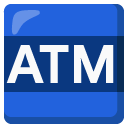
The ATM Sign emoji depicts a blue or gray rectangular sign with the letters 'ATM', representing an Automated Teller Machine — a banking terminal where users can withdraw cash, check balances, and conduct basic financial transactions.
02What does 🏧 mean on TikTok?
Represents money moments — broke confessions, payday dances, financial tips, or ironic wealth commentary.
03What does 🏧 mean on WhatsApp?
Used to ask about or mention an ATM location, signal a cash pickup, or humorously say someone is treating you as a money source.
04What does 🏧 mean in Gen-Z slang?
Used to signal money-related situations — broke moments, flexing cash access, or ironically discussing financial struggle. Also used when referencing the grind or needing to make a withdrawal from the 'bank of real life.'
05Is the 🏧 emoji safe to use?
Completely safe and functional emoji representing banking and cash access infrastructure with no inherently harmful connotations.
06What does 🏧 mean in texting?
The ATM symbol subconsciously triggers thoughts about money, scarcity, or financial freedom depending on the user's economic context. It can provoke stress or relief depending on whether someone is wealthy or struggling.
07What is the shortcode for 🏧?
The shortcode for ATM Sign is :atm_sign:
08What does 🏧 mean in dating?
Rarely used flirtatiously, but could be dropped as a subtle hint that someone wants to be taken out — implying 'fund the date.' Occasionally used in a playful 'I know where the money is' vibe.
Safety & usage
- Safe meaning
- Completely safe and functional emoji representing banking and cash access infrastructure with no inherently harmful connotations.
- Caution
- Can be used passive-aggressively to call someone out for treating others as a financial resource — 'I am not your ATM' sentiment in arguments.
No significant toxic or NSFW usage patterns identified. Minimal misuse potential beyond interpersonal financial arguments.
How it looks across platforms


Appearance varies by platform and device. Google Noto, Twemoji, and OpenMoji are open-source.