💅
The Emoji
Nail Polish
U+1F485 · :nail_care:
Trend 85
Meaning layers
- interpretation
- Used to convey unbothered confidence, petty indifference, or a 'not my problem' attitude. Often means 'I'm unbothered and fabulous' or 'I did that and I don't care what you think.'
- tiktok usage
- Frequently placed at the end of a statement to signal self-satisfied indifference, like bragging without apology or dismissing drama while looking good.
- irony level
- 7 / 10
Platform meanings
- meaning
- Symbol of unbothered confidence and self-satisfaction; used to punctuate mic-drop moments, petty victories, or self-care content.
- trend usage
- Appears in 'main character' energy videos, glow-up transformations, and any content where the creator is owning their moment without seeking validation.
- hashtags
- #unbothered#nailcheck#selfcare#maincharacter#girlboss
- virality score
- 88 / 100
Cultural meanings
🇺🇸
Western / Gen-Z
The defining emoji of unbothered confidence and casual petty energy — ending any statement with 💅 signals you're too fabulous to care about the drama. Deeply embedded in meme culture and everyday digital communication.
🇵🇰
Pakistan & India
Used primarily in beauty and fashion contexts among urban youth, signaling a manicure or self-care moment. Younger, internet-savvy users are increasingly adopting the Western 'unbothered' connotation in English-language chats.
🌍
Middle East
Associated with femininity, beauty routines, and personal pampering. In conservative contexts it's straightforwardly literal; among younger, urban social media users the confident/sassy connotation is gaining traction.
🌐
Global Neutral
Universally recognized as relating to beauty, nail care, and femininity. The ironic 'unbothered' layer is primarily a Western internet phenomenon but is spreading globally through TikTok.
🇧🇩
Bangladesh
Used mainly in the literal beauty context — celebrating fresh nails or a salon visit. The sassy Gen Z meaning is slowly emerging among younger, English-fluent social media users.
🇱🇰
Sri Lanka
Primarily a beauty and self-care emoji in Sri Lankan digital culture, used to express femininity and a polished look. The ironic usage is beginning to appear among younger TikTok users.
🇨🇳
China
On platforms like WeChat and Weibo, it's used to indicate beauty, grooming, and feminine elegance. The 'unbothered' connotation is less established but visible in younger Douyin (TikTok) culture.
🇯🇵
Japan
Associated with kawaii culture, nail art (which is enormously popular in Japan), and feminine aesthetics. Nail art is a serious art form in Japan, so this emoji carries significant cultural weight in beauty spaces.
🇰🇷
South Korea
Deeply connected to K-beauty culture and the massive nail art trend. Used extensively in beauty content and increasingly adopted with the confident, self-care energy popularized by K-pop idols and influencers.
🇹🇼
Taiwan
Used in beauty and lifestyle contexts, reflecting Taiwan's strong nail art and salon culture. Among younger users exposed to Western TikTok content, the confidence/unbothered meaning is increasingly understood.
🇭🇰
Hong Kong
Associated with beauty, sophistication, and self-care in a cosmopolitan context. The Western internet slang layer is well understood among younger, bilingual social media users.
🇵🇭
Philippines
Very popular in beauty and self-care contexts; Filipinos have a strong salon and nail culture. The 'sassy and unbothered' meaning is widely adopted among Gen Z Filipinos active on TikTok and Twitter/X.
🇮🇩
Indonesia
Used in beauty and feminine contexts; nail salons are popular and the emoji reflects self-care culture. Among urban Indonesian youth on TikTok, the confident/dismissive connotation is increasingly common.
🇹🇭
Thailand
Connected to Thailand's vibrant beauty and spa culture. Used in beauty content and increasingly in the confident, self-care meme context among younger Thai social media users.
🇻🇳
Vietnam
Primarily used for beauty and self-care contexts. Among younger, internationally connected Vietnamese users, the 'unbothered' Gen Z meaning is being adopted through TikTok influence.
🇲🇾
Malaysia
Used in beauty and self-care contexts in a multilingual digital space. The Gen Z sassy meaning is well understood among English-speaking Malaysian youth active on international platforms.
🇸🇦
Saudi Arabia
Used in beauty contexts, particularly in women's spaces and private group chats where beauty culture is freely discussed. Among younger Saudi women on TikTok and Snapchat, the confidence connotation is gaining popularity.
🇦🇪
UAE
In the cosmopolitan UAE, this emoji is used both literally for beauty culture and in the Western Gen Z 'unbothered' sense by the diverse, internationally connected youth population.
🇪🇬
Egypt
Associated with femininity and beauty care in Egyptian digital culture. The ironic, confident meaning is emerging among younger Egyptian users connected to global internet culture.
🇹🇷
Turkey
Used in beauty and self-care contexts, reflecting Turkey's strong grooming culture. Among younger Turkish users on TikTok and Instagram, the self-assured connotation is increasingly recognized.
🇮🇷
Iran
In Persian social media spaces, primarily used in beauty and femininity contexts. Among younger users connected to diaspora culture and global TikTok trends, the confidence layer is understood.
🇳🇬
Nigeria
Widely used in Nigerian social media to express confidence, fabulousness, and a 'I don't care about the haters' energy that aligns naturally with Nigerian wit and sass culture. Both literal and figurative uses are popular.
🇿🇦
South Africa
Used in beauty contexts and increasingly in the confident, petty-but-fabulous sense among South African Gen Z and Millennial users who are heavily engaged with global TikTok trends.
🇬🇧
UK & Ireland
Strongly adopted in the Gen Z 'unbothered' sense, often used with British wit and self-deprecating humor. Also literal in beauty contexts; nail bars are a major part of UK beauty culture.
🇫🇷
France
Associated with chic beauty and self-care, fitting French cultural values around grooming and elegance. The ironic Gen Z meaning is increasingly adopted by younger French users engaged with Anglo internet culture.
🇩🇪
Germany
Used more literally in beauty and self-care contexts. The ironic usage is understood by younger, internationally connected Germans but is less embedded in mainstream German digital communication.
🇪🇸
Spain & Italy
Associated with femininity, beauty, and style — values central to both cultures. The 'sassy and unbothered' connotation is enthusiastically adopted by Spanish and Italian Gen Z users on TikTok and Instagram.
🇧🇷
Brazil
Widely used in Brazilian beauty culture, where nail art is enormously popular. The confident, self-satisfied meaning is perfectly aligned with Brazilian 'gata' energy and is heavily used in sassy social media contexts.
🇲🇽
Mexico
Used in beauty and self-care contexts and strongly adopted with the confident, sass-forward meaning by Mexican Gen Z users. Fits naturally into the playful, expressive nature of Mexican digital communication.
🌎
Latin America
Across Latin America, nail culture is significant and the emoji is widely used in beauty contexts. The unbothered confidence meaning resonates strongly with the region's expressive, self-assured digital communication style.
🇦🇺
Australia & NZ
Adopted fully in both the literal beauty sense and the Gen Z 'unbothered' internet sense. Australian and New Zealand users use it with characteristic dry humor and casual confidence.
How its meaning shifted
- 2010
Used almost exclusively in its literal sense — to indicate nail polish, a manicure, or interest in beauty and grooming. No ironic or meme connotations existed.
- 2015
Still predominantly literal but beginning to be used as a general 'girly' or 'feminine' emoji to express vanity, beauty culture, or a fashionable mood.
- 2020
The 'unbothered and fabulous' meaning explodes with TikTok's rise. The 'anyway 💅' format becomes a viral meme format; the emoji transforms into a cultural signifier for confident indifference.
- 2026
Fully established as a dual-meaning emoji: literal beauty content and a universal symbol of effortless confidence, self-satisfaction, and petty but fabulous energy across all platforms and age groups.
See it on every platform
Emoji combinations
Adjacent emojis
- Often confused with
- raised handwaving handnail care
- Can replace
- sparklescrownstar struck
Share & embed
Frequently asked
01What does the 💅 Nail Polish emoji mean?
A hand with painted fingernails, depicting nail polish being applied or freshly done nails, typically shown in pink or red.
02What does 💅 mean on TikTok?
Symbol of unbothered confidence and self-satisfaction; used to punctuate mic-drop moments, petty victories, or self-care content.
03What does 💅 mean on WhatsApp?
Used casually to signal confidence, end a conversation with attitude, or celebrate a personal win like 'I handled that 💅'.
04What does 💅 mean in Gen-Z slang?
Used to convey unbothered confidence, petty indifference, or a 'not my problem' attitude. Often means 'I'm unbothered and fabulous' or 'I did that and I don't care what you think.'
05Is the 💅 emoji safe to use?
Beauty, self-care, confidence, personal grooming, unbothered energy, celebrating a manicure or personal achievement.
06What does 💅 mean in texting?
Tapping into the psychology of performative nonchalance — using beauty as armor. The emoji channels the emotional safety of self-care as a shield against criticism or drama.
07What is the shortcode for 💅?
The shortcode for Nail Polish is :nail_care:
08What does 💅 mean in dating?
Can be used flirtatiously to signal that the sender feels put-together and desirable, or to tease a partner with a 'too good for you' vibe in a playful way.
Safety & usage
- Safe meaning
- Beauty, self-care, confidence, personal grooming, unbothered energy, celebrating a manicure or personal achievement.
- Caution
- Can be used in a passive-aggressive or dismissive way to shut down conversations or signal contempt for another person's opinions or feelings.
Generally a very safe emoji. In rare toxic contexts it can be weaponized to dismiss legitimate concerns or gaslight someone by signaling their concerns are beneath consideration. Not inherently harmful.
How it looks across platforms
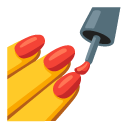


Appearance varies by platform and device. Google Noto, Twemoji, and OpenMoji are open-source.