🎒
The Emoji
Backpack
U+1F392 · :backpack:
Trend 58
Meaning layers
- interpretation
- Symbolizes the grind — school stress, carrying burdens, or literally 'packing up and going.' Also used to signal adventure, freedom, or 'I'm about to disappear for a while.'
- tiktok usage
- Used in travel content, back-to-school hacks, 'what's in my bag' videos, and ironically to represent emotional baggage or life burdens.
- irony level
- 4 / 10
Platform meanings
- meaning
- Travel readiness, back-to-school content, carrying burdens ironically, 'what's in my bag' reveal videos.
- trend usage
- Used in travel hacks, student life vlogs, aesthetic packing videos, and 'soft life' vs 'grind' contrast content.
- hashtags
- #backpacklife#backtoschooltiktok#packwithme#travelpack#whatsinmybag
- virality score
- 62 / 100
Cultural meanings
🇺🇸
Western / Gen-Z
Represents school stress, adventure culture, and the aesthetic of always being 'ready to go.' Heavily used in travel content and ironic 'I carry too many burdens' humor.
🇵🇰
Pakistan & India
Strongly associated with school and student life; parents send it proudly on children's first day of school. Also used for pilgrimage and long-distance travel contexts.
🌍
Middle East
Commonly linked to student life and academic achievement, which is highly valued culturally. Also used in religious pilgrimage (Hajj/Umrah) travel planning contexts.
🌐
Global Neutral
Universally understood as a symbol of travel, school, or preparedness with no significant cultural controversy across regions.
🇧🇩
Bangladesh
Primarily associated with school and academic life; reflects the cultural emphasis on education. Used by students and parents to signal school readiness.
🇱🇰
Sri Lanka
Used in school and education contexts predominantly; also appears in adventure tourism content among younger social media users.
🇨🇳
China
Associated with student life and the intense academic culture ('gaokao grind'). Also popular in travel content and outdoor hiking communities on platforms like WeChat and Weibo.
🇯🇵
Japan
Strongly connected to the iconic 'randoseru' school backpack tradition, making it a symbol of childhood innocence, new beginnings, and the school year start.
🇰🇷
South Korea
Linked to intense study culture and education; used heavily around university entrance exam seasons. Also tied to K-content travel vlogging aesthetics.
🇹🇼
Taiwan
Used in both academic and outdoor adventure contexts; Taiwan's hiking culture gives it additional significance in nature and mountain trekking communities.
🇭🇰
Hong Kong
Associated with student life and urban commuting; also used in travel content reflecting Hong Kong's historically mobile, cosmopolitan population.
🇵🇭
Philippines
Commonly used in OFW (overseas foreign worker) contexts symbolizing departure and new beginnings abroad, alongside typical school and travel uses.
🇮🇩
Indonesia
Used in school, travel, and outdoor adventure content; reflects Indonesia's growing backpacker tourism culture among younger generations.
🇹🇭
Thailand
Popular in backpacker tourism contexts, as Thailand is a major destination on the Southeast Asian backpacker trail. Also used in student and school content.
🇻🇳
Vietnam
Associated with student life and the cultural value placed on education. Also used in travel and adventure content by younger Vietnamese social media users.
🇲🇾
Malaysia
Used in school and educational contexts as well as travel; reflects the multicultural, mobile nature of Malaysian youth who travel frequently within Southeast Asia.
🇸🇦
Saudi Arabia
Primarily used in educational contexts and for signaling Hajj/Umrah travel preparation. Academic achievement culture makes it a symbol of studious diligence.
🇦🇪
UAE
Reflects the cosmopolitan, travel-heavy culture of the UAE; used in both student life contexts and luxury/adventure travel content across Dubai and Abu Dhabi social media.
🇪🇬
Egypt
Used in school and student contexts reflecting the importance of education in Egyptian culture. Also appears in travel and tourism content promoting Egyptian adventures.
🇹🇷
Turkey
Common in student life and travel content; Turkey's position as a travel hub between Europe and Asia gives it strong travel association among Turkish social media users.
🇮🇷
Iran
Primarily associated with student and academic life due to cultural emphasis on education. Used in travel content among younger Iranians exploring domestic nature tourism.
🇳🇬
Nigeria
Associated with hustle culture — carrying what you need to succeed. Used in school, university, and 'grind' motivational content popular among Nigerian youth.
🇿🇦
South Africa
Used in both student contexts and adventure/outdoor travel; reflects South Africa's strong hiking and ecotourism culture alongside standard academic associations.
🇬🇧
UK & Ireland
Associated with school, university freshers' week energy, and gap year travel culture. Used ironically in 'carrying the weight of this country's problems' humor.
🇫🇷
France
Tied to the 'rentrée scolaire' (back-to-school season), a major cultural and commercial event. Also used in travel and adventure content reflecting French wanderlust culture.
🇩🇪
Germany
Practical and straightforward usage around school, hiking (Wandern culture), and travel. Germans associate it with preparedness and outdoor activity.
🇪🇸
Spain & Italy
Used in school contexts and heavily in travel/backpacker culture; both countries are major destinations on European backpacker routes, adding tourism associations.
🇧🇷
Brazil
Associated with school life and adventure travel; used in content about mochilão (backpacker travel), a popular Brazilian travel style among young people.
🇲🇽
Mexico
Used in student contexts and travel content; also appears in 'ready to hustle' motivational posts reflecting Mexican youth entrepreneurial spirit.
🌎
Latin America
Broadly associated with student life across Latin America and the adventurous 'mochilero' backpacker travel culture popular among young Latin Americans.
🇦🇺
Australia & NZ
Strongly tied to gap year culture, backpacker hostels, and outdoor adventure. Australia and New Zealand are major backpacker destinations, making this emoji highly resonant.
How its meaning shifted
- 2010
Predominantly used literally to represent school bags and physical travel packing; minimal ironic or metaphorical use. Emoji itself was relatively new and used straightforwardly.
- 2015
Began appearing in travel blogger content and Instagram travel culture as wanderlust aesthetics grew. Study and student life uses became more prevalent on Twitter and Tumblr.
- 2020
Ironic 'emotional baggage' usage emerged; pandemic era gave it a wistful 'remember when we could travel' connotation. TikTok boosted 'what's in my bag' and packing content.
- 2026
Multi-layered usage: literal travel/school, ironic burden metaphor, aesthetic minimalist lifestyle symbol, and Gen Z shorthand for 'I'm out of here' or 'starting fresh.' Embedded in study and digital nomad culture.
See it on every platform
Compare with
Emoji combinations
Adjacent emojis
Share & embed
Frequently asked
01What does the 🎒 Backpack emoji mean?
A backpack or rucksack, typically depicted as a school or travel bag with straps, zippers, and sometimes a front pocket.
02What does 🎒 mean on TikTok?
Travel readiness, back-to-school content, carrying burdens ironically, 'what's in my bag' reveal videos.
03What does 🎒 mean on WhatsApp?
Signals travel plans, school/work readiness, or 'I'm heading out soon.'
04What does 🎒 mean in Gen-Z slang?
Symbolizes the grind — school stress, carrying burdens, or literally 'packing up and going.' Also used to signal adventure, freedom, or 'I'm about to disappear for a while.'
05Is the 🎒 emoji safe to use?
School, travel, adventure, preparedness, student life, hiking, and fresh starts.
06What does 🎒 mean in texting?
The backpack evokes childhood nostalgia tied to school days while simultaneously representing readiness and independence. It can also carry psychological weight as a metaphor for unresolved stress or trauma ('emotional baggage').
07What is the shortcode for 🎒?
The shortcode for Backpack is :backpack:
08What does 🎒 mean in dating?
Rarely used as a flirt tool; may appear in 'let's run away together' romantic travel fantasies or casual 'come with me' invites.
Safety & usage
- Safe meaning
- School, travel, adventure, preparedness, student life, hiking, and fresh starts.
- Caution
- Rarely used in harmful contexts; occasionally in 'pack your bags and leave' dismissive or hostile messages.
Generally a safe, benign emoji. No significant NSFW, coded, or dangerous uses documented. Extremely low risk in all contexts.
How it looks across platforms
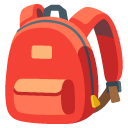


Appearance varies by platform and device. Google Noto, Twemoji, and OpenMoji are open-source.