🦡
The Emoji
Badger
U+1F9A1 · :badger:
Trend 38
Meaning layers
- interpretation
- Gen Z uses the badger to represent someone who is relentlessly persistent, stubborn in the best way, or unafraid to 'badger' (pester) someone. Also used to signal being lowkey weird but unapologetically so.
- tiktok usage
- Used in comments to hype up someone who won't give up, or ironically when someone is being extremely persistent about something trivial. 'You're such a 🦡 for this.'
- irony level
- 6 / 10
Platform meanings
- meaning
- Symbol of stubborn persistence, chaotic determination, or someone who is niche and unbothered. Used to represent the 'honey badger don't care' energy.
- trend usage
- Appears in POV videos about refusing to give up on something, 'being in your badger era' trends, and comments hyping up resilient creators.
- hashtags
- #badgerenergy#badgerera#honeybadger#stubbornvibes#unapologetic
- virality score
- 42 / 100
Cultural meanings
🇺🇸
Western / Gen-Z
The badger is an ironic symbol of unbothered persistence — used to describe someone in their 'feral little creature' era who refuses to conform or give up. Widely understood through the 'honey badger don't care' meme lens.
🇵🇰
Pakistan & India
The badger has limited cultural footprint; when used, it's typically literal (wildlife content) or borrowed from Western meme culture. The honey badger meme is known among English-speaking internet users.
🌍
Middle East
Used almost exclusively in literal wildlife contexts or borrowed Western meme usage. The badger is not a native or culturally significant animal in most Middle Eastern countries.
🌐
Global Neutral
Universally understood as a wild, burrowing animal. The emoji carries a broadly neutral meaning of tenacity and wildness when used metaphorically across non-specific cultural contexts.
🇧🇩
Bangladesh
Very niche usage — primarily seen in wildlife education content or borrowed Western internet humor. The animal is not culturally significant in Bangladesh.
🇱🇰
Sri Lanka
Limited usage; when appearing, it's in wildlife or nature contexts. The emoji may occasionally appear in content about the honey badger, which has more global meme recognition.
🇨🇳
China
The Chinese internet occasionally uses badger (獾) in wordplay and folklore contexts where the badger is associated with good luck or cleverness in traditional tales. Modern emoji usage is minimal but growing.
🇯🇵
Japan
Badgers (tanuki adjacent but distinct) have some folklore overlap, though tanuki are more culturally dominant. The emoji is used in cute animal contexts and niche nature accounts. Perceived as adorable and slightly mysterious.
🇰🇷
South Korea
Niche animal emoji with limited cultural reference. Used mainly in cute animal posts or by people familiar with Western meme culture. The 'don't care' energy translates well to Korean internet humor.
🇹🇼
Taiwan
Used in wildlife and nature content; occasionally in meme culture borrowed from Western internet. Taiwanese internet users with exposure to global meme culture may use it for its 'unbothered' connotation.
🇭🇰
Hong Kong
Bilingual internet culture means the badger emoji surfaces in both literal wildlife content and Westernized meme usage. Some use it to signal stubbornly holding a position in debate or discourse.
🇵🇭
Philippines
Used mostly in cute animal contexts or when referencing the honey badger meme. Filipino internet culture loves animal emojis for expressive humor, so the badger occasionally appears in funny reaction posts.
🇮🇩
Indonesia
Niche usage in wildlife and nature content. The honey badger meme is known among younger, English-exposed users. Badger energy ('gak peduli' / don't care) resonates with some internet communities.
🇹🇭
Thailand
Primarily used in cute animal contexts or wildlife education. Thai internet culture loves animal emojis, but the badger is less prominent than more locally familiar animals.
🇻🇳
Vietnam
Limited cultural resonance; used in nature or educational contexts. Younger Vietnamese internet users familiar with global memes may use it for its 'honey badger don't care' energy.
🇲🇾
Malaysia
English-speaking Malaysian internet users engage with the honey badger meme, making the emoji occasionally appear in 'tak kisah' (don't care) humorous contexts. Otherwise used literally.
🇸🇦
Saudi Arabia
Very limited usage outside of literal wildlife contexts. The badger is not culturally significant, and the emoji rarely appears in Saudi Arabic internet culture organically.
🇦🇪
UAE
The cosmopolitan, multilingual social media environment in the UAE means Western meme usage of the badger emoji is understood by younger users. Occasionally appears in humor and wildlife content.
🇪🇬
Egypt
Rare usage; primarily seen in wildlife or nature content. Egyptian internet humor focuses more on culturally specific animals, but the meme-aware community may recognize the honey badger reference.
🇹🇷
Turkey
Used in nature and wildlife contexts. Turkish internet culture occasionally adopts Western meme energy, and the stubborn/persistent connotation translates reasonably well to Turkish humor.
🇮🇷
Iran
Limited and niche usage. Appears in wildlife content or among younger Persian-speaking users familiar with international internet culture. The symbol of stubborn persistence may be humorously relatable.
🇳🇬
Nigeria
Nairalanders and Nigerian Twitter/X users with Western internet exposure may use it for 'I don't care' or persistent energy. Otherwise, it's a niche animal emoji with limited organic cultural resonance.
🇿🇦
South Africa
South Africa has honey badgers (ratel) as a native species, making the emoji more culturally grounded here. The honey badger is a national symbol of tenacity, and the emoji carries genuine pride and humor.
🇬🇧
UK & Ireland
High cultural relevance — badgers are native British wildlife, central to conservation debates (badger culling controversy), and the Hufflepuff house mascot. The emoji is used seriously in conservation contexts and humorously in everyday British internet culture.
🇫🇷
France
Moderate usage in wildlife and nature contexts. French internet culture occasionally adopts the 'je m'en fous' (I don't care) angle. The badger (blaireau) is also a mild French slang insult, adding a layer of irony.
🇩🇪
Germany
The Dachs (badger) is a culturally familiar woodland creature in German folklore and nature culture. The emoji appears in nature content and occasionally as a symbol of Sturheit (stubbornness) in a self-aware way.
🇪🇸
Spain & Italy
Used in wildlife and nature contexts. The stubborn/persistent metaphor translates culturally as tejon (Spanish) or tasso (Italian), though the emoji is more common in nature-loving communities than meme culture.
🇧🇷
Brazil
Niche usage; the honey badger meme is known among English-exposed Brazilian internet users. 'Mel de texugo não liga' energy occasionally surfaces in Brazilian meme pages as an import from English meme culture.
🇲🇽
Mexico
Limited but growing usage in meme-aware communities. Mexican internet humor may adopt the badger for its relentless energy, especially among users familiar with English-language meme formats.
🌎
Latin America
Across Latin America, the badger emoji is niche and primarily literal. Wildlife and nature communities use it, while meme-literate Gen Z users borrow its Western connotations of stubborn persistence.
🇦🇺
Australia & NZ
Australians and New Zealanders interact with the emoji through both UK-influenced wildlife discourse and Western meme culture. The honey badger is also a beloved figure in Australian rugby (Nick 'Honey Badger' Cummins), giving it strong cultural currency in sports contexts.
How its meaning shifted
- 2010
The emoji didn't exist yet, but the 'Badger Badger Badger' Flash animation (2003) and early 'honey badger don't care' YouTube video (2011) were cementing the badger as a core internet animal meme in text-only internet culture.
- 2015
Still no dedicated badger emoji, but the honey badger meme had fully integrated into internet vernacular. Animal emojis like 🐻 were used as proxies. The cultural groundwork was laid.
- 2020
Introduced in 2018, the 🦡 emoji was becoming known in niche circles — Hufflepuff fans, UK wildlife advocates, cottagecore communities, and meme-aware Gen Z users. Usage was low but culturally loaded.
- 2026
The badger emoji has settled into a stable niche cultural role — representing stubborn persistence, woodland aesthetics, Hufflepuff identity, and the unbothered 'feral creature' archetype beloved by Gen Z. It's not mainstream but deeply meaningful in specific communities.
See it on every platform
Compare with
Share & embed
Frequently asked
01What does the 🦡 Badger emoji mean?
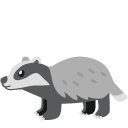
The badger emoji 🦡 depicts a black-and-white striped burrowing mammal known for being tenacious, fierce, and industrious. It represents the animal itself in its most literal sense.
02What does 🦡 mean on TikTok?
Symbol of stubborn persistence, chaotic determination, or someone who is niche and unbothered. Used to represent the 'honey badger don't care' energy.
03What does 🦡 mean on WhatsApp?
Used to describe someone who won't stop texting/calling — 'You're being such a 🦡 rn.' Also used literally when discussing wildlife or nature.
04What does 🦡 mean in Gen-Z slang?
Gen Z uses the badger to represent someone who is relentlessly persistent, stubborn in the best way, or unafraid to 'badger' (pester) someone. Also used to signal being lowkey weird but unapologetically so.
05Is the 🦡 emoji safe to use?
A wildlife and nature emoji representing a badger animal. Used for persistence, stubbornness, Hufflepuff identity, and woodland aesthetics.
06What does 🦡 mean in texting?
The badger evokes a primal sense of resilience and ferocity disproportionate to size, psychologically representing the archetype of someone who holds their ground no matter what — tying into themes of self-protection and tenacity.
07What is the shortcode for 🦡?
The shortcode for Badger is :badger:
08What does 🦡 mean in dating?
Rarely used flirtatiously; if used, it might mean someone is persistently pursuing you — 'I'll keep badgering you until you say yes 🦡.' Has a playful, self-aware pestering vibe.
Safety & usage
- Safe meaning
- A wildlife and nature emoji representing a badger animal. Used for persistence, stubbornness, Hufflepuff identity, and woodland aesthetics.
- Caution
- In French slang, 'blaireau' (badger) is a mild insult meaning an idiot or loser — someone using the French internet subculture meaning could use this emoji passive-aggressively as a subtle insult.
Extremely low risk. The only cultural nuance to note is the French slang connotation where 'blaireau' is a mild insult. No NSFW or harmful associations in mainstream usage.
How it looks across platforms


Appearance varies by platform and device. Google Noto, Twemoji, and OpenMoji are open-source.