🐦⬛
The Emoji
Black Bird
U+1F426 U+200D U+2B1B · :black_bird:
Trend 65
Meaning layers
- interpretation
- Symbol of dark academia aesthetics, mystery, brooding energy, or 'main character' vibes. Often used to signal a gothic, alternative, or emotionally complex personality.
- tiktok usage
- Used in captions for moody outdoor content, dark aesthetics, or when someone is embracing their 'villain era' or mysterious persona.
- irony level
- 4 / 10
Platform meanings
- meaning
- Represents dark academia, goblincore, or cottagecore aesthetics with a darker twist. Used to set a moody, introspective tone.
- trend usage
- Appears in 'villain era' trend videos, dark aesthetic montages, autumn forest walks, and Edgar Allan Poe-themed content.
- hashtags
- #darkacademia#villainera#goblincore#moodyvibe#ravenaesthetic
- virality score
- 62 / 100
Cultural meanings
🇺🇸
Western / Gen-Z
A beloved symbol of dark academia, villain era aesthetics, and brooding individuality. Frequently used to signal mysterious or gothic personality traits on social media.
🇵🇰
Pakistan & India
Crows hold deep superstitious significance — often associated with ancestors, omens, and spirits. This emoji can evoke both everyday bird sightings and deeper spiritual connotations.
🌍
Middle East
Ravens and black birds appear in Islamic folklore and pre-Islamic poetry as symbols of longing, bad omens, or wisdom. This emoji may carry those literary and folkloric undertones.
🌐
Global Neutral
Universally recognized as a dark-colored bird with associations to mystery, intelligence, and nature. Generally safe to use in any context without strong cultural controversy.
🇧🇩
Bangladesh
Crows are ubiquitous in Bangladeshi daily life and are associated with ancestors visiting the living in folk beliefs. This emoji may be used both casually and in spiritual contexts.
🇱🇰
Sri Lanka
Crows are common urban birds with mixed symbolism — sometimes considered nuisances, sometimes respected as omens. The emoji is likely used in casual nature contexts.
🇨🇳
China
Ravens and crows (乌鸦) carry negative omens in Chinese folk culture, associated with bad luck. However, younger generations familiar with global aesthetics may use it for dark academia vibes.
🇯🇵
Japan
The raven (八咫烏, Yatagarasu) is a sacred symbol of divine guidance in Japanese mythology. This emoji may evoke both ominous connotations and sacred, powerful symbolism.
🇰🇷
South Korea
The crow is associated with the sun in ancient Korean mythology (삼족오). Modern usage by Gen Z leans toward dark aesthetic culture and moody content creation.
🇹🇼
Taiwan
Crows appear in indigenous Taiwanese mythology as significant birds. Modern urban users likely associate this emoji with dark aesthetics or Halloween content.
🇭🇰
Hong Kong
Used primarily for aesthetic or horror-related content among younger generations. Older users may associate crows with bad luck in Cantonese folk belief.
🇵🇭
Philippines
Black birds are often tied to superstition and omens in Filipino folklore. The emoji may be used cautiously in some contexts, though younger users adopt it for gothic aesthetics.
🇮🇩
Indonesia
Associated with mystery and dark omens in Indonesian folklore. Urban Gen Z users increasingly use it for aesthetic purposes, especially in dark or alternative online communities.
🇹🇭
Thailand
Crows are considered unlucky in Thai culture, sometimes associated with death. While traditional connotations are negative, younger online users may use it more aesthetically.
🇻🇳
Vietnam
In Vietnamese culture, crows can symbolize bad luck or death omens. Online youth culture has partially reclaimed it as a cool, dark aesthetic symbol.
🇲🇾
Malaysia
Crows carry mixed superstitious meanings in Malaysian folk belief across Malay, Chinese, and Indian communities. Online users tend to use it more neutrally for nature or dark aesthetics.
🇸🇦
Saudi Arabia
Ravens appear in Islamic tradition and pre-Islamic poetry. The emoji may evoke classical literary associations or simply be used casually for nature-related content.
🇦🇪
UAE
In a diverse, cosmopolitan digital culture, this emoji is mostly used for aesthetic or nature purposes, with some awareness of its ominous folkloric meanings.
🇪🇬
Egypt
Crows and ravens appear in ancient Egyptian symbolism and mythology. Modern Egyptian users likely use it for ominous humor, dark aesthetics, or literary references.
🇹🇷
Turkey
Crows are associated with intelligence and omens in Turkish folk culture. Urban users often use this emoji for moody aesthetics or dark humor, especially in literary communities.
🇮🇷
Iran
Ravens (زاغ/کلاغ) are deeply embedded in Persian poetry and folklore as symbols of separation, longing, and bad news. This emoji carries rich literary and emotional weight in Iranian culture.
🇳🇬
Nigeria
Black birds in West African traditions can carry spiritual significance, sometimes linked to ancestral spirits or warnings. Younger Nigerian users online may use it more aesthetically.
🇿🇦
South Africa
Used for both nature appreciation and aesthetic purposes. In some traditional communities, black birds hold spiritual significance, but urban youth use it more freely.
🇬🇧
UK & Ireland
Strong cultural association with ravens at the Tower of London and Celtic mythology. Frequently used for gothic, dark academia aesthetics, and Halloween content with genuine cultural resonance.
🇫🇷
France
Associated with Baudelaire-era symbolism and dark Romantic literary tradition. French users may use it to signal appreciation for symbolist poetry or brooding aesthetic content.
🇩🇪
Germany
Ravens are central to Germanic and Norse mythology (Odin's ravens Huginn and Muninn). German users may reference this mythology or use it for dark fantasy and gothic aesthetics.
🇪🇸
Spain & Italy
Black birds appear in Spanish and Italian folk omens and literary traditions. Modern users tend to use this emoji for dark aesthetics, Halloween, or to signal bad omens humorously.
🇧🇷
Brazil
In Brazilian folklore, crows (corvos) are associated with death and bad omens. Online Gen Z users have reclaimed the imagery for dark aesthetic, emo, and alternative culture.
🇲🇽
Mexico
Black birds connect to Day of the Dead traditions and indigenous Mesoamerican symbolism. This emoji may evoke both sincere cultural reverence and aesthetic appreciation.
🌎
Latin America
Across Latin America, black birds carry folkloric associations with death and omens rooted in indigenous and colonial-era traditions. Online youth use it for dark aesthetics and emotional expression.
🇦🇺
Australia & NZ
Used primarily for nature content, as ravens and crows are native to Australia. Also embraced in gothic and dark academia communities, with less superstitious connotation than in Asia.
How its meaning shifted
- 2010
This emoji did not exist as a ZWJ sequence in 2010; generic bird emojis were used for any bird reference. Black birds were rarely represented in early emoji sets.
- 2015
Still not available as a distinct emoji. Users combined 🐦 with black or dark descriptors in text to refer to crows or ravens.
- 2020
Introduced as a ZWJ sequence, quickly adopted by dark academia, gothic, and alt-aesthetic communities. Became a staple of moody TikTok and Instagram content during pandemic-era aesthetic trends.
- 2026
Firmly established as the go-to emoji for dark aesthetics, brooding content, and gothic culture online. Also widely used in wildlife content about crow and raven intelligence, which has surged in viral popularity.
See it on every platform
Compare with
Adjacent emojis
- Opposite
- dove of peacebaby chicksun
- Often confused with
- birdfeatherblack heart
Share & embed
Frequently asked
01What does the 🐦⬛ Black Bird emoji mean?
A black bird emoji representing a dark-colored bird, typically depicted as a crow or raven. Introduced as a ZWJ sequence combining the bird emoji with a black large square.
02What does 🐦⬛ mean on TikTok?
Represents dark academia, goblincore, or cottagecore aesthetics with a darker twist. Used to set a moody, introspective tone.
03What does 🐦⬛ mean on WhatsApp?
Signals something ominous, mysterious, or dark happening. Can also just mean 'I saw a cool bird.'
04What does 🐦⬛ mean in Gen-Z slang?
Symbol of dark academia aesthetics, mystery, brooding energy, or 'main character' vibes. Often used to signal a gothic, alternative, or emotionally complex personality.
05Is the 🐦⬛ emoji safe to use?
Dark aesthetic appreciation, nature content, gothic culture, wildlife interest, literary references to ravens and crows.
06What does 🐦⬛ mean in texting?
Black birds across cultures evoke liminal emotions — the boundary between known and unknown. Psychologically, they represent the shadow self, transformation, and an acceptance of life's darker truths.
07What is the shortcode for 🐦⬛?
The shortcode for Black Bird is :black_bird:
08What does 🐦⬛ mean in dating?
Used by someone who wants to appear mysterious and alluring — the 'I'm not like other people' flirt move. May be sent to signal brooding depth or dark romanticism.
Safety & usage
- Safe meaning
- Dark aesthetic appreciation, nature content, gothic culture, wildlife interest, literary references to ravens and crows.
- Caution
- In rare cases, may be used in harassment contexts to imply someone is an omen or bad presence, or used in occult-adjacent content that some communities find offensive.
Largely safe for all audiences. Be mindful in cultures where black birds carry strong death or bad omen associations, as use may be unintentionally upsetting in sensitive conversations. No NSFW associations.
How it looks across platforms
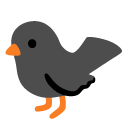

Appearance varies by platform and device. Google Noto, Twemoji, and OpenMoji are open-source.