🚏
The Emoji
Bus Stop
U+1F68F · :bus_stop:
Trend 35
Meaning layers
- interpretation
- Used to signal waiting — for someone, something, or a vibe that never comes. Also deployed ironically to represent being left on read or stood up.
- tiktok usage
- Appears in 'waiting for my life to start' content, or videos about public transport struggles and urban life aesthetics.
- irony level
- 6 / 10
Platform meanings
- meaning
- Symbol of waiting, public transit life, or being stuck in a moment
- trend usage
- Used in POV videos like 'POV: you're waiting for your life to begin 🚏' or city commuter aesthetic content
- hashtags
- #waitingforever#publictransit#citylife#busstop#urbanvibes
- virality score
- 42 / 100
Cultural meanings
🇺🇸
Western / Gen-Z
Used ironically to express existential waiting — for adulthood, success, or love — often with self-deprecating humor on social media.
🇵🇰
Pakistan & India
Primarily used literally in group chats to indicate meeting points, but also in memes about the chaos of public bus systems and long waits.
🌍
Middle East
Used in practical contexts for coordinating transit, though public bus culture is less dominant in Gulf states; more relevant in Jordan, Lebanon, and Egypt.
🌐
Global Neutral
Universally understood as a bus stop marker, used for directions, meetup coordination, and travel communication across languages.
🇧🇩
Bangladesh
Heavily practical use — sent in chats to indicate locations in cities like Dhaka where bus travel is the primary mode of transport.
🇱🇰
Sri Lanka
Used to denote bus stop meetups or transit points; Colombo's bus culture makes this very relatable and commonly used in local chats.
🇨🇳
China
Less common due to metro and high-speed rail dominance, but used in smaller cities; also appears in cute transit-themed content on Weibo.
🇯🇵
Japan
Used precisely to indicate bus stops, which are highly organized in Japan; also appears in travel content romanticizing rural bus routes.
🇰🇷
South Korea
Used in transit coordination; also appears in aesthetic city content on platforms like Instagram and KakaoStory celebrating Seoul street life.
🇹🇼
Taiwan
Practical use for Taipei's well-used bus network; also used in travel content and retro city aesthetic posts.
🇭🇰
Hong Kong
Common in transit coordination given Hong Kong's dense public transport use; also nostalgic in posts about old bus routes and urban change.
🇵🇭
Philippines
Used with humor referencing the chaotic jeepney and bus culture; also part of commuter meme culture about long, exhausting Metro Manila commutes.
🇮🇩
Indonesia
Frequently used in Jakarta commuter chats; also appears in memes about TransJakarta and the daily struggle of public transit.
🇹🇭
Thailand
Used in practical Bangkok transit coordination; also appears in travel content for tourists navigating Thai public buses.
🇻🇳
Vietnam
Practical use in Hanoi and Ho Chi Minh City transit chats; also in content about the growing bus culture as motorbike transport shifts.
🇲🇾
Malaysia
Used in Kuala Lumpur transit coordination; also in humorous content about waiting forever for buses in areas with sparse coverage.
🇸🇦
Saudi Arabia
Relatively rare due to car-dominant culture; when used, typically in academic or labor commuter contexts or newer transit development discussions.
🇦🇪
UAE
Used in transit content by expat workers and in content about Dubai's growing RTA bus network; rarely used by car-culture dominant locals.
🇪🇬
Egypt
Very relatable — used in Cairo meme culture about crowded, unpredictable buses and the universal experience of waiting too long.
🇹🇷
Turkey
Common in Istanbul transit content; also used in nostalgic content about city life and the iconic bus culture of Turkish urban centers.
🇮🇷
Iran
Used practically for Tehran's BRT system coordination; also appears in urban life content discussing public transport improvements.
🇳🇬
Nigeria
Used humorously in Lagos meme culture about 'danfo' buses and the chaotic, unpredictable nature of urban Nigerian transit.
🇿🇦
South Africa
Used in content about minibus taxi culture and bus stops; often carries undertones of discussions about public safety and transport inequality.
🇬🇧
UK & Ireland
Culturally significant — Brits and Irish use this extensively in memes about buses that never come on time, especially in rural areas.
🇫🇷
France
Practical use in French transit coordination; also appears in Parisian aesthetic content and complaints about RATP bus delays.
🇩🇪
Germany
Used with precision — Germany's punctual transit culture means this emoji often accompanies praise or jokes when Deutsche Bahn or buses run late.
🇪🇸
Spain & Italy
Used in both practical transit contexts and humorous content about the relaxed pace of bus schedules in smaller towns.
🇧🇷
Brazil
Frequently used in São Paulo and Rio commuter content; also in memes about overcrowded buses and the struggles of Brazilian public transit.
🇲🇽
Mexico
Used in CDMX transit content; also in humor about 'pesero' minibuses and the vibrant, chaotic experience of Mexican urban transport.
🌎
Latin America
Broadly used across Latin America in transit coordination and in meme culture about unreliable or overcrowded public bus systems.
🇦🇺
Australia & NZ
Used in meme content about sparse rural bus coverage and waiting ages for a bus in suburban Australia; also in city transit coordination.
How its meaning shifted
- 2010
Used almost exclusively literally in early smartphone messaging to denote physical bus stop locations in text-based navigation and coordination.
- 2015
Began appearing in travel apps and map-based communication; still primarily functional with occasional use in commuter complaint posts.
- 2020
Gained metaphorical traction during lockdowns as a symbol of longing for the return of normal commuter life and urban mobility.
- 2026
Fully embraced as a multidimensional emoji — used literally for transit, metaphorically for waiting and limbo, and ironically in meme culture across all platforms.
See it on every platform
Compare with
Adjacent emojis
- Often confused with
- construction signno entryinformation desk person
Share & embed
Frequently asked
01What does the 🚏 Bus Stop emoji mean?
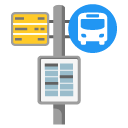
A sign or shelter marking a designated location where passengers can board or alight from a bus, typically depicted as a pole with a bus symbol.
02What does 🚏 mean on TikTok?
Symbol of waiting, public transit life, or being stuck in a moment
03What does 🚏 mean on WhatsApp?
Literally used to say 'I'm at the bus stop' or 'meet me at the bus stop'
04What does 🚏 mean in Gen-Z slang?
Used to signal waiting — for someone, something, or a vibe that never comes. Also deployed ironically to represent being left on read or stood up.
05Is the 🚏 emoji safe to use?
A completely benign emoji representing public transit infrastructure, used for directions, travel, and commuter communication.
06What does 🚏 mean in texting?
The bus stop symbolizes a transitional space — neither here nor there — evoking feelings of waiting, uncertainty, and the mundane passage of time, which resonates with existential restlessness in younger demographics.
07What is the shortcode for 🚏?
The shortcode for Bus Stop is :bus_stop:
08What does 🚏 mean in dating?
Rarely used as a direct flirt, but can be sent to say 'come pick me up' or 'I'm waiting for you to make a move.'
Safety & usage
- Safe meaning
- A completely benign emoji representing public transit infrastructure, used for directions, travel, and commuter communication.
- Caution
- Extremely rare misuse — could theoretically be used in a threatening context about a location, but this is highly unusual.
No known toxic or NSFW usage patterns. Safe for all ages and contexts.
How it looks across platforms


Appearance varies by platform and device. Google Noto, Twemoji, and OpenMoji are open-source.