🍻
The Emoji
Clinking Beer Mugs
U+1F37B · :clinking_beer_mugs:
Trend 71
Meaning layers
- interpretation
- Used to hype up plans, celebrate small wins, or signal that the vibe is immaculate. Often dropped in group chats when something good happens or when pre-gaming for a night out.
- tiktok usage
- Appears in videos about going out, party prep, friend group content, or any 'we survived' moment. Frequently paired with chaotic energy captions.
- irony level
- 4 / 10
Platform meanings
- meaning
- Signals celebration, friend group energy, party content, or a chaotic 'we're doing this' moment. Often the entire caption of a going-out video.
- trend usage
- Used in 'POV you're out with the boys/girls' content, Friday night vlogs, pregame compilations, and 'survived the week' trend videos.
- hashtags
- #cheers#friendgroup#girlsnight#weekendvibes#partytime
- virality score
- 74 / 100
Cultural meanings
🇺🇸
Western / Gen-Z
Universally used to signal going out, celebrating with friends, and embracing chaotic fun energy. Also used ironically to cheers to bad decisions.
🇵🇰
Pakistan & India
Culturally sensitive due to alcohol being taboo in many communities, especially Muslim-majority ones. More commonly used by urban youth to signal celebration without literal alcohol connotation, or avoided altogether.
🌍
Middle East
Generally avoided in conservative contexts due to Islamic prohibition on alcohol. In more cosmopolitan or expat communities (Dubai, Beirut), used freely to signal celebration.
🌐
Global Neutral
Broadly understood as a celebration/cheers symbol. In non-drinking cultures, often reinterpreted as a general 'toast to good things' without the alcohol-specific meaning.
🇧🇩
Bangladesh
Largely avoided in public digital communication due to Islamic values and cultural norms around alcohol. Urban educated youth may use it casually in private chats for generic celebration.
🇱🇰
Sri Lanka
Used moderately among younger, urban demographics for celebration. Cultural and religious diversity (Buddhism, Hinduism, Islam) means reception varies — some communities avoid it.
🇨🇳
China
Popular in social contexts, especially for business toasting culture (干杯/ganbei). Nightlife and social media users embrace it freely as a celebration signal.
🇯🇵
Japan
Strongly resonates due to 'kanpai' drinking culture being deeply embedded in social and professional life. Widely and enthusiastically used across all digital platforms.
🇰🇷
South Korea
Enthusiastically used given Korea's vibrant drinking and social culture (geon-bae). Common in social media posts about friend gatherings, company dinners, and celebrations.
🇹🇼
Taiwan
Casually used for celebration and social events. Taiwan's lively nightlife and social culture make this emoji very relatable and widely used.
🇭🇰
Hong Kong
Used freely and enthusiastically, reflecting the city's vibrant bar culture and cosmopolitan social scene. Common in celebration posts across all platforms.
🇵🇭
Philippines
Widely used to celebrate, especially in the context of social gatherings and the Filipino value of togetherness (bayanihan spirit). Very positive connotation.
🇮🇩
Indonesia
Mixed reception — majority Muslim population means many avoid it, but urban non-Muslim communities and younger demographics use it freely for generic celebration.
🇹🇭
Thailand
Used commonly for celebration, especially given Thailand's tourism culture and social drinking norms. Frequently seen in nightlife, Songkran, and festival content.
🇻🇳
Vietnam
Very relatable given Vietnam's strong beer (bia hơi) drinking culture. Enthusiastically used in celebratory contexts, friend gatherings, and social toasts.
🇲🇾
Malaysia
Mixed usage similar to Indonesia — avoided by Muslim Malays but used freely by Chinese-Malaysian, Indian-Malaysian, and non-Muslim communities for celebration.
🇸🇦
Saudi Arabia
Almost entirely avoided due to strict Islamic law prohibiting alcohol. On rare occasions, used by expats or in private digital spaces to signal celebration without alcohol connotation.
🇦🇪
UAE
Split usage — avoided by conservative and Muslim users but freely used by the large expat community and in Dubai's cosmopolitan social media scene.
🇪🇬
Egypt
Largely avoided in conservative Muslim contexts. Younger, liberal urban youth may use it casually for celebration, but cultural sensitivity means it's not mainstream.
🇹🇷
Turkey
Moderately used — Turkey has a secular tradition with a beer culture (especially Efes), so urban youth use it casually. More conservative communities avoid it.
🇮🇷
Iran
Effectively not used in public digital spaces due to legal prohibition of alcohol. In private or diaspora communities, occasionally used to signal celebration or freedom.
🇳🇬
Nigeria
Widely used across Nigeria's diverse population for celebration. Given Nigeria's lively social scene and beer culture, it's a very common hype and celebration emoji.
🇿🇦
South Africa
Enthusiastically used, reflecting South Africa's strong social drinking and braai culture. Common in friend group chats, sports celebrations, and social media posts.
🇬🇧
UK & Ireland
One of the most culturally resonant uses globally — pub culture is deeply embedded in British and Irish identity. 🍻 is practically a national symbol in digital communication.
🇫🇷
France
Used for celebration but wine emojis (🍷) often compete for dominance. French users do use it for casual beer moments and social toasts, though wine culture is more prestigious.
🇩🇪
Germany
Extremely culturally resonant — Oktoberfest, beer halls, and Biergarten culture make this one of Germany's most relatable emojis. Used with great enthusiasm.
🇪🇸
Spain & Italy
Used for celebration, though wine culture also competes. Spanish and Italian users love this for expressing social joy, aperitivo culture, and group celebrations.
🇧🇷
Brazil
Very popular — Brazilian social culture is vibrant and celebratory. Used frequently for chopp (draft beer) culture, friends gathering, and festive moments.
🇲🇽
Mexico
Enthusiastically used, especially in contexts of celebration, Friday energy, and social gatherings. Pairs with taco and music emojis in festive posts.
🌎
Latin America
Broadly positive across Latin America as a symbol of celebration, friendship, and social joy. Resonates well with communal social values across the region.
🇦🇺
Australia & NZ
Massively popular — Australia and NZ have strong pub and beer cultures (especially around rugby). One of the most-used celebration emojis in the region.
How its meaning shifted
- 2010
Primarily used literally to represent drinking beer or celebrating with alcohol. Sent between friends making plans to go to a bar or pub.
- 2015
Expanded to general celebration beyond just literal beer — birthday greetings, milestone celebrations, and 'cheers to the weekend' type messages became common.
- 2020
Took on ironic and meme dimensions during lockdowns — used sarcastically to 'cheers' to chaotic news, virtual happy hours, and dark humor about the state of the world.
- 2026
Multidimensional: genuine celebration, ironic commentary on life chaos, Gen Z slang for 'the vibe is set,' and a universal hype signal across all social platforms simultaneously.
See it on every platform
Compare with
Emoji combinations
Adjacent emojis
- Opposite
- crying facebroken heartcoffin
- Often confused with
- beer mugtropical drinksake
- Can replace
- party popperraised handsclinking glasses
Share & embed
Frequently asked
01What does the 🍻 Clinking Beer Mugs emoji mean?
Two beer mugs clinking together in a toast gesture, representing celebration, cheers, and social drinking.
02What does 🍻 mean on TikTok?
Signals celebration, friend group energy, party content, or a chaotic 'we're doing this' moment. Often the entire caption of a going-out video.
03What does 🍻 mean on WhatsApp?
Classic 'cheers!' or 'let's celebrate' shorthand in group chats. Used to hype plans, congratulate someone, or kick off a night out conversation.
04What does 🍻 mean in Gen-Z slang?
Used to hype up plans, celebrate small wins, or signal that the vibe is immaculate. Often dropped in group chats when something good happens or when pre-gaming for a night out.
05Is the 🍻 emoji safe to use?
Celebration, friendship, social bonding, toasting to good news, and communal joy.
06What does 🍻 mean in texting?
The clinking motion taps into social bonding rituals. Psychologically, toasting reinforces group identity, trust, and shared positive experience — it's one of the oldest communal gestures humans perform.
07What is the shortcode for 🍻?
The shortcode for Clinking Beer Mugs is :clinking_beer_mugs:
08What does 🍻 mean in dating?
Sent after suggesting a drink date or to confirm plans for going out together — a low-pressure way to signal fun and openness without being too forward.
Safety & usage
- Safe meaning
- Celebration, friendship, social bonding, toasting to good news, and communal joy.
- Caution
- Can be used to glorify excessive drinking, peer pressure around alcohol, or to cheers to harmful or self-destructive behavior in a normalized way.
Culturally insensitive in Muslim-majority and other alcohol-prohibiting communities. May normalize drinking culture for underage audiences. Not recommended in professional or formal digital communication without context.
How it looks across platforms
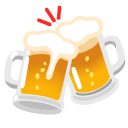


Appearance varies by platform and device. Google Noto, Twemoji, and OpenMoji are open-source.