⛈️
The Emoji
Cloud With Lightning And Rain
U+26C8 U+FE0F · :cloud_with_lightning_and_rain:
Trend 58
Meaning layers
- interpretation
- Used to represent chaotic energy, emotional turbulence, a dramatic mood, or situations that feel intense and overwhelming. Also used as a vibe descriptor for moody aesthetics.
- tiktok usage
- Appears in transition videos with dark aesthetics, 'main character in a storm' energy, or as a caption for chaotic life updates and dramatic storytelling.
- irony level
- 4 / 10
Platform meanings
- meaning
- Represents dramatic, chaotic, or emotionally intense content — the 'stormy era' of someone's life.
- trend usage
- Used in trending 'dark era' storytimes, moody aesthetic transitions, weather GRWM videos, and 'this is fine' disaster content.
- hashtags
- #StormySeason#ChaoticEnergy#MoodyVibes#ThunderStruck#DarkAesthetic
- virality score
- 62 / 100
Cultural meanings
🇺🇸
Western / Gen-Z
Primarily used as an emotional metaphor for chaos, bad days, and intense moods — almost divorced from literal weather meaning in casual use.
🇵🇰
Pakistan & India
Used literally for weather alerts during monsoon season and also metaphorically in Urdu/Hindi-language social media for emotional turmoil or family drama.
🌍
Middle East
Literal weather usage is common since sandstorms and rare but severe rain events are notable; metaphorically used for political or personal turbulence.
🌐
Global Neutral
Universally understood as a thunderstorm symbol — the literal weather meaning crosses all language barriers as a safe, neutral interpretation.
🇧🇩
Bangladesh
Heavily used in a literal context due to Bangladesh's extreme weather and cyclone seasons; also used in social media during monsoon floods.
🇱🇰
Sri Lanka
Used seasonally during the island's intense monsoon periods; locals post it as weather warnings and it carries a sense of community alertness.
🇨🇳
China
Primarily literal on platforms like WeChat and Weibo; metaphorically used for political or social unrest in coded speech given censorship context.
🇯🇵
Japan
Used with precision for actual weather warnings on Twitter and LINE; aesthetically used in tsuyu (rainy season) content and moody atmospheric posts.
🇰🇷
South Korea
Popular in both literal monsoon/typhoon season warnings and as a KPop fan expression for 'intense emotional performance energy' or dramatic fan moments.
🇹🇼
Taiwan
Typhoon season makes this a highly practical emoji used in emergency alerts and community weather warnings; also adopted for moody aesthetic content.
🇭🇰
Hong Kong
Used in a very literal sense during typhoon warnings — the city has a formal typhoon signal system and this emoji visually represents those alerts.
🇵🇭
Philippines
Extremely practical use during typhoon season — one of the most severe weather-affected nations; the emoji carries real urgency and safety messaging.
🇮🇩
Indonesia
Used during rainy season and for flooding alerts; also adopted in youth culture for describing chaotic situations or overwhelming days.
🇹🇭
Thailand
Literal during monsoon season; also used in Thai social media for dramatic storytelling or reacting to chaotic news with theatrical flair.
🇻🇳
Vietnam
Practical weather usage during typhoon and monsoon season; younger users on TikTok Vietnam use it for moody, emotional content.
🇲🇾
Malaysia
Used year-round due to frequent tropical storms; both a practical weather emoji and a casual expression of 'everything's a mess today'.
🇸🇦
Saudi Arabia
Rare weather events make this emoji notable when used — actual storms are significant enough to warrant social media attention and warnings.
🇦🇪
UAE
Used during the rare but dramatic rain events that flood Dubai; goes viral locally whenever actual storms hit because of their unusual nature.
🇪🇬
Egypt
Used for weather warnings during rare but intense Alexandria rainstorms; also used metaphorically for political turbulence in online discourse.
🇹🇷
Turkey
Dual usage — literal weather warnings during severe Aegean or Black Sea storms and metaphorical use for political and economic 'storms'.
🇮🇷
Iran
Used carefully in political contexts as a metaphor for unrest; in everyday use it describes actual weather events or personal emotional turbulence.
🇳🇬
Nigeria
Used during rainy season for weather warnings but also heavily adopted in Nollywood-adjacent social media for dramatic life storytelling.
🇿🇦
South Africa
Used for actual storm season in coastal cities; also a metaphor for load-shedding chaos and broader socioeconomic turbulence in social media commentary.
🇬🇧
UK & Ireland
Ironically used because storms are so frequent — 'another ⛈️ Tuesday' energy; also genuinely used for weather alerts given the countries' stormy climates.
🇫🇷
France
Used aesthetically in French social media for moody weather days; also appears in political commentary during periods of social unrest or strikes.
🇩🇪
Germany
Practical weather usage is common; also used in business and political discourse for metaphorical 'Sturm' (storm) situations with characteristic directness.
🇪🇸
Spain & Italy
Used during actual Mediterranean storms and gota fría events; also dramatically deployed in emotional social media posts about love, loss, or chaos.
🇧🇷
Brazil
Heavy literal use during tropical storm and flooding seasons; also used expressively in Brazilian social media culture for over-the-top dramatic reactions.
🇲🇽
Mexico
Used during hurricane season on both coasts and during dramatic rainstorms; also adopted for telenovela-style dramatic life commentary on social media.
🌎
Latin America
Broadly used across Latin America for hurricane season alerts and as a dramatic expression of life chaos — the 'todo está mal' emoji shorthand.
🇦🇺
Australia & NZ
Used for actual severe weather events and cyclones in the north; also used with dry humor for everyday annoyances given Australian ironic communication style.
How its meaning shifted
- 2010
Rarely used — emoji keyboards were limited and weather emojis were niche; primarily used by tech-savvy users to describe actual weather in text messages.
- 2015
Gained traction with Emoji 1.0 standardization; primarily used as a weather descriptor in messages, still mostly literal with some early metaphorical use.
- 2020
Expanded metaphorical use accelerated — 'stormy' as a mood or situation became common; COVID-era chaos gave this emoji a new layer of 'everything is terrible' meaning.
- 2026
Fully integrated into emotional vocabulary — equally literal and metaphorical; core to storm aesthetic content, used in AI weather apps, and embedded in meme formats about life chaos.
See it on every platform
Compare with
Emoji combinations
Adjacent emojis
- Opposite
- sunrainbowsun with face
- Often confused with
- cloud with lightningcloud with raincyclone
- Can replace
- cloud with lightningtornadocloud with rain
Share & embed
Frequently asked
01What does the ⛈️ Cloud With Lightning And Rain emoji mean?
A cloud with lightning bolt and rain drops falling beneath it, representing a thunderstorm or stormy weather.
02What does ⛈️ mean on TikTok?
Represents dramatic, chaotic, or emotionally intense content — the 'stormy era' of someone's life.
03What does ⛈️ mean on WhatsApp?
Weather warning or literal storm update in group chats; also used to express that someone is in a bad mood or going through a rough time.
04What does ⛈️ mean in Gen-Z slang?
Used to represent chaotic energy, emotional turbulence, a dramatic mood, or situations that feel intense and overwhelming. Also used as a vibe descriptor for moody aesthetics.
05Is the ⛈️ emoji safe to use?
Represents stormy weather, emotional turbulence, chaos, or intensity — entirely benign in all standard contexts.
06What does ⛈️ mean in texting?
Storms are psychologically linked to both fear and awe — this emoji taps into that dual feeling of dread and excitement, often used when someone is processing intense emotions or external chaos.
07What is the shortcode for ⛈️?
The shortcode for Cloud With Lightning And Rain is :cloud_with_lightning_and_rain:
08What does ⛈️ mean in dating?
Rarely used for flirting directly; may be sent to suggest a 'stormy' date night indoors, coziness, or as a mood setter for rainy day vibes together.
Safety & usage
- Safe meaning
- Represents stormy weather, emotional turbulence, chaos, or intensity — entirely benign in all standard contexts.
- Caution
- Extremely rare toxic use — could theoretically be used to threaten someone with 'incoming storm' but this is essentially never observed.
No meaningful safety concerns. In political contexts in censored regions it may serve as coded language for unrest, but this is low risk.
How it looks across platforms
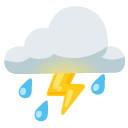


Appearance varies by platform and device. Google Noto, Twemoji, and OpenMoji are open-source.