🗡️
The Emoji
Dagger
U+1F5E1 U+FE0F · :dagger:
Trend 58
Meaning layers
- interpretation
- Used to represent being 'stabbed in the back' emotionally, betrayal, or dark aesthetic energy. Also used in dramatic self-deprecating humor like 'that comment 🗡️' meaning something hit hard.
- tiktok usage
- Appears in dark aesthetic edits, villain-era content, and comments when someone says something devastatingly accurate or savage.
- irony level
- 7 / 10
Platform meanings
- meaning
- Symbol of dark aesthetic, villain energy, or being emotionally stabbed by a comment or situation.
- trend usage
- Used heavily in villain-era trends, dark academia edits, and comment sections when a creator says something devastatingly relatable.
- hashtags
- #darkacademia#villainera#gothicaesthetic#emotionaldamage#edgyaesthetic
- virality score
- 62 / 100
Cultural meanings
🇺🇸
Western / Gen-Z
Primarily used as a symbol of emotional pain, betrayal, or dark-aesthetic identity; widely understood as ironic or dramatic rather than literally threatening.
🇵🇰
Pakistan & India
Less commonly used in casual texting; may be interpreted more literally as a weapon symbol, appearing in historical, Mughal, or fantasy gaming contexts online.
🌍
Middle East
Often associated with historical weaponry and traditional blade culture; in online spaces, younger users may adopt it for dark-aesthetic or dramatic emotional expression.
🌐
Global Neutral
Universally recognized as a blade/weapon symbol; interpreted as dramatic or aesthetic rather than threatening in most digital contexts.
🇧🇩
Bangladesh
Rarely used in everyday casual communication; more likely to appear in gaming, fantasy, or historical discussion contexts among younger internet users.
🇱🇰
Sri Lanka
Appears mostly in gaming and fantasy contexts; some association with traditional ceremonial daggers in historical or cultural discussions.
🇨🇳
China
Used in gaming communities (especially RPG and fantasy genres) to represent weapons; dark aesthetic use is growing among youth on Weibo and Bilibili.
🇯🇵
Japan
Associated with tanto (traditional Japanese dagger) imagery; widely used in anime, manga, and gaming contexts, as well as dark-cute (yami kawaii) aesthetics.
🇰🇷
South Korea
Appears in gaming content and dark aesthetic communities on platforms like Naver and KakaoTalk; occasionally used in dramatic expression among K-drama fans.
🇹🇼
Taiwan
Used in gaming and fantasy communities; younger users adopt it for dark aesthetic or dramatic emotional expression similar to Western Gen Z usage.
🇭🇰
Hong Kong
Common in gaming and action-genre discussions; also used in protest-adjacent online spaces as a symbol of resistance or sharp opposition, though context-dependent.
🇵🇭
Philippines
Used in gaming (Mobile Legends, RPG contexts) and among dark-aesthetic communities; also deployed humorously to indicate feeling emotionally 'stabbed' by a comment.
🇮🇩
Indonesia
Appears in RPG and fantasy gaming communities; among youth, increasingly used for dark aesthetic expression or to indicate emotional hurt.
🇹🇭
Thailand
Associated with gaming weapon imagery and dark anime aesthetics; sometimes used in dramatic emotional expression on Thai Twitter and TikTok.
🇻🇳
Vietnam
Common in gaming communities as a weapon symbol; younger Vietnamese users on TikTok and Facebook also use it for dramatic emotional expression.
🇲🇾
Malaysia
Used in gaming contexts and dark aesthetic communities; bilingual online culture means it appears in both Malay and English language posts with similar meanings.
🇸🇦
Saudi Arabia
Primarily used in gaming contexts; traditional dagger (khanjar) cultural associations may lend it some ceremonial significance in historical discussions.
🇦🇪
UAE
Similar to Saudi Arabia — gaming and historical contexts dominate, though cosmopolitan youth culture on Instagram also uses it for dark aesthetic purposes.
🇪🇬
Egypt
Used mostly in gaming and dramatic online expression; some users associate it with historical pharaonic or Islamic warfare imagery in educational content.
🇹🇷
Turkey
Associated with yatagan (traditional Turkish sword/dagger) cultural heritage in historical discussions; among youth, used similarly to Western Gen Z for dark aesthetics.
🇮🇷
Iran
Appears in gaming and literary/poetic contexts (Persian literature has rich imagery of blades); younger users on Instagram use it for dramatic or dark aesthetic expression.
🇳🇬
Nigeria
Used in gaming communities and Nollywood-inspired dramatic expression; sometimes deployed in heated online debates to signal a cutting remark.
🇿🇦
South Africa
Appears in gaming, fantasy, and dark-aesthetic communities; used similarly to Western Gen Z in dramatic emotional or sarcastic online expression.
🇬🇧
UK & Ireland
Used for dark-academic aesthetics, villain-era energy, and as dramatic punctuation in sarcastic or cutting remarks online; strong overlap with Western Gen Z use.
🇫🇷
France
Appears in gothic, dark-romantic, and historical contexts; French internet culture embraces its dramatic flair for expressing sharp wit or emotional cutting remarks.
🇩🇪
Germany
Used in gaming, LARP (live-action role-play), and medieval history communities; also adopted in dark aesthetic spaces for dramatic emotional expression.
🇪🇸
Spain & Italy
Common in fantasy gaming and dark romantic aesthetics; Mediterranean drama culture embraces it for expressing emotional intensity or sharp verbal jabs.
🇧🇷
Brazil
Widely used among Brazilian gamers and dark aesthetic communities on TikTok and Instagram; also used humorously to indicate when something 'hit different' or hurt emotionally.
🇲🇽
Mexico
Appears in gaming contexts and among dark-aesthetic communities; sometimes used in dramatic or humorous expression of emotional pain in Mexican internet culture.
🌎
Latin America
Broadly used across Latin American gaming and dark-aesthetic communities; adopted by younger users for dramatic emotional expression with regional humor flavoring.
🇦🇺
Australia & NZ
Used similarly to UK/US Gen Z — dark aesthetic, villain era, and as ironic punctuation for cutting remarks; appears in gaming communities as a weapon symbol.
How its meaning shifted
- 2010
Largely nonexistent as a standalone emoji; the symbol existed in Unicode but had minimal digital usage outside of specialized text encoding.
- 2015
Began appearing in gaming, fantasy literature, and role-playing contexts; used literally to represent weapons in text-based RPGs and fantasy fandom discussions.
- 2020
Expanded into dark aesthetic, villain-era, and emotional expression contexts on TikTok and Instagram; started being used as shorthand for emotional pain or betrayal.
- 2026
Firmly established as a dark aesthetic and dramatic expression staple; used across platforms for villain energy, emotional hurt, savage commentary, and edgy personal branding.
See it on every platform
Emoji combinations
Adjacent emojis
- Opposite
- red heartsparkleswhite flower
- Often confused with
- kitchen knifefork and knifescissors
- Can replace
- kitchen knifeswordanger symbol
Share & embed
Frequently asked
01What does the 🗡️ Dagger emoji mean?
A dagger or dirk — a short, double-edged stabbing weapon with a pointed blade and handle, typically used as a secondary weapon or tool.
02What does 🗡️ mean on TikTok?
Symbol of dark aesthetic, villain energy, or being emotionally stabbed by a comment or situation.
03What does 🗡️ mean on WhatsApp?
Expresses feeling hurt or betrayed, or used dramatically after a painful truth in casual conversation.
04What does 🗡️ mean in Gen-Z slang?
Used to represent being 'stabbed in the back' emotionally, betrayal, or dark aesthetic energy. Also used in dramatic self-deprecating humor like 'that comment 🗡️' meaning something hit hard.
05Is the 🗡️ emoji safe to use?
Represents a historical weapon, fantasy/gaming prop, dark aesthetic symbol, or dramatic emotional expression (feeling hurt or betrayed).
06What does 🗡️ mean in texting?
The dagger symbolizes sharp emotional pain or feeling wounded by words or actions. It taps into archetypal imagery of betrayal (the proverbial 'knife in the back'), allowing users to externalize deep emotional hurt through visual metaphor.
07What is the shortcode for 🗡️?
The shortcode for Dagger is :dagger:
08What does 🗡️ mean in dating?
Rarely used in flirting directly; may appear in edgy or dark-romantic contexts, e.g., pairing with 🥀 or 🖤 for a brooding aesthetic persona.
Safety & usage
- Safe meaning
- Represents a historical weapon, fantasy/gaming prop, dark aesthetic symbol, or dramatic emotional expression (feeling hurt or betrayed).
- Caution
- Could be used as a veiled threat when combined with specific personal context, or to glorify violence, self-harm ideation, or intimidation.
Context-dependent risk: in most digital uses it is aesthetic or humorous, but when directed at a specific person or combined with threatening language, it may constitute harassment or an implicit threat. Some platforms flag weapon emojis in moderation algorithms.
How it looks across platforms
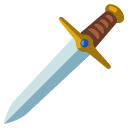


Appearance varies by platform and device. Google Noto, Twemoji, and OpenMoji are open-source.