🏜️
The Emoji
Desert
U+1F3DC U+FE0F · :desert:
Trend 58
Meaning layers
- interpretation
- Used to express extreme dryness, loneliness, emptiness, or a total lack of something — most commonly used to describe a dry text conversation, a barren social life, or zero attention from a crush.
- tiktok usage
- Appears in 'my DMs are a 🏜️' jokes, thirst trap commentary, and videos about being ignored or getting no matches on dating apps.
- irony level
- 7 / 10
Platform meanings
- meaning
- Represents dryness in social life, zero engagement, or a barren dating situation. Also used in travel content and aesthetic desert visuals.
- trend usage
- Common in 'POV: your DMs' videos, 'day in my life' desert aesthetics, and self-deprecating humor about being ignored.
- hashtags
- #desertvibes#drytexters#desertaesthetic#lonely#thatgirl
- virality score
- 62 / 100
Cultural meanings
🇺🇸
Western / Gen-Z
Primarily used as slang for dryness — dry texters, dry social lives, or zero romantic prospects. A staple of self-deprecating humor.
🇵🇰
Pakistan & India
Used literally to reference arid regions like Thar Desert or Rajasthan, and metaphorically to describe extreme heat or a desolate situation.
🌍
Middle East
Carries strong cultural resonance as deserts are a central part of regional identity, heritage, and landscapes — used with pride in regional travel content.
🌐
Global Neutral
Universally understood as representing a desert landscape; used for travel, geography, weather, and climate discussions.
🇧🇩
Bangladesh
Used less frequently; when used, it references extreme heat or dryness, or expresses barrenness in a metaphorical sense.
🇱🇰
Sri Lanka
Occasionally used in travel content or to describe dry seasons; not commonly used in slang or metaphorical contexts.
🇨🇳
China
Used in travel content referencing the Gobi Desert or Silk Road; also used in philosophical contexts about solitude and emptiness.
🇯🇵
Japan
Associated with exotic foreign landscapes and minimalist aesthetics; used in travel content and sometimes in poetic expressions of loneliness (wabi-sabi adjacent).
🇰🇷
South Korea
Used in travel content, K-drama fan contexts involving desert scenes, and occasionally in slang to describe an emotionally cold or distant person.
🇹🇼
Taiwan
Primarily used for travel content and aesthetics; sometimes used humorously to describe being ghosted or socially ignored.
🇭🇰
Hong Kong
Used in travel posts and occasionally in commentary about the dry, sparse state of social or political dialogue.
🇵🇭
Philippines
Used in travel content and memes about extreme heat; also used to humorously describe being broke or having zero social activity.
🇮🇩
Indonesia
Appears in travel content about exotic desert destinations; metaphorically used to describe dry, uneventful situations.
🇹🇭
Thailand
Used in travel content for desert destinations in the Middle East or Central Asia; occasionally used to express loneliness or boredom.
🇻🇳
Vietnam
Primarily literal — used in travel and geography content; metaphorical dryness usage is emerging among younger users.
🇲🇾
Malaysia
Used in travel content and in humorous posts about dry spells in social life, especially among younger, English-speaking demographics.
🇸🇦
Saudi Arabia
Holds deep cultural significance as deserts are central to Saudi identity, heritage, and Vision 2030 tourism campaigns; used proudly in regional content.
🇦🇪
UAE
Frequently used in travel and tourism content given the UAE's desert landscape; also used in luxury desert experience marketing.
🇪🇬
Egypt
Strong cultural resonance tied to the Sahara and Egyptian desert heritage; used in travel, history, and cultural content with genuine pride.
🇹🇷
Turkey
Used in travel content for Cappadocia and Central Asian desert imagery; occasionally used metaphorically for emotional emptiness.
🇮🇷
Iran
Connected to Iran's vast desert regions like Dasht-e Kavir; used in travel content, poetry references, and expressions of solitude.
🇳🇬
Nigeria
Used mostly in travel contexts or to describe extreme heat; younger users may use it in slang to describe dryness in social situations.
🇿🇦
South Africa
Used in travel content referencing the Kalahari or Namib Desert; also used metaphorically by youth culture for dry or uneventful periods.
🇬🇧
UK & Ireland
Used heavily in irony and self-deprecating humor to describe the dull, grey nature of British/Irish life — 'my social life is a 🏜️' is a common joke.
🇫🇷
France
Used in travel content and philosophical commentary; occasionally employed in existentialist-tinged social commentary about emptiness.
🇩🇪
Germany
Used practically in travel and geography contexts; younger Germans adopt it in English-influenced internet slang for emotional dryness.
🇪🇸
Spain & Italy
Used in travel content referencing local arid regions; also used expressively to describe passionate dryness — a dry conversation is a social crime.
🇧🇷
Brazil
Used in travel content and memes about the Sertão (Brazilian semi-arid region); also used humorously in slang about romantic dry spells.
🇲🇽
Mexico
Connected to the Sonoran Desert and Baja landscapes; used in travel content and colloquially to describe a dry or boring situation.
🌎
Latin America
Broadly used for travel content about Patagonian steppe or Atacama Desert; metaphorically used to describe emotional or social dryness.
🇦🇺
Australia & NZ
Strongly associated with the Australian Outback; used proudly in travel content and humorously to describe remote, isolated parts of the country.
How its meaning shifted
- 2010
Rarely used; primarily a niche geographic symbol in travel blogs and basic weather/climate discussions before widespread emoji adoption.
- 2015
Gained traction in travel and lifestyle content as Instagram's desert aesthetic trend emerged; mostly literal usage in posts about desert destinations.
- 2020
Expanded into slang territory with Gen Z — 'dry texter' culture and pandemic-era loneliness made it a metaphor for emptiness and social isolation.
- 2026
Firmly established in internet slang as a symbol of dryness, emotional emptiness, and social drought while retaining its literal travel aesthetic use; desert aesthetic remains culturally strong.
See it on every platform
Emoji combinations
Adjacent emojis
- Often confused with
- national parksunnybeach with umbrella
Share & embed
Frequently asked
01What does the 🏜️ Desert emoji mean?
A desert landscape featuring sand dunes, a hot sun, and sparse or no vegetation, representing arid, dry, desolate environments.
02What does 🏜️ mean on TikTok?
Represents dryness in social life, zero engagement, or a barren dating situation. Also used in travel content and aesthetic desert visuals.
03What does 🏜️ mean on WhatsApp?
Signals a dead or boring conversation, often sent alone as a response to dry chat or long silences.
04What does 🏜️ mean in Gen-Z slang?
Used to express extreme dryness, loneliness, emptiness, or a total lack of something — most commonly used to describe a dry text conversation, a barren social life, or zero attention from a crush.
05Is the 🏜️ emoji safe to use?
Represents desert landscapes, travel, arid climates, solitude, and metaphorical dryness in a completely harmless way.
06What does 🏜️ mean in texting?
The desert as a symbol taps into primal feelings of abandonment and scarcity. Psychologically, it maps onto emotional desolation and the anxiety of being overlooked or forgotten in social contexts.
07What is the shortcode for 🏜️?
The shortcode for Desert is :desert:
08What does 🏜️ mean in dating?
Rarely used flirtatiously; more often used self-deprecatingly to describe a dead romantic life or drought of attention, e.g., 'My love life is literally 🏜️'.
Safety & usage
- Safe meaning
- Represents desert landscapes, travel, arid climates, solitude, and metaphorical dryness in a completely harmless way.
- Caution
- No notable toxic usage; in rare cases, it may be used dismissively to tell someone their content or personality is barren and worthless.
Extremely low risk emoji. No known associations with harmful, extremist, or NSFW content. Safe for all audiences.
How it looks across platforms
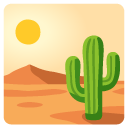


Appearance varies by platform and device. Google Noto, Twemoji, and OpenMoji are open-source.