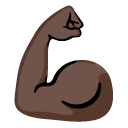
💪🏿
The Emoji
Flexed Biceps: Dark Skin Tone
U+1F4AA U+1F3FF · :flexed_biceps_dark_skin_tone:
Trend 78
Meaning layers
- interpretation
- Used to signal hype, Black excellence, solidarity, personal wins, or general motivation. Often deployed in contexts celebrating Black identity and achievement.
- tiktok usage
- Appears in workout videos, Black empowerment content, hustle culture posts, and reaction comments to impressive feats — especially by Black creators celebrating wins.
- irony level
- 2 / 10
Platform meanings
- meaning
- Signals strength, Black pride, hype energy, and motivational momentum in video captions and comments.
- trend usage
- Used heavily in FitTok, Black TikTok, hustle culture content, and reaction videos celebrating impressive athletic or academic achievements.
- hashtags
- #BlackExcellence#Gains#Melanin#Motivation#BlackTikTok
- virality score
- 82 / 100
Cultural meanings
🇺🇸
Western / Gen-Z
A dual-purpose symbol: universal gym/hustle emoji AND a culturally significant marker of Black pride and identity — Gen Z understands the skin tone specificity as intentional cultural expression.
🇵🇰
Pakistan & India
Primarily read as a strength or fitness emoji; the skin tone is noted but cultural nuance around Black identity is less pronounced — mostly used in workout or motivational contexts.
🌍
Middle East
Interpreted as a straightforward strength symbol; used in sports and fitness contexts with moderate frequency, though skin tone modifier carries less cultural specificity.
🌐
Global Neutral
Universally understood as strength, power, and determination regardless of cultural context — the dark skin tone is seen as a representation choice.
🇧🇩
Bangladesh
Used mainly in fitness and motivational contexts; skin tone nuance is recognized but Black cultural significance is less commonly understood.
🇱🇰
Sri Lanka
Primarily a fitness and encouragement symbol; used in sports contexts and motivational messages without strong cultural layering.
🇨🇳
China
Interpreted as a strength emoji; less culturally loaded than in Western contexts — used in fitness and gaming hype scenarios.
🇯🇵
Japan
Used in gym and sports content; Japanese users may select skin tone to match their own or use the yellow default — the dark tone is seen as a representation option.
🇰🇷
South Korea
Common in K-fitness and sports content; appreciated aesthetically but Black cultural context is less emphasized compared to Western usage.
🇹🇼
Taiwan
Primarily a strength and motivation symbol; used in fitness communities and gaming hype with limited cultural specificity.
🇭🇰
Hong Kong
Used in fitness, sports commentary, and motivational posts; the skin tone modifier is understood as diversity representation.
🇵🇭
Philippines
Widely used in fitness and hustle content; Filipino users connect with the strength meaning and occasionally use it in OFW (overseas worker) resilience narratives.
🇮🇩
Indonesia
Used in gym, sports, and motivational content; the dark skin tone is normalized but the specific Black cultural connotation is less commonly applied.
🇹🇭
Thailand
Primarily a fitness and strength emoji; the dark skin tone may carry colorism-adjacent perceptions in some contexts, though it is increasingly used neutrally.
🇻🇳
Vietnam
Used in workout and motivational contexts; skin tone representation is recognized but Black cultural significance is not widely applied.
🇲🇾
Malaysia
Used in fitness and sports content; in diverse Malaysian contexts, it can also serve as a representation tool for darker-skinned Malay or Indian communities.
🇸🇦
Saudi Arabia
Primarily a strength and fitness emoji used in sports and gym contexts; skin tone representation is acknowledged though cultural depth is less prominent.
🇦🇪
UAE
Used broadly in the multicultural UAE context — appreciated both as a fitness symbol and as a representation of the large African diaspora community in the country.
🇪🇬
Egypt
Used in sports and motivational content; the dark skin tone resonates with darker-skinned Egyptians and Nile Valley identity, though Black cultural nuance is variable.
🇹🇷
Turkey
Primarily a gym and strength emoji; cultural nuance around Black identity is less pronounced though the symbol is widely understood as motivational.
🇮🇷
Iran
Used in fitness and sports contexts; skin tone nuance around Black culture is less commonly understood — primarily a strength symbol.
🇳🇬
Nigeria
Strongly resonant — carries deep cultural pride and Black identity significance. Widely used in celebrations of Nigerian excellence, Afrobeats culture, and personal achievement.
🇿🇦
South Africa
Highly culturally significant — used to express Black African pride, post-apartheid resilience, and celebration of Black achievement in sports and culture.
🇬🇧
UK & Ireland
Used in fitness content and also carries strong Black British cultural resonance — common in grime, UK hip-hop, and Black British excellence content.
🇫🇷
France
Used in sports and fitness; also carries meaning within Afro-French and Black French communities celebrating identity and achievement.
🇩🇪
Germany
Primarily a fitness and motivational symbol; within Afro-German communities, it is increasingly used to signal Black identity pride.
🇪🇸
Spain & Italy
Used in sports and gym contexts; within Afro-Latino and African diaspora communities in these countries, it carries pride and solidarity meaning.
🇧🇷
Brazil
Deeply resonant — used to celebrate Afro-Brazilian identity, Black pride, and cultural strength; common in capoeira, Afrobeats, and Black community posts.
🇲🇽
Mexico
Used in fitness and motivational content; within Afro-Mexican communities, it carries cultural pride significance, though mainstream use is primarily strength-focused.
🌎
Latin America
Used broadly for strength and motivation; within Afro-Latin communities across the region, it also signals Black cultural pride and solidarity.
🇦🇺
Australia & NZ
Used in fitness and sports content; within Aboriginal, Torres Strait Islander, and Pacific Islander communities, the dark skin tone holds additional representative significance.
How its meaning shifted
- 2010
The flexed biceps emoji existed but only in yellow — skin tone variants did not yet exist. Usage was purely about physical strength and gym culture.
- 2015
Dark skin tone variant introduced with Unicode 8.0 — immediately adopted by Black users as a representation milestone and cultural expression tool.
- 2020
Usage surged during the Black Lives Matter movement resurgence — became a symbol of Black resilience, protest strength, and community solidarity alongside ✊🏿.
- 2026
Fully established as a dual-purpose emoji — both a fitness/hustle symbol and a cultural identity marker for Black communities globally; normalized as intentional skin tone selection.
See it on every platform
Adjacent emojis
Share & embed
Frequently asked
01What does the 💪🏿 Flexed Biceps: Dark Skin Tone emoji mean?
A flexed bicep muscle arm with dark skin tone modifier, representing physical strength, power, and determination.
02What does 💪🏿 mean on TikTok?
Signals strength, Black pride, hype energy, and motivational momentum in video captions and comments.
03What does 💪🏿 mean on WhatsApp?
Encouragement or celebration of someone's effort, strength, or milestone — 'You did that 💪🏿'.
04What does 💪🏿 mean in Gen-Z slang?
Used to signal hype, Black excellence, solidarity, personal wins, or general motivation. Often deployed in contexts celebrating Black identity and achievement.
05Is the 💪🏿 emoji safe to use?
Physical strength, empowerment, Black pride, gym motivation, personal achievement, and solidarity.
06What does 💪🏿 mean in texting?
Carries layered psychological weight — both as a universal strength symbol and as a culturally specific marker of Black pride and resilience, tapping into collective identity and individual achievement simultaneously.
07What is the shortcode for 💪🏿?
The shortcode for Flexed Biceps: Dark Skin Tone is :flexed_biceps_dark_skin_tone:
08What does 💪🏿 mean in dating?
Sent to compliment someone's physique or hustle, or to show off one's own strength and confidence as an attractive trait.
Safety & usage
- Safe meaning
- Physical strength, empowerment, Black pride, gym motivation, personal achievement, and solidarity.
- Caution
- Rarely weaponized negatively; occasionally used in aggressive trash-talk or intimidation contexts in competitive settings.
Generally very safe. Context of skin tone selection should be respected — non-Black users using this specific variant in mockery contexts can be considered appropriative or disrespectful.
How it looks across platforms


Appearance varies by platform and device. Google Noto, Twemoji, and OpenMoji are open-source.