💪🏻
The Emoji
Flexed Biceps: Light Skin Tone
U+1F4AA U+1F3FB · :flexed_biceps_light_skin_tone:
Trend 74
Meaning layers
- interpretation
- Used to hype someone up, express self-confidence, celebrate hard work, or ironically flex minor achievements. Also used in 'let's get it' energy posts.
- tiktok usage
- Appears in gym transformation videos, motivational captions, workout challenges, and ironically when doing something barely impressive like waking up before noon.
- irony level
- 6 / 10
Platform meanings
- meaning
- Represents gym culture, fitness motivation, hustle, and ironically celebrating small wins
- trend usage
- Used in gym transformation captions, 'glow up' videos, motivational voiceovers, and 'POV: you started going to the gym' trends
- hashtags
- #GymTok#FitnesMotivation#LiftingLife#GlowUp#StrengthCheck
- virality score
- 78 / 100
Cultural meanings
🇺🇸
Western / Gen-Z
Heavily ironic and sincere simultaneously — used to hype gym culture genuinely but also to mock hustle culture and celebrate tiny wins sarcastically.
🇵🇰
Pakistan & India
Used sincerely to celebrate physical strength, cricket victories, and Bollywood fitness culture; also used by gym-going youth to signal dedication and discipline.
🌍
Middle East
Associated with gym culture which is rapidly growing, especially among youth; used in fitness influencer content and to express strength and pride in physical discipline.
🌐
Global Neutral
Universally understood as representing strength, effort, and encouragement — the most cross-culturally safe interpretation across all regions.
🇧🇩
Bangladesh
Used in fitness communities and youth culture to express physical strength and determination; also used in academic and career contexts to mean 'working hard.'
🇱🇰
Sri Lanka
Appears in gym community posts and cricket-related celebrations; used sincerely to express pride and encouragement among youth.
🇨🇳
China
Popular in fitness and sports content on platforms like WeChat and Weibo; associated with national strength narratives and personal discipline in youth culture.
🇯🇵
Japan
Used in gym and sports communities; carries a nuanced tone of quiet dedication rather than boastful showing-off, aligning with Japanese values of diligence.
🇰🇷
South Korea
Extremely common in K-pop fan communities hyping idols, gym culture influenced by idol body standards, and general self-improvement content.
🇹🇼
Taiwan
Used in fitness and self-improvement content; also appears in political and social resilience contexts meaning 'we can do it.'
🇭🇰
Hong Kong
Used in gym and protest/resilience contexts; carries a dual meaning of physical and emotional/social strength in local discourse.
🇵🇭
Philippines
Widely used to hype friends, celebrate achievements, and in OFW (overseas worker) communities to express resilience and hard work.
🇮🇩
Indonesia
Popular in gym and motivational content; used sincerely in religious contexts too, paired with prayers for strength and perseverance.
🇹🇭
Thailand
Associated with Muay Thai culture, fitness, and sports; used to hype athletes and express national pride in combat sports.
🇻🇳
Vietnam
Used in fitness and hustle culture contexts; younger generations use it in academic and career grind content as well.
🇲🇾
Malaysia
Common in gym communities and motivational posts; used across ethnicities to express determination and celebrate physical or personal achievements.
🇸🇦
Saudi Arabia
Growing usage tied to the Saudi Vision 2030 fitness push and gym culture boom; used to celebrate athletic achievement and personal discipline.
🇦🇪
UAE
Appears in cosmopolitan fitness influencer content; associated with the gym-heavy lifestyle culture in Dubai and Abu Dhabi's youth scene.
🇪🇬
Egypt
Used in sports contexts especially football, gym culture, and general expressions of toughness and perseverance in difficult situations.
🇹🇷
Turkey
Associated with gym culture, sports victories, and expressions of national or personal strength; used sincerely and with strong conviction.
🇮🇷
Iran
Used in fitness and sports communities, especially in private social media spaces; represents physical strength and personal resilience.
🇳🇬
Nigeria
Very popular in hustle culture content, Afrobeats fitness videos, and to celebrate hard-earned wins; carries strong energy of ambition and grind.
🇿🇦
South Africa
Used in sports (rugby, soccer) hype content and general motivational posts; carries meaning of community strength and personal resilience.
🇬🇧
UK & Ireland
Often used ironically and self-deprecatingly — 'managed to get out of bed 💪🏻' is a classic British tone; also genuinely in sports fan contexts.
🇫🇷
France
Used in sports fan communities, gym culture, and general encouragement; French users tend to use it more sincerely than ironically.
🇩🇪
Germany
Associated with fitness, efficiency, and discipline; used seriously in sports and professional achievement contexts with little irony.
🇪🇸
Spain & Italy
Enthusiastically used in sports, football victory celebrations, and gym culture; carries warm, expressive energy consistent with Mediterranean communication styles.
🇧🇷
Brazil
Heavily used in fitness culture (Brazil has one of the world's highest gym membership rates), Carnival preparation, and sports hype especially football.
🇲🇽
Mexico
Used in sports, lucha libre culture, gym content, and general expressions of strength and perseverance; sincere and energetic usage.
🌎
Latin America
Broadly used across Latin America for sports, fitness, hustle culture, and encouraging friends; universally positive and energetic in tone.
🇦🇺
Australia & NZ
Used in sports (AFL, rugby, cricket) hype, gym culture, and often ironically in casual self-deprecating Australian humor contexts.
How its meaning shifted
- 2010
Rarely used; emoji adoption was early-stage. When used, it was straightforward and literal — meaning physical strength or working out with no ironic layer.
- 2015
Growing popularity tied to rise of fitness influencer culture on Instagram; used sincerely in gym posts, transformation content, and motivational captions.
- 2020
Became widely ironic alongside hustle culture discourse; used both genuinely in pandemic home workout content and sarcastically in 'surviving lockdown' humor.
- 2026
Multi-layered usage: sincere in fitness communities, heavily ironic in meme culture, present in AI fitness bot interactions, and embedded in identity-expressive skin tone contexts.
See it on every platform
Adjacent emojis
- Often confused with
- raised fistoncoming fisthand with fingers splayed
- Can replace
- firehundred pointssparkles
Share & embed
Frequently asked
01What does the 💪🏻 Flexed Biceps: Light Skin Tone emoji mean?
A flexed bicep muscle with light skin tone modifier, showing a raised arm with a prominent muscle bulge, used to represent physical strength, fitness, and power.
02What does 💪🏻 mean on TikTok?
Represents gym culture, fitness motivation, hustle, and ironically celebrating small wins
03What does 💪🏻 mean on WhatsApp?
Encouragement, showing support, or hype after someone shares good news or an achievement
04What does 💪🏻 mean in Gen-Z slang?
Used to hype someone up, express self-confidence, celebrate hard work, or ironically flex minor achievements. Also used in 'let's get it' energy posts.
05Is the 💪🏻 emoji safe to use?
Physical strength, fitness motivation, encouragement, celebrating achievements, and self-improvement.
06What does 💪🏻 mean in texting?
Triggers associations with self-efficacy and accomplishment. The skin tone specificity adds a layer of personal identity and representation, making the emotional resonance more personal and direct.
07What is the shortcode for 💪🏻?
The shortcode for Flexed Biceps: Light Skin Tone is :flexed_biceps_light_skin_tone:
08What does 💪🏻 mean in dating?
Used to signal physical fitness or show off gym progress to a crush; sometimes sent as a playful flex to get attention or imply 'I work out, notice me.'
Safety & usage
- Safe meaning
- Physical strength, fitness motivation, encouragement, celebrating achievements, and self-improvement.
- Caution
- Can be weaponized in toxic masculinity or hustle-culture shaming contexts; rarely used in threatening or aggressive ways when combined with hostile language.
Generally very safe. The skin tone specificity (light skin tone) is occasionally flagged in discussions about emoji skin tone politics and representation debates online, but the emoji itself carries no inherent toxic meaning.
How it looks across platforms
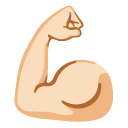


Appearance varies by platform and device. Google Noto, Twemoji, and OpenMoji are open-source.