🙂↕️
The Emoji
Head Shaking Vertically
U+1F642 U+200D U+2195 U+FE0F · :head_shaking_vertically:
Trend 65
Meaning layers
- interpretation
- Used to signal reluctant agreement, deadpan confirmation, or ironic 'sure, totally' energy. Often deployed when someone is agreeing but clearly not thrilled about it, or as a dry acknowledgment of something absurd.
- tiktok usage
- Appears in comment sections to wordlessly agree with a hot take, or in video captions to indicate 'yep, this is exactly my life' with zero emotional investment.
- irony level
- 7 / 10
Platform meanings
- meaning
- Represents quiet, ironic agreement or a 'yep, that checks out' reaction to relatable or chaotic content.
- trend usage
- Used in comment sections under life-advice videos or chaotic confessionals to signal wordless solidarity or sarcastic validation.
- hashtags
- #nodding#iagree#relatable#deadpan#vibes
- virality score
- 62 / 100
Cultural meanings
🇺🇸
Western / Gen-Z
Widely used as ironic or deadpan agreement — the nodding face carries a 'sure, why not' or 'I hate that I agree' energy that resonates deeply with Gen Z's communication style.
🇵🇰
Pakistan & India
Understood as a straightforward 'haan' (yes) gesture in digital chat contexts, though the ironic layer is increasingly adopted by urban youth on Instagram and Twitter.
🌍
Middle East
The vertical nod is a familiar affirmative gesture in most Middle Eastern cultures, so this emoji translates clearly as agreement or acknowledgment in messaging apps.
🌐
Global Neutral
Universally readable as a 'yes' or affirmative nod — one of the more cross-culturally stable emojis due to the near-universal meaning of the vertical head nod gesture.
🇧🇩
Bangladesh
Interpreted simply as agreement or confirmation in everyday chat — urban Bangladeshi youth on Facebook and WhatsApp use it as a casual 'ji' (yes).
🇱🇰
Sri Lanka
Used as a polite affirmative in digital conversations — the subtle smile adds a warm, respectful tone that aligns with Sri Lankan communication norms.
🇨🇳
China
The nodding emoji reads as 点头 (diǎntóu — nodding) and is understood as agreement, though Chinese users more commonly use text-based affirmatives on WeChat.
🇯🇵
Japan
In Japan, the vertical nod (うなずき) is a deeply embedded gesture of active listening and agreement — this emoji captures that nuance and is used respectfully in digital conversations.
🇰🇷
South Korea
Used to signal agreement or acknowledgment in KakaoTalk and Instagram DMs — Korean internet culture layers it with some ironic distance when used in fandom or meme contexts.
🇹🇼
Taiwan
Understood as casual agreement in LINE and Instagram chats — Taiwanese youth may pair it with other emojis for added expressiveness.
🇭🇰
Hong Kong
Used in Cantonese-dominant chat culture as a casual affirmative — blends into the fast-paced, layered emoji communication style common on Instagram and WhatsApp.
🇵🇭
Philippines
Filipinos use it to casually say 'oo' (yes) in chat — fits naturally into the expressive, emoji-rich communication style prevalent on Facebook and TikTok.
🇮🇩
Indonesia
Interpreted as 'iya' (yes) or agreement in GoChat and WhatsApp — Indonesian Gen Z increasingly layers it with ironic tone following global meme trends.
🇹🇭
Thailand
Used as a polite affirmative that softens agreement — the smiley face adds a respectful warmth consistent with Thai communication etiquette.
🇻🇳
Vietnam
Understood straightforwardly as agreement in Zalo and Facebook chats — Vietnamese youth also adopt the ironic usage following Korean and Western meme influences.
🇲🇾
Malaysia
Used across Bahasa and English conversations on WhatsApp and TikTok as a simple 'ya' or agreement marker — multilingual Malaysian users appreciate its clarity.
🇸🇦
Saudi Arabia
The nodding gesture is a common affirmative in Saudi culture, and the emoji translates well as agreement — used casually in WhatsApp and Snapchat conversations.
🇦🇪
UAE
In the diverse, cosmopolitan UAE digital space, it reads universally as agreement — used across Arabic, English, and South Asian chat contexts without friction.
🇪🇬
Egypt
Egyptian internet culture embraces expressive emojis — this one reads as straightforward agreement but can be layered with sarcasm in Twitter (X) discourse.
🇹🇷
Turkey
Used as an affirmative in WhatsApp and Twitter — Turkish meme culture occasionally uses it with the same ironic 'sure, okay' energy as Western Gen Z.
🇮🇷
Iran
Understood as a simple 'bale' (yes) in Telegram and Instagram DMs — the ironic usage is emerging among younger Iranians familiar with global meme culture.
🇳🇬
Nigeria
Nigerian social media users adopt it as a casual 'e don be' or affirmative reaction — fits naturally into the expressive, emoji-forward style on Twitter and WhatsApp.
🇿🇦
South Africa
Used across all eleven official language communities as a universal 'yes' signal — South African Gen Z also layers ironic meanings influenced by global TikTok trends.
🇬🇧
UK & Ireland
Fits perfectly into British dry humor culture — used with peak deadpan energy to signal reluctant agreement or sarcastic validation in tweets and group chats.
🇫🇷
France
French digital culture tends toward minimalism — this emoji serves as a curt, slightly bemused 'oui' without over-committing to enthusiasm.
🇩🇪
Germany
Germans appreciate its directness — used as a clear affirmative in WhatsApp and email-adjacent messaging, less ironic than in English-speaking contexts.
🇪🇸
Spain & Italy
Used expressively in chat to signal enthusiastic or playful agreement — Southern European communication style embraces emojis warmly and sincerely.
🇧🇷
Brazil
Brazilian users layer it with energy and sarcasm equally — popular on TikTok and Instagram as both genuine agreement and deadpan 'claro' (sure, obviously) irony.
🇲🇽
Mexico
Used casually as 'sí' in WhatsApp and TikTok comment sections — Mexican meme culture also uses it for sarcastic agreement in viral tweet formats.
🌎
Latin America
Across Latin America, it reads as casual agreement with regional flavors of warmth or irony depending on country — universally understood and widely adopted.
🇦🇺
Australia & NZ
Aussies and Kiwis use it with understated dry humor — the nodding face perfectly captures the 'yeah nah yeah' cultural speech pattern in emoji form.
How its meaning shifted
- 2010
This specific emoji did not exist in 2010 — head gesture emojis were not yet part of the Unicode standard, and users relied on text emoticons like ':)' or 'nod' to convey agreement.
- 2015
Still not in existence — agreement was communicated via thumbs up, check mark emojis, or plain text affirmatives like 'yes' or 'agreed' in digital chats.
- 2020
The groundwork for gesture-based emoji combinations was being laid — users simulated nodding with 👍 or creative emoji combos, but no dedicated head-nodding emoji existed yet.
- 2026
Adopted relatively quickly by Gen Z and digital-native communities following its Unicode introduction — used primarily for ironic agreement, deadpan affirmation, and as a cultural shorthand for reluctant or enthusiastic 'yes' across TikTok, Threads, and Discord.
See it on every platform
Adjacent emojis
- Often confused with
- slightly smiling faceupside down facedotted line face
Share & embed
Frequently asked
01What does the 🙂↕️ Head Shaking Vertically emoji mean?
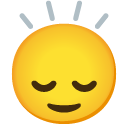
A yellow smiley face with a subtle smile, animated or contextually implied to be nodding its head up and down, indicating vertical head movement as a 'yes' nod or affirmative gesture.
02What does 🙂↕️ mean on TikTok?
Represents quiet, ironic agreement or a 'yep, that checks out' reaction to relatable or chaotic content.
03What does 🙂↕️ mean on WhatsApp?
A casual 'yes' or 'agreed' that feels more animated than a plain thumbs up but less formal than typing it out.
04What does 🙂↕️ mean in Gen-Z slang?
Used to signal reluctant agreement, deadpan confirmation, or ironic 'sure, totally' energy. Often deployed when someone is agreeing but clearly not thrilled about it, or as a dry acknowledgment of something absurd.
05Is the 🙂↕️ emoji safe to use?
A universally benign affirmative gesture — used to signal agreement, confirmation, or acknowledgment without harmful implications.
06What does 🙂↕️ mean in texting?
The vertical nod is one of the oldest affirmative human gestures rooted in submissive bowing, but digitally it often conveys compliance without genuine enthusiasm — a psychologically ambivalent 'yes' that can mask reluctance or sarcasm.
07What is the shortcode for 🙂↕️?
The shortcode for Head Shaking Vertically is :head_shaking_vertically:
08What does 🙂↕️ mean in dating?
Sent as a slow, deliberate 'yes' to plans or flirty proposals — can feel playful and coy, like nodding along to something exciting without spelling it out.
Safety & usage
- Safe meaning
- A universally benign affirmative gesture — used to signal agreement, confirmation, or acknowledgment without harmful implications.
- Caution
- In rare passive-aggressive contexts, it can be used as a condescending 'sure, whatever you say' to dismiss someone's point without engaging — low-level toxic potential.
Context-dependent irony may cause miscommunication — what reads as enthusiastic agreement to one person may register as dismissive sarcasm to another, particularly across generational or cultural lines.
How it looks across platforms
Appearance varies by platform and device. Google Noto, Twemoji, and OpenMoji are open-source.