🏇🏿
The Emoji
Horse Racing: Dark Skin Tone
U+1F3C7 U+1F3FF · :horse_racing_dark_skin_tone:
Trend 28
Meaning layers
- interpretation
- Used to flex speed, hustle, or being in a competitive race — metaphorically racing through life, deadlines, or drama. Also used ironically to describe chaotic situations or 'riding out' tough moments.
- tiktok usage
- Appears in videos about winning, competitive energy, speed running tasks, or betting culture. Sometimes used in POV content about pressure and performance.
- irony level
- 4 / 10
Platform meanings
- meaning
- Speed, hustle, competitive energy, or racing through challenges. Also used in betting and horse racing content.
- trend usage
- Appears in 'grinding season' montages, bet-winning celebration videos, Derby content, and 'POV: you're racing against time' formats.
- hashtags
- #HorseRacing#DerbyDay#RaceSeason#HustleHard#WinningMindset
- virality score
- 34 / 100
Cultural meanings
🇺🇸
Western / Gen-Z
Mostly used literally for horse racing events like the Kentucky Derby or as a hustle/speed metaphor. The dark skin tone modifier is appreciated as representation in equestrian sports, which is historically less diverse.
🇵🇰
Pakistan & India
Horse racing has cultural roots in India through colonial-era racecourses; this emoji may reference betting culture in Mumbai or Lahore, or the growing equestrian sports scene. Skin tone modifier adds cultural relatability.
🌍
Middle East
Horse racing is deeply prestigious in Gulf countries and the broader Arab world; this emoji carries strong cultural relevance tied to tradition, wealth, and national pride in equestrian heritage.
🌐
Global Neutral
Universally interpreted as a representation of horse racing as a competitive sport, with the dark skin tone modifier signaling inclusive representation of athletes in equestrian disciplines.
🇧🇩
Bangladesh
Horse racing is not a major cultural sport, so this emoji is rarely used; when it appears, it likely relates to international sports betting or general speed metaphors.
🇱🇰
Sri Lanka
Limited cultural connection to horse racing as a mainstream activity; the emoji may appear in international sports discussions or betting contexts among urban communities.
🇨🇳
China
Horse racing is popular in Hong Kong and has growing interest on the mainland; this emoji is used during racing events and in betting communities, with the skin tone less culturally emphasized.
🇯🇵
Japan
Japan has a major horse racing culture (JRA is one of the world's largest racing bodies); this emoji is well understood and used frequently during race seasons and in betting discussions.
🇰🇷
South Korea
Horse racing (Gyeongma) is a licensed gambling activity in Korea; the emoji is recognized and used in sports betting and racing fan communities.
🇹🇼
Taiwan
Horse racing is less prominent culturally but understood through international sports media; used occasionally in betting or competitive sports discussions.
🇭🇰
Hong Kong
Horse racing is one of Hong Kong's most iconic cultural activities via HKJC; this emoji carries strong local significance and is widely used during race days at Happy Valley and Sha Tin.
🇵🇭
Philippines
Horse racing exists in the Philippines but is niche; the emoji may appear in sports betting communities or among equestrian enthusiasts in Metro Manila.
🇮🇩
Indonesia
Horse racing has regional cultural presence (traditional races in Sumbawa); the emoji is used in both traditional cultural contexts and modern sports betting discussions.
🇹🇭
Thailand
Horse racing exists but is limited in Thailand; the emoji is mostly understood through international sports context and occasionally used in betting communities.
🇻🇳
Vietnam
Horse racing is not a major cultural sport; this emoji appears mostly in international sports contexts or among Vietnamese communities engaged in online sports betting.
🇲🇾
Malaysia
Horse racing has a presence through venues like Selangor Turf Club; used in betting and sports circles, especially among racing fans and gamblers.
🇸🇦
Saudi Arabia
Horse racing and equestrianism are deeply rooted in Saudi Arabian culture and royal heritage; this emoji carries prestige and is used proudly in contexts relating to Arabian horse culture.
🇦🇪
UAE
The UAE is a global hub for horse racing with events like the Dubai World Cup; this emoji is highly relevant and used widely in sports, luxury, and national pride contexts.
🇪🇬
Egypt
Equestrian sports have historical and cultural significance in Egypt; the emoji is used in sports communities and carries some cultural resonance tied to Arab horse-riding traditions.
🇹🇷
Turkey
Horse racing has a following in Turkey with several racetracks; used in sports betting circles and by equestrian enthusiasts, particularly around major Turkish racing events.
🇮🇷
Iran
Equestrian sports are practiced in Iran with historical roots; horse racing exists but is regulated — the emoji is used within sports communities and cultural discussions about traditional horsemanship.
🇳🇬
Nigeria
Polo and equestrian sports have cultural presence in northern Nigeria; horse racing is less mainstream but this emoji may be used in competitive sports discussions or by betting communities.
🇿🇦
South Africa
Horse racing is a well-established sport in South Africa with events like the Durban July; this emoji resonates strongly with local racing fans and the skin tone modifier carries particular cultural significance.
🇬🇧
UK & Ireland
Horse racing is a beloved national sport in both the UK and Ireland — with events like Cheltenham, Royal Ascot, and the Grand National; this emoji is widely used and culturally significant.
🇫🇷
France
France has a rich horse racing tradition (Prix de l'Arc de Triomphe); the emoji is used by racing enthusiasts and in high-fashion Derby Day contexts among the French social scene.
🇩🇪
Germany
Horse racing exists in Germany but is less dominant culturally; used in sports betting and equestrian communities, particularly around the Hamburg Derby.
🇪🇸
Spain & Italy
Both countries have equestrian traditions; the emoji is used in racing fan communities, with Italy's Palio di Siena giving horse racing a strong cultural tie that resonates with this emoji.
🇧🇷
Brazil
Horse racing has a following in Brazil, particularly in São Paulo; the emoji is used in betting communities and by equestrian sports fans, with the skin tone modifier resonating in Brazil's diverse context.
🇲🇽
Mexico
Charreada (Mexican rodeo) and equestrian culture are deeply rooted; horse racing is also popular — this emoji is used in both traditional cultural pride contexts and modern sports discussions.
🌎
Latin America
Horse racing and equestrian culture have strong regional traditions across Latin America; this emoji is used in racing fan communities and carries cultural pride in horsemanship heritage.
🇦🇺
Australia & NZ
Horse racing is a major cultural institution in Australia (Melbourne Cup) and New Zealand; this emoji is widely recognized and heavily used during racing season with strong cultural enthusiasm.
How its meaning shifted
- 2010
Emoji skin tone modifiers did not yet exist; the base horse racing emoji was used generically for horse racing and speed references without any identity representation.
- 2015
Skin tone modifiers were introduced in Unicode 8.0; the dark skin tone variant became available as part of diversity initiatives, though adoption was slow and primarily in sports contexts.
- 2020
Increased use following global conversations about racial representation and diversity in sports; the dark skin tone modifier gained cultural significance as users became more intentional about inclusive emoji selection.
- 2026
Commonly used in horse racing content, betting culture, and competitive hustle metaphors; the skin tone modifier is naturally integrated into personal expression and representation in equestrian and sports contexts.
See it on every platform
Adjacent emojis
- Often confused with
- horse racinghorse facejockey
Share & embed
Frequently asked
01What does the 🏇🏿 Horse Racing: Dark Skin Tone emoji mean?
A jockey riding a horse in a racing context, with a dark skin tone modifier applied to the human figure, representing horse racing as a sport or activity.
02What does 🏇🏿 mean on TikTok?
Speed, hustle, competitive energy, or racing through challenges. Also used in betting and horse racing content.
03What does 🏇🏿 mean on WhatsApp?
Telling someone you're moving fast or are in a rush. Can also refer to actual horse racing or gambling on races.
04What does 🏇🏿 mean in Gen-Z slang?
Used to flex speed, hustle, or being in a competitive race — metaphorically racing through life, deadlines, or drama. Also used ironically to describe chaotic situations or 'riding out' tough moments.
05Is the 🏇🏿 emoji safe to use?
Represents horse racing as a sport and equestrian competition; used in sports, betting, and competitive contexts with inclusive skin tone representation.
06What does 🏇🏿 mean in texting?
Evokes the thrill of competition and the high-stakes psychology of racing — speed, risk, and the desire to win. Can also carry pride in athletic identity and representation.
07What is the shortcode for 🏇🏿?
The shortcode for Horse Racing: Dark Skin Tone is :horse_racing_dark_skin_tone:
08What does 🏇🏿 mean in dating?
Rarely used in flirting; occasionally used to say someone is 'a ride' in slang, or to imply someone moves fast in a relationship.
Safety & usage
- Safe meaning
- Represents horse racing as a sport and equestrian competition; used in sports, betting, and competitive contexts with inclusive skin tone representation.
- Caution
- Extremely rare misuse; in very niche contexts it could be used dismissively or in racially insensitive combinations, but this is highly uncommon.
The emoji itself is safe and positive. As with any skin-tone emoji, context matters — use respectfully and avoid using it to mock or stereotype. Gambling associations (horse racing betting) should be mindful of audience.
How it looks across platforms
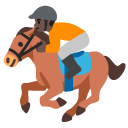


Appearance varies by platform and device. Google Noto, Twemoji, and OpenMoji are open-source.