🎎
The Emoji
Japanese Dolls
U+1F38E · :japanese_dolls:
Trend 18
Meaning layers
- interpretation
- Used to express aesthetic appreciation for Japanese culture, cottagecore-adjacent traditional vibes, or a sense of being 'two peas in a pod' with someone. Sometimes used ironically to describe feeling like a decorative object or being put on display.
- tiktok usage
- Appears in Japanese aesthetic videos, traditional culture appreciation content, and occasionally in 'we're just for show' ironic relationship commentary.
- irony level
- 4 / 10
Platform meanings
- meaning
- Signals Japanese aesthetic content, Hinamatsuri references, or traditional culture dives. Also used in 'we're just decorative' self-deprecating humor.
- trend usage
- Paired with Japan travel vlogs, sakura season content, anime cultural explainers, and cottagecore-Japanese hybrid aesthetics.
- hashtags
- #hinamatsuri#japaneseaesthetic#traditionaljapan#dollfestival#japanesedolls
- virality score
- 28 / 100
Cultural meanings
🇺🇸
Western / Gen-Z
Often used as an aesthetic marker for Japan-core or traditional East Asian vibes; appreciated more for visual/cultural cachet than literal meaning.
🇵🇰
Pakistan & India
Recognized as a Japanese cultural symbol; occasionally used in discussions about South vs East Asian cultural differences or international festival comparisons.
🌍
Middle East
Seen as an exotic cultural artifact emoji representing Japan; used in travel content or cultural curiosity posts.
🌐
Global Neutral
Universally understood as a Japanese traditional symbol; used in Japan-related content across languages and regions.
🇧🇩
Bangladesh
Used primarily in Japan-interest communities and among students or workers with Japanese cultural exposure; little everyday usage.
🇱🇰
Sri Lanka
Appears in Japan travel and cultural content; associated with Japanese tourism and anime culture interest among youth.
🇨🇳
China
Recognized but carries complex cultural nuance — some users distinguish it from Chinese traditions, others use it broadly for East Asian aesthetics.
🇯🇵
Japan
Carries deep cultural resonance; strongly associated with Hinamatsuri (March 3rd Girls' Day) and is used with genuine seasonal and familial significance.
🇰🇷
South Korea
Recognized as specifically Japanese; used in Japan-travel content and cultural discussions, sometimes in contrast to Korean traditional aesthetics.
🇹🇼
Taiwan
Appreciated as a shared East Asian cultural aesthetic; used in Japan-culture content and Hinamatsuri awareness posts.
🇭🇰
Hong Kong
Used in Japan-travel and culture content; appreciated aesthetically and associated with Japanese festival culture.
🇵🇭
Philippines
Popular among Japan-enthusiast communities and OFWs in Japan; used in cultural appreciation and Japan-travel content.
🇮🇩
Indonesia
Used among Japanese culture fans and anime communities; signals traditional Japan aesthetic in content.
🇹🇭
Thailand
Common in Japanese culture appreciation posts; Thai audiences with strong Japan-culture affinity use it in travel and lifestyle content.
🇻🇳
Vietnam
Used in Japanese cultural content and among the significant Vietnam-Japan cultural exchange community.
🇲🇾
Malaysia
Appears in Japan-travel posts and among anime/Japanese culture enthusiasts; one of the more Japan-culturally engaged SEA audiences.
🇸🇦
Saudi Arabia
Used in travel and cultural content about Japan; Japanese culture has a notable following among Saudi youth.
🇦🇪
UAE
Used in cosmopolitan Japan-travel and cultural content; UAE's multicultural environment makes Japanese cultural emojis relatably exotic.
🇪🇬
Egypt
Found in Japan-interest and anime fan communities; signals appreciation for Japanese cultural traditions.
🇹🇷
Turkey
Used by Japanese culture fans and anime communities; Turkey has a growing Japan-culture interest base.
🇮🇷
Iran
Used within Japanese culture and anime fan circles; Japanese aesthetics are popular among Iranian youth.
🇳🇬
Nigeria
Used in Japan-curiosity and anime communities; signals cultural exploration and appreciation for Japanese traditions.
🇿🇦
South Africa
Appears in Japan travel content and cultural curiosity posts; used by anime fans and Japan-travel enthusiasts.
🇬🇧
UK & Ireland
Used in Japan-travel content and cultural appreciation posts; often appears around Japan-related events or Cherry Blossom season social content.
🇫🇷
France
France has strong Japan cultural affinity (Japonisme legacy); used in traditional art appreciation, Japan travel, and cultural aesthetic posts.
🇩🇪
Germany
Used in Japan cultural content and collector communities; Germans with strong interest in Japanese craftsmanship use it authentically.
🇪🇸
Spain & Italy
Used in travel content and cultural appreciation posts about Japan; associated with traditional craftsmanship and aesthetic beauty.
🇧🇷
Brazil
Brazil has one of the largest Japanese diaspora populations; this emoji carries genuine cultural resonance in Japanese-Brazilian communities and Hinamatsuri events.
🇲🇽
Mexico
Used in Japan-culture appreciation content; Mexican anime fans and Japan-enthusiasts use it in cultural exploration contexts.
🌎
Latin America
Generally used as an exotic Japanese culture marker; Japan-culture communities across Latin America use it in cultural appreciation posts.
🇦🇺
Australia & NZ
Used in Japan-travel content and cultural appreciation; both countries have significant Japan tourism and cultural exchange ties.
How its meaning shifted
- 2010
Used almost exclusively in its literal sense by early emoji adopters, primarily to signal Japanese culture or Hinamatsuri on Japanese mobile platforms.
- 2015
Gained minor traction in Western markets as emoji culture expanded; used in Japan-travel posts and among anime communities discovering traditional culture.
- 2020
Adopted into aesthetic and Japan-core communities on Instagram and TikTok; began acquiring ironic 'staged couple' or 'decorative object' metaphorical usage.
- 2026
Niche but stable usage in Japanese cultural content, aesthetics communities, and ironic 'we're just for show' commentary; low general virality but high cultural specificity.
See it on every platform
Compare with
Emoji combinations
Adjacent emojis
- Opposite
- modern facerobotclown face
- Often confused with
- performing artsdragonred envelope
- Can replace
- cherry blossomkimonoshinto shrine
Share & embed
Frequently asked
01What does the 🎎 Japanese Dolls emoji mean?
Two Japanese traditional dolls (hina dolls) displayed together, representing a boy and girl doll dressed in imperial Heian-period court costumes.
02What does 🎎 mean on TikTok?
Signals Japanese aesthetic content, Hinamatsuri references, or traditional culture dives. Also used in 'we're just decorative' self-deprecating humor.
03What does 🎎 mean on WhatsApp?
Sent between friends to reference Japanese culture, celebrate Girls' Day, or describe a matching pair dynamic.
04What does 🎎 mean in Gen-Z slang?
Used to express aesthetic appreciation for Japanese culture, cottagecore-adjacent traditional vibes, or a sense of being 'two peas in a pod' with someone. Sometimes used ironically to describe feeling like a decorative object or being put on display.
05Is the 🎎 emoji safe to use?
A culturally respectful emoji representing Japanese traditional dolls and the Hinamatsuri festival; safe for all audiences in cultural and educational contexts.
06What does 🎎 mean in texting?
Evokes feelings of preserved tradition, childhood memory, and cultural identity. The paired doll imagery subtly conveys partnership and complementary relationships, triggering warmth and sentimentality.
07What is the shortcode for 🎎?
The shortcode for Japanese Dolls is :japanese_dolls:
08What does 🎎 mean in dating?
Rarely used flirtatiously, but can imply 'we look good together like these two dolls' in a cute, traditional-aesthetic romantic context.
Safety & usage
- Safe meaning
- A culturally respectful emoji representing Japanese traditional dolls and the Hinamatsuri festival; safe for all audiences in cultural and educational contexts.
- Caution
- Could theoretically be used in cultural appropriation debates or to mock traditional customs, but this is extremely rare.
Minimal risk emoji. In rare cases, could be misused in contexts mocking Japanese culture or in discussions around gender roles in traditional societies. Generally considered safe and culturally appreciative.
How it looks across platforms
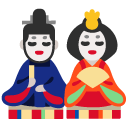


Appearance varies by platform and device. Google Noto, Twemoji, and OpenMoji are open-source.