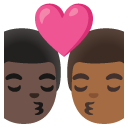
👨🏿❤️💋👨🏾
The Emoji
Kiss: Man, Man, Dark Skin Tone, Medium-dark Skin Tone
U+1F468 U+1F3FF U+200D U+2764 U+FE0F U+200D U+1F48B U+200D U+1F468 U+1F3FE · :kiss_man_man_dark_skin_tone_mediumdark_skin_tone:
Trend 58
Meaning layers
- interpretation
- A celebration of queer love, interracial same-sex relationships, and Black/Brown LGBTQ+ visibility. Used authentically by queer men of color and allies to show support and representation.
- tiktok usage
- Appears in coming-out videos, LGBTQ+ pride content, relationship reveal TikToks, and Black/Brown queer creator spaces as a symbol of unapologetic queer love.
- irony level
- 1 / 10
Platform meanings
- meaning
- Symbol of Black and Brown queer love and visibility; appears in LGBTQ+ content, coming-out stories, and couple content by queer men of color.
- trend usage
- Used heavily during Pride Month, in #BlackLGBTQ and #QueerPOC spaces, and in duets or stitches reacting to LGBTQ+ representation milestones.
- hashtags
- #BlackLGBTQ#QueerPOC#PrideMonth#RepresentationMatters#LoveIsLove
- virality score
- 62 / 100
Cultural meanings
🇺🇸
Western / Gen-Z
Enthusiastically embraced as a symbol of intersectional LGBTQ+ pride and racial diversity in queer love; used freely and positively across social platforms by Gen Z in Western contexts.
🇵🇰
Pakistan & India
Extremely sensitive and rarely used openly due to strong social stigma around homosexuality; may be used privately by closeted queer individuals or urban LGBTQ+ activists advocating for rights.
🌍
Middle East
Largely taboo and avoided in most Middle Eastern digital spaces due to criminalization or heavy social stigma around same-sex relationships; used covertly by underground LGBTQ+ communities.
🌐
Global Neutral
Recognized as a same-sex couple emoji with darker skin tones; interpretation varies widely by region but universally understood as representing queer male romance.
🇧🇩
Bangladesh
Very rarely used openly due to conservative social norms and legal restrictions; primarily circulates in small, private LGBTQ+ digital spaces among activists.
🇱🇰
Sri Lanka
Sensitive in public digital spaces; occasionally used by younger urban LGBTQ+ individuals in private messaging, but largely avoided in public posts due to social pressure.
🇨🇳
China
Censored or avoided on major platforms due to government restrictions on LGBTQ+ content; may appear in private chats among queer individuals or on VPN-accessed international platforms.
🇯🇵
Japan
More accepted in urban and online contexts given Japan's relatively higher visibility of BL (Boys' Love) culture; used by LGBTQ+ individuals and allies, though public same-sex affection remains uncommon.
🇰🇷
South Korea
Used in progressive LGBTQ+ communities online, particularly in Seoul-based digital spaces, but faces backlash in more conservative or religious digital communities.
🇹🇼
Taiwan
Widely accepted and positively used given Taiwan's status as the first Asian country to legalize same-sex marriage; celebrated as a symbol of love and equality.
🇭🇰
Hong Kong
Used in LGBTQ+ circles and by allies; the active LGBTQ+ community in Hong Kong uses it in Pride and advocacy contexts, though political climate adds complexity.
🇵🇭
Philippines
Used in LGBTQ+ spaces with relative openness given the Philippines' culturally visible queer community, though religious conservatism tempers wide public use.
🇮🇩
Indonesia
Rarely used publicly due to strong religious and social opposition to LGBTQ+ identities; circulates in small private online communities of Indonesian queer individuals.
🇹🇭
Thailand
Used with moderate openness in Thailand's visible LGBTQ+ community; the country's cultural acceptance of diverse gender identities makes this emoji more visible than in neighboring nations.
🇻🇳
Vietnam
Occasionally used in younger, urban Vietnamese LGBTQ+ communities online, though public displays of same-sex affection remain uncommon and the emoji is largely confined to private spaces.
🇲🇾
Malaysia
Highly sensitive due to legal restrictions on homosexuality; used covertly by LGBTQ+ individuals in private digital spaces, rarely appearing on public social media.
🇸🇦
Saudi Arabia
Essentially forbidden in public digital spaces due to strict laws against homosexuality; its appearance could carry serious social and legal consequences.
🇦🇪
UAE
Avoided in public digital content due to legal prohibition of homosexuality; used extremely discreetly if at all within private LGBTQ+ networks.
🇪🇬
Egypt
Very rarely used publicly due to strong social and legal stigma; confined to private or encrypted communications among Egypt's underground LGBTQ+ community.
🇹🇷
Turkey
Used in LGBTQ+ circles in urban centers like Istanbul, but faces increasing hostility as Pride events have been banned; more common in private chats than public posts.
🇮🇷
Iran
Essentially absent from public digital use due to severe criminalization of homosexuality; used only in the most covert private communications by Iranian LGBTQ+ individuals.
🇳🇬
Nigeria
Rarely used openly due to strong legal and cultural prohibitions on same-sex relationships; small activist communities may use it in private spaces or diaspora networks.
🇿🇦
South Africa
More openly used than most African nations given South Africa's constitutional protection of LGBTQ+ rights; used in Cape Town and Johannesburg LGBTQ+ spaces and Pride events.
🇬🇧
UK & Ireland
Positively and widely used in LGBTQ+ communities and by allies; both the UK and Ireland have strong traditions of LGBTQ+ rights and the emoji is embraced in Pride and advocacy contexts.
🇫🇷
France
Used in LGBTQ+ circles with general acceptance; France's secular tradition of equality supports its positive use, though it remains niche outside of explicitly queer or ally spaces.
🇩🇪
Germany
Accepted and used in Germany's progressive LGBTQ+ community; Berlin's prominent queer culture makes this emoji particularly at home in German digital spaces.
🇪🇸
Spain & Italy
Used openly in Spain's LGBTQ+-positive culture, especially in Madrid and Barcelona; Italy has a more mixed response with northern urban areas more accepting than southern regions.
🇧🇷
Brazil
Widely used in Brazil's large and vibrant LGBTQ+ community, especially given São Paulo's massive Pride parade; represents the intersection of Black Brazilian and queer identities.
🇲🇽
Mexico
Used in urban LGBTQ+ communities in Mexico City and Guadalajara; the growing visibility of queer rights movements has made this emoji more common in activist and ally spaces.
🌎
Latin America
Usage varies across Latin America; more open in Argentina, Chile, and Colombia with progressive LGBTQ+ laws, while more cautious in Central American and Caribbean nations with conservative climates.
🇦🇺
Australia & NZ
Positively used in Australia and New Zealand's inclusive LGBTQ+ communities; both nations' legalization of same-sex marriage and strong diversity culture make this emoji widely accepted.
How its meaning shifted
- 2010
This specific emoji did not exist in 2010; same-sex couple representation was entirely absent from the emoji keyboard, making any queer digital expression rely on generic heart emojis or text.
- 2015
Basic same-sex couple emojis were introduced around this period but without skin tone diversity; the concept of skin tone modifiers was just emerging, so intersectional representation like this was unavailable.
- 2020
Skin-tone-diverse same-sex couple emojis became available, including kiss variants; usage grew significantly as LGBTQ+ visibility on social media exploded and Black Lives Matter intersected with queer rights movements.
- 2026
Widely recognized symbol of Black and Brown queer love; actively used in mainstream Pride content, LGBTQ+ advocacy, and interracial queer couple representation across all major platforms.
See it on every platform
Adjacent emojis
- Often confused with
- kiss markkissing facesmiling face with hearts
- Can replace
- rainbow flagtwo heartsred heart
Share & embed
Frequently asked
01What does the 👨🏿❤️💋👨🏾 Kiss: Man, Man, Dark Skin Tone, Medium-dark Skin Tone emoji mean?
A kiss emoji depicting two men with dark skin tone and medium-dark skin tone, joined by a red heart and kiss mark. Represents a romantic kiss between two men of these specific skin tones.
02What does 👨🏿❤️💋👨🏾 mean on TikTok?
Symbol of Black and Brown queer love and visibility; appears in LGBTQ+ content, coming-out stories, and couple content by queer men of color.
03What does 👨🏿❤️💋👨🏾 mean on WhatsApp?
Sent between gay male partners of color to express affection, kisses, or romantic feelings in private chats.
04What does 👨🏿❤️💋👨🏾 mean in Gen-Z slang?
A celebration of queer love, interracial same-sex relationships, and Black/Brown LGBTQ+ visibility. Used authentically by queer men of color and allies to show support and representation.
05Is the 👨🏿❤️💋👨🏾 emoji safe to use?
A sincere, positive representation of romantic love and affection between two men of color; used to celebrate LGBTQ+ identity, visibility, and relationships.
06What does 👨🏿❤️💋👨🏾 mean in texting?
This emoji carries deep psychological weight for Black and Brown queer men who have historically been underrepresented in mainstream media. Seeing oneself reflected in digital iconography reinforces identity affirmation and belonging.
07What is the shortcode for 👨🏿❤️💋👨🏾?
The shortcode for Kiss: Man, Man, Dark Skin Tone, Medium-dark Skin Tone is :kiss_man_man_dark_skin_tone_mediumdark_skin_tone:
08What does 👨🏿❤️💋👨🏾 mean in dating?
Used on dating apps like Grindr, Scruff, or Hinge by queer men of color to signal romantic interest, openness, and shared identity in their bios or messages.
Safety & usage
- Safe meaning
- A sincere, positive representation of romantic love and affection between two men of color; used to celebrate LGBTQ+ identity, visibility, and relationships.
- Caution
- May be weaponized by trolls in harassment campaigns targeting LGBTQ+ individuals or used to provoke outrage in homophobic or racist online communities.
While the emoji itself is safe and positive, sharing it in certain cultural or legal contexts (e.g., countries where homosexuality is criminalized) can expose users to real-world risk. Platforms should be mindful of regional content policies when moderating LGBTQ+ emoji use.
How it looks across platforms
Appearance varies by platform and device. Google Noto, Twemoji, and OpenMoji are open-source.