👨🏻❤️💋👨🏻
The Emoji
Kiss: Man, Man, Light Skin Tone
U+1F468 U+1F3FB U+200D U+2764 U+FE0F U+200D U+1F48B U+200D U+1F468 U+1F3FB · :kiss_man_man_light_skin_tone:
Trend 68
Meaning layers
- interpretation
- Used by Gen Z to celebrate gay male relationships, express queer pride, or show affection between male friends in a non-ironically romantic context. Also used as an ally signifier or to celebrate LGBTQ+ couples.
- tiktok usage
- Appears in couple reveal videos, Pride Month content, gay relationship POVs, and 'ship' commentary on male celebrity duos. Commonly drops in comment sections to cheer on LGBTQ+ couples.
- irony level
- 2 / 10
Platform meanings
- meaning
- Signals gay male relationships, LGBTQ+ Pride content, or ship commentary on male duos in pop culture
- trend usage
- Appears in #GayCouple TikToks, Pride Month compilations, 'gay relationship check' trends, and comment flooding under celebrity bromance videos
- hashtags
- #GayCouple#PrideMonth#LGBTQTikTok#GayLove#QueerTikTok
- virality score
- 72 / 100
Cultural meanings
🇺🇸
Western / Gen-Z
Widely used and celebrated as a positive symbol of gay male love and LGBTQ+ visibility; Gen Z treats it as completely normalized and uses it freely in all contexts.
🇵🇰
Pakistan & India
Rarely used openly due to social stigma around homosexuality; within underground LGBTQ+ communities and urban queer spaces, it appears as a coded signal of identity and solidarity.
🌍
Middle East
Largely avoided in public digital communication due to legal and social restrictions on homosexuality; may be used privately within discreet LGBTQ+ networks as a symbol of resistance or private affection.
🌐
Global Neutral
Recognized globally as a representation of a gay male couple kissing; interpretation ranges from celebratory to controversial depending on cultural and religious context.
🇧🇩
Bangladesh
Rarely seen in mainstream digital use; homosexuality is criminalized and socially stigmatized, making this emoji almost exclusively a private or activist symbol within very small circles.
🇱🇰
Sri Lanka
Infrequently used publicly; while not as overtly penalized as in some neighboring countries, strong cultural conservatism means this emoji is largely confined to private LGBTQ+ spaces.
🇨🇳
China
Usage is suppressed on major domestic platforms like WeChat and Weibo due to censorship of LGBTQ+ content; may appear on international platforms or in private chats among queer Chinese youth.
🇯🇵
Japan
Used within Japan's relatively tolerant but nuanced LGBTQ+ culture; more commonly seen in fandom (BL/yaoi) contexts and Pride communities in major cities like Tokyo and Osaka.
🇰🇷
South Korea
Gaining visibility through K-pop fandom shipping culture and emerging queer youth communities, though mainstream social acceptance remains mixed and legal recognition of same-sex couples is limited.
🇹🇼
Taiwan
Widely used and celebrated, particularly since Taiwan became the first Asian country to legalize same-sex marriage in 2019; a proud symbol used openly in Taiwanese digital culture.
🇭🇰
Hong Kong
Used within the active LGBTQ+ community in Hong Kong; Pride events have historically been large, though political tensions have complicated public expression in recent years.
🇵🇭
Philippines
Used in the Philippines' large and vibrant LGBTQ+ community and pop culture; Filipinos are generally expressive about gay relationships online, though family and religious conservatism create complex dynamics.
🇮🇩
Indonesia
Rarely used publicly due to strong religious and cultural opposition to homosexuality; within private or international-facing LGBTQ+ networks, it signals community membership and identity.
🇹🇭
Thailand
Used fairly openly in Thailand's famously LGBTQ+-friendly culture, especially in Bangkok's gay-friendly spaces; seen in travel content, entertainment, and social media by Thai queer communities.
🇻🇳
Vietnam
Increasing visibility among urban Vietnamese youth influenced by K-pop and Western media; public same-sex relationships are not legally recognized but tolerance is growing in metropolitan areas.
🇲🇾
Malaysia
Rarely used openly due to both civil and religious laws penalizing homosexuality; appears in private or diaspora contexts among Malaysian LGBTQ+ individuals as a discreet identifier.
🇸🇦
Saudi Arabia
Essentially absent from public digital communication; homosexuality is illegal and heavily stigmatized, making this emoji a symbol that could carry serious real-world consequences if displayed.
🇦🇪
UAE
Similarly suppressed as in Saudi Arabia; used only in the most private and secure digital communications within the small underground LGBTQ+ community or by expats.
🇪🇬
Egypt
Rarely used publicly; while not explicitly illegal, LGBTQ+ individuals face significant social and legal persecution, making this emoji largely confined to private or anonymous online spaces.
🇹🇷
Turkey
Usage has declined with increased crackdowns on Pride events and LGBTQ+ expression; still used by queer Turkish youth on international platforms and in private chats as a symbol of defiance.
🇮🇷
Iran
Virtually absent from public digital use due to severe legal consequences for homosexuality; used only in diaspora communities or encrypted private chats as a symbol of identity and resistance.
🇳🇬
Nigeria
Extremely rare in public use due to criminalization of same-sex relationships and intense social stigma; only appears in very private or international LGBTQ+ activist contexts.
🇿🇦
South Africa
Used openly in South Africa's constitutionally protected LGBTQ+ community, one of Africa's most progressive; commonly seen in Cape Town's vibrant Pride culture and queer advocacy spaces.
🇬🇧
UK & Ireland
Widely used and normalized across the UK and Ireland; a standard part of LGBTQ+ digital expression, couple posts, and Pride celebration content without controversy.
🇫🇷
France
Used freely in France's secular and generally LGBTQ+-accepting culture; seen in couple posts, Marais district content (Paris's gay village), and LGBTQ+ rights advocacy.
🇩🇪
Germany
Common in Germany's progressive LGBTQ+ culture, particularly during Christopher Street Day (CSD) Pride events; used in couple content, queer activism, and mainstream acceptance contexts.
🇪🇸
Spain & Italy
Widely used in Spain where same-sex marriage has been legal since 2005; in Italy, usage is growing with emerging LGBTQ+ rights movements, though cultural conservatism persists in rural areas.
🇧🇷
Brazil
Frequently used in Brazil, which has one of the world's largest Pride parades and a vibrant queer culture; appears in gay couple content, carnival posts, and LGBTQ+ advocacy despite political tensions.
🇲🇽
Mexico
Used in Mexico's growing LGBTQ+ community, especially in Mexico City which has had same-sex marriage since 2009; visible in urban queer spaces though conservatism persists in rural areas.
🌎
Latin America
Varies significantly by country — used openly in Argentina and Chile which have progressive LGBTQ+ laws, and more cautiously in countries with stronger religious or political conservatism.
🇦🇺
Australia & NZ
Widely used and celebrated in both Australia and New Zealand, where same-sex marriage is legal and LGBTQ+ visibility is high; a normal part of queer digital expression and couple content.
How its meaning shifted
- 2010
This specific emoji sequence did not exist in 2010; same-sex couple representation in emoji was nonexistent, and LGBTQ+ digital expression relied on text combinations like '<3' or rainbow flags.
- 2015
Same-sex couple emojis began appearing in Unicode 6.0+ era discussions and early proposals; the kiss couple variant was not yet widely supported but growing LGBTQ+ emoji advocacy was gaining momentum.
- 2020
Increasingly used on major platforms following broader Unicode and platform support; appeared prominently during Black Lives Matter and Pride intersectional moments, and gained traction in Gen Z digital culture.
- 2026
Normalized as a standard part of digital communication in LGBTQ+ communities and progressive spaces globally; skin tone variants are used with intention to represent specific couples, and the emoji appears regularly in mainstream media, advertising, and public discourse.
See it on every platform
Compare with
Adjacent emojis
- Often confused with
- people hugginghandshakekiss mark
Share & embed
Frequently asked
01What does the 👨🏻❤️💋👨🏻 Kiss: Man, Man, Light Skin Tone emoji mean?
A kiss between two men with light skin tone, represented by the combination of two male face emojis, a red heart, and a kiss mark. This is a ZWJ sequence combining 👨🏻 + ❤️ + 💋 + 👨🏻.
02What does 👨🏻❤️💋👨🏻 mean on TikTok?
Signals gay male relationships, LGBTQ+ Pride content, or ship commentary on male duos in pop culture
03What does 👨🏻❤️💋👨🏻 mean on WhatsApp?
Used between gay male partners or close LGBTQ+ friend groups to express love and affection in personal chats
04What does 👨🏻❤️💋👨🏻 mean in Gen-Z slang?
Used by Gen Z to celebrate gay male relationships, express queer pride, or show affection between male friends in a non-ironically romantic context. Also used as an ally signifier or to celebrate LGBTQ+ couples.
05Is the 👨🏻❤️💋👨🏻 emoji safe to use?
A loving kiss between two men; a symbol of gay male romance, LGBTQ+ pride, and same-sex relationship affection. Entirely positive and celebratory in intent.
06What does 👨🏻❤️💋👨🏻 mean in texting?
Carries deep emotional significance for LGBTQ+ individuals as a symbol of visibility and validation. For same-sex couples, using this emoji can feel affirming and empowering, representing a public declaration of love that was historically suppressed.
07What is the shortcode for 👨🏻❤️💋👨🏻?
The shortcode for Kiss: Man, Man, Light Skin Tone is :kiss_man_man_light_skin_tone:
08What does 👨🏻❤️💋👨🏻 mean in dating?
Used between gay or bisexual men to signal romantic interest or affection. Dropping this in a DM or comment signals clear romantic intent and openness about one's sexuality.
Safety & usage
- Safe meaning
- A loving kiss between two men; a symbol of gay male romance, LGBTQ+ pride, and same-sex relationship affection. Entirely positive and celebratory in intent.
- Caution
- Can be weaponized by bad actors to harass straight men by implying homosexuality as an insult, or used to troll conservative figures. In some regions, sending this to someone could be used to out them without consent.
In countries where homosexuality is criminalized or severely stigmatized, displaying or sending this emoji in public or semi-public digital spaces could expose individuals to discrimination, harassment, or legal risk. Use with awareness of the recipient's cultural context.
How it looks across platforms
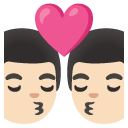
Appearance varies by platform and device. Google Noto, Twemoji, and OpenMoji are open-source.