👨🏽❤️💋👨🏾
The Emoji
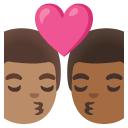
Kiss: Man, Man, Medium Skin Tone, Medium-dark Skin Tone
U+1F468 U+1F3FD U+200D U+2764 U+FE0F U+200D U+1F48B U+200D U+1F468 U+1F3FE · :kiss_man_man_medium_skin_tone_mediumdark_skin_tone:
Trend 68
Meaning layers
- interpretation
- Used to celebrate queer love, LGBTQ+ pride, and same-sex relationships; also used by allies to signal support for queer couples or to celebrate representation.
- tiktok usage
- Appears in LGBTQ+ love story videos, pride content, couple reveals, and ally support videos; often used in captions like 'we love to see it' or 'representation matters'.
- irony level
- 1 / 10
Platform meanings
- meaning
- Symbol of queer male love and LGBTQ+ representation; used in couple content, pride videos, and ally support posts.
- trend usage
- Frequently appears in 'gay couple' TikTok trends, pride month challenges, coming-out story videos, and LGBTQ+ community celebration content.
- hashtags
- #GayCouple#LGBTQlove#PrideMonth#QueerTikTok#RepresentationMatters
- virality score
- 72 / 100
Cultural meanings
🇺🇸
Western / Gen-Z
Widely embraced as a positive symbol of LGBTQ+ love and visibility; used freely by queer youth and allies alike, often paired with pride flag emojis in affirming digital spaces.
🇵🇰
Pakistan & India
Rarely used publicly due to social and legal stigma around homosexuality; may be used privately within LGBTQ+ communities or by diaspora members in affirming online spaces.
🌍
Middle East
Largely avoided in public digital communication due to legal prohibitions and strong social taboos around same-sex relationships in many countries across the region.
🌐
Global Neutral
Universally understood as representing a same-sex male romantic kiss; interpretation varies widely based on local cultural attitudes toward LGBTQ+ relationships.
🇧🇩
Bangladesh
Extremely rarely used publicly given strong social and legal prohibitions on same-sex relationships; may circulate in private or underground LGBTQ+ digital spaces.
🇱🇰
Sri Lanka
Used cautiously within private LGBTQ+ circles; public use remains uncommon due to conservative social norms and legal ambiguity around same-sex relationships.
🇨🇳
China
Used discreetly within Chinese LGBTQ+ communities online despite platform censorship; may be removed or flagged on domestic platforms like WeChat or Weibo.
🇯🇵
Japan
Used within Japan's LGBTQ+ community and among younger, progressive users; generally tolerated in urban digital spaces though traditional contexts may find it unusual.
🇰🇷
South Korea
Growing in use among younger LGBTQ+ South Koreans and allies, particularly on Twitter/X and Instagram; remains sensitive in mainstream contexts given conservative social attitudes.
🇹🇼
Taiwan
Widely accepted and positively received given Taiwan's status as the first Asian country to legalize same-sex marriage; used freely in LGBTQ+ and ally communities.
🇭🇰
Hong Kong
Used within Hong Kong's active LGBTQ+ community, particularly online; visibility has decreased somewhat amid broader social and political changes in recent years.
🇵🇭
Philippines
Used in the Philippines' large and vibrant LGBTQ+ community, particularly on Facebook and TikTok; generally well-received in digital spaces despite conservative Catholic social norms.
🇮🇩
Indonesia
Rarely used publicly given strong social conservatism and increasing legal pressure on LGBTQ+ expression; confined to private or encrypted communication among queer Indonesians.
🇹🇭
Thailand
Used in Thailand's relatively visible LGBTQ+ community; while Thai culture has some social tolerance for gender diversity, public same-sex romantic expression can still be context-dependent.
🇻🇳
Vietnam
Increasingly used by younger Vietnamese LGBTQ+ users on Instagram and TikTok as attitudes shift; official stance remains ambiguous but social acceptance is gradually growing.
🇲🇾
Malaysia
Very rarely used publicly due to legal prohibitions on homosexuality and strong Islamic social norms; confined to private LGBTQ+ digital spaces.
🇸🇦
Saudi Arabia
Avoided almost entirely in public digital communication due to strict legal and religious prohibitions on homosexuality; use could carry serious social or legal consequences.
🇦🇪
UAE
Not used in public-facing digital communication given legal and social prohibitions; may appear in expat or tourist communities with different cultural backgrounds.
🇪🇬
Egypt
Rarely used publicly due to social conservatism and legal risks associated with LGBTQ+ expression; may appear in private digital conversations among queer Egyptians.
🇹🇷
Turkey
Use is growing cautiously among young urban LGBTQ+ Turks and allies despite increasing social and political pressure on LGBTQ+ communities in recent years.
🇮🇷
Iran
Essentially unused in public digital communication given severe legal prohibitions; any LGBTQ+ digital expression carries significant personal risk.
🇳🇬
Nigeria
Very rarely used publicly given strong legal prohibitions and social stigma; may be used by diaspora Nigerians or in private LGBTQ+ digital spaces.
🇿🇦
South Africa
Used relatively openly given South Africa's constitutional protections for LGBTQ+ rights; the country has one of Africa's most visible LGBTQ+ communities online.
🇬🇧
UK & Ireland
Widely and positively used in LGBTQ+ communities and by allies; normalized in mainstream digital culture, especially among younger users and in major urban centers.
🇫🇷
France
Used freely in LGBTQ+ and ally contexts in France; generally accepted in mainstream digital culture, particularly among younger generations in urban areas.
🇩🇪
Germany
Commonly used by German LGBTQ+ communities and allies; well-accepted in mainstream digital culture with Germany having strong legal protections for same-sex couples.
🇪🇸
Spain & Italy
Widely used in Spain where LGBTQ+ rights are strong and acceptance is high; used more selectively in Italy where social conservatism varies significantly by region.
🇧🇷
Brazil
Widely used in Brazil's large and vibrant LGBTQ+ community; Brazil has one of the world's largest Pride events and a significant queer digital culture.
🇲🇽
Mexico
Used increasingly by Mexico's LGBTQ+ community and allies, particularly in major cities; attitudes vary significantly between urban progressive and rural conservative contexts.
🌎
Latin America
Usage varies widely across Latin America; more freely used in countries with stronger LGBTQ+ legal protections like Argentina and Uruguay, more cautiously elsewhere.
🇦🇺
Australia & NZ
Widely accepted and used in LGBTQ+ and ally communities; both Australia and New Zealand have legalized same-sex marriage and have active, visible LGBTQ+ digital cultures.
How its meaning shifted
- 2010
This specific emoji did not exist in 2010; same-sex couple representation in emoji was essentially nonexistent, and LGBTQ+ users had no standardized way to represent their relationships.
- 2015
Couple kiss emojis with same-sex options began appearing around this period following Unicode and Apple updates, though skin tone variation combinations were still limited; used primarily by early LGBTQ+ adopters.
- 2020
By 2020, this emoji was widely available across major platforms and commonly used in LGBTQ+ communities; Pride Month, marriage equality celebrations, and global LGBTQ+ movements drove increased adoption.
- 2026
A normalized part of LGBTQ+ digital expression; used daily by gay couples, queer communities, and allies across all major platforms; increasingly represented in brand and mainstream media communication.
See it on every platform
Adjacent emojis
- Often confused with
- two men holding handsmen wrestlinghandshake
- Can replace
- rainbow flagred heartkiss mark
Share & embed
Frequently asked
01What does the 👨🏽❤️💋👨🏾 Kiss: Man, Man, Medium Skin Tone, Medium-dark Skin Tone emoji mean?
A kiss emoji depicting two men with medium skin tone and medium-dark skin tone, shown with a heart and kissing lips, representing a same-sex male romantic couple.
02What does 👨🏽❤️💋👨🏾 mean on TikTok?
Symbol of queer male love and LGBTQ+ representation; used in couple content, pride videos, and ally support posts.
03What does 👨🏽❤️💋👨🏾 mean on WhatsApp?
Expresses romantic affection between same-sex male partners; used by couples to say 'I love you' or to send a virtual kiss.
04What does 👨🏽❤️💋👨🏾 mean in Gen-Z slang?
Used to celebrate queer love, LGBTQ+ pride, and same-sex relationships; also used by allies to signal support for queer couples or to celebrate representation.
05Is the 👨🏽❤️💋👨🏾 emoji safe to use?
A positive representation of same-sex male romantic affection; used to celebrate LGBTQ+ love, pride, and relationship milestones.
06What does 👨🏽❤️💋👨🏾 mean in texting?
This emoji carries deep emotional significance for LGBTQ+ individuals as it validates and visibilizes same-sex relationships in digital communication, fostering a sense of belonging and acceptance.
07What is the shortcode for 👨🏽❤️💋👨🏾?
The shortcode for Kiss: Man, Man, Medium Skin Tone, Medium-dark Skin Tone is :kiss_man_man_medium_skin_tone_mediumdark_skin_tone:
08What does 👨🏽❤️💋👨🏾 mean in dating?
Used between gay or queer men in dating contexts to signal romantic interest, express affection, or celebrate being in a relationship; also used to subtly come out or signal identity.
Safety & usage
- Safe meaning
- A positive representation of same-sex male romantic affection; used to celebrate LGBTQ+ love, pride, and relationship milestones.
- Caution
- Could be used in a mocking or harassing context by bad actors targeting LGBTQ+ individuals, though the emoji itself carries no inherently toxic meaning.
Context matters significantly across cultures; in regions with anti-LGBTQ+ laws or strong social stigma, use of this emoji can expose individuals to discrimination, harassment, or legal risk. Platforms should be aware of regional safety implications.
How it looks across platforms
Appearance varies by platform and device. Google Noto, Twemoji, and OpenMoji are open-source.