🧑🏿❤️💋🧑🏾
The Emoji
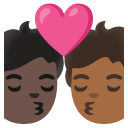
Kiss: Person, Person, Dark Skin Tone, Medium-dark Skin Tone
U+1F9D1 U+1F3FF U+200D U+2764 U+FE0F U+200D U+1F48B U+200D U+1F9D1 U+1F3FE · :kiss_person_person_dark_skin_tone_mediumdark_skin_tone:
Trend 58
Meaning layers
- interpretation
- Used to express deep affection, a romantic gesture, or to simp over a partner or crush. Often dropped in comments to show 'couple goals' energy or to hype up a relationship post.
- tiktok usage
- Appears in duet videos, 'ship' content, couple POVs, and Black romance TikToks to celebrate melanated love. Often paired with captions like 'this us fr'.
- irony level
- 1 / 10
Platform meanings
- meaning
- Represents Black couple energy, romantic affection, and melanated love in couple-focused content.
- trend usage
- Paired with trending sounds about love and relationships, used in 'Black love' duets, couple skits, and POV romance videos. Frequently appears in comment sections hyping dark-skinned couples.
- hashtags
- #BlackLove#MelaninCouple#CoupleGoals#DarkSkinLove#BlackRomance
- virality score
- 62 / 100
Cultural meanings
🇺🇸
Western / Gen-Z
Widely embraced as a symbol of Black love and melanated couple goals, frequently used by Gen Z to celebrate diverse romantic representation and push back against colorism in media.
🇵🇰
Pakistan & India
Relatively uncommon and may raise eyebrows in conservative contexts; in urban, progressive circles it might be used between couples privately, but public romantic emoji use is still culturally sensitive.
🌍
Middle East
Rarely used in public digital spaces due to conservative social norms around public displays of affection; might appear in strictly private messaging between couples.
🌐
Global Neutral
Universally understood as a romantic kissing couple emoji, with the skin tone detail adding a layer of specific cultural representation that resonates most in communities celebrating dark-skinned love.
🇧🇩
Bangladesh
Romantic emojis are typically reserved for private conversations; this specific skin tone combination holds little cultural significance locally but is understood as a kiss/love symbol.
🇱🇰
Sri Lanka
Used privately between couples in digital communication; the skin tone nuance is less culturally loaded here but the romantic meaning is clearly understood.
🇨🇳
China
Less commonly used as the skin tone system is not as culturally prominent in Chinese digital culture; the romantic gesture itself is understood but simpler heart emojis are preferred.
🇯🇵
Japan
Japan's emoji culture tends toward kawaii or simpler icons; this specific ZWJ sequence is rarely used, with couples preferring heart or face emojis over complex kiss sequences.
🇰🇷
South Korea
Couple culture is strong in South Korea, but this specific dark-skin-tone combination is uncommon; younger Koreans familiar with global diversity discourse may use it for representation.
🇹🇼
Taiwan
Similar to South Korea — the kiss emoji concept is understood but skin tone specificity is largely overlooked; simpler heart or couple emojis dominate romantic digital expression.
🇭🇰
Hong Kong
Understood as a romantic gesture; the skin tone nuance carries less cultural weight here, but young, globally connected users appreciate the diversity it represents.
🇵🇭
Philippines
Filipinos are active emoji users and appreciate romantic emojis; the dark skin tone combination may resonate with those celebrating Afro-Filipino or dark-skinned identity.
🇮🇩
Indonesia
Used privately for romantic expression; the skin tone aspect holds less cultural significance, but the kissing couple meaning is well understood across the digital-savvy population.
🇹🇭
Thailand
Romantic emojis are popular in Thai digital culture; this specific emoji is less common but understood as a loving couple gesture without strong skin-tone-specific cultural associations.
🇻🇳
Vietnam
Used in private couple chats as a romantic gesture; the skin tone specificity is not a major cultural focal point, but the loving meaning is clearly conveyed.
🇲🇾
Malaysia
In multicultural Malaysia, this emoji may carry additional layers of meaning around racial identity; used by couples and appreciated in communities celebrating dark-skinned Malay or Indian-Malaysian love.
🇸🇦
Saudi Arabia
Romantic emojis are used cautiously in public digital spaces; this emoji would be largely confined to private couple messaging due to conservative norms around public romantic expression.
🇦🇪
UAE
In the diverse expat community of the UAE, this emoji finds more use among African and South Asian communities celebrating melanated love; locally, romantic emojis are kept private.
🇪🇬
Egypt
Used privately between couples; in younger, more progressive Egyptian digital circles it may appear in romantic conversations, but skin tone representation discourse is less prominent.
🇹🇷
Turkey
Romantic emojis are popular in Turkish digital culture; this skin tone combination is less common but is understood and appreciated among globally connected, diversity-aware users.
🇮🇷
Iran
Romantic public emoji expression is limited due to social norms; in private chats this emoji carries its universal meaning of love and affection between couples.
🇳🇬
Nigeria
Highly resonant — Nigeria has a vibrant digital culture celebrating dark-skinned love, and this emoji is embraced to represent authentic Black Nigerian couples and counter colorism.
🇿🇦
South Africa
Deeply meaningful in the context of South Africa's racial history; used by Black South African couples and communities to celebrate melanated love and representation unapologetically.
🇬🇧
UK & Ireland
Used by Black British and Irish communities to celebrate dark-skinned romantic love; part of broader UK conversations about representation and diversity in digital spaces.
🇫🇷
France
Used in Afro-French communities to celebrate Black love; France's ongoing conversations about race and representation give this emoji added cultural weight among younger users.
🇩🇪
Germany
Used primarily within Afro-German and immigrant communities; appreciated by those engaged in diversity discourse, while mainstream German emoji culture tends toward simpler romantic icons.
🇪🇸
Spain & Italy
Less commonly used in mainstream digital culture; resonates more within African diaspora communities in Spain and Italy who celebrate melanated love and identity.
🇧🇷
Brazil
Brazil's rich Afro-Brazilian culture makes this emoji particularly meaningful — used to celebrate Black Brazilian love, combat colorism, and affirm dark-skinned beauty in relationships.
🇲🇽
Mexico
Used in Afro-Mexican communities and among those who identify with or celebrate dark-skinned love; gaining traction as conversations about Afro-Latino identity grow in Mexican digital culture.
🌎
Latin America
Resonates across the African diaspora in Latin America, celebrating Afro-Latino romantic love and challenging colorism that historically marginalized dark-skinned individuals in the region.
🇦🇺
Australia & NZ
Used by Aboriginal, Pacific Islander, and African diaspora communities in Australia and New Zealand to celebrate dark-skinned love and inclusive representation in digital spaces.
How its meaning shifted
- 2010
This specific emoji did not exist in 2010. Emoji skin tone modifiers and complex ZWJ sequences for couples were not yet part of the Unicode standard, and diverse couple representation was entirely absent.
- 2015
Unicode 8.0 introduced skin tone modifiers in 2015, but multi-person ZWJ sequences with mixed skin tones were not yet available. Basic couple emoji existed but without skin tone diversity.
- 2020
By 2020, diverse couple emoji sequences with skin tone combinations were more widely supported. This emoji began appearing in conversations about Black love, representation, and diversity, gaining traction on Instagram and TikTok.
- 2026
By 2026, this emoji is a well-established symbol of melanated love and Black couple representation. It's used confidently across platforms in Gen Z and millennial communities, celebrated in content centering diverse romantic identities and anti-colorism movements.
See it on every platform
Compare with
Adjacent emojis
Share & embed
Frequently asked
01What does the 🧑🏿❤️💋🧑🏾 Kiss: Person, Person, Dark Skin Tone, Medium-dark Skin Tone emoji mean?
A kiss emoji sequence depicting two people kissing, with the left person having dark skin tone and the right person having medium-dark skin tone. Formed by combining person, heart, and lips glyphs.
02What does 🧑🏿❤️💋🧑🏾 mean on TikTok?
Represents Black couple energy, romantic affection, and melanated love in couple-focused content.
03What does 🧑🏿❤️💋🧑🏾 mean on WhatsApp?
Sent between partners as a digital kiss, expressing deep romantic affection in private chats.
04What does 🧑🏿❤️💋🧑🏾 mean in Gen-Z slang?
Used to express deep affection, a romantic gesture, or to simp over a partner or crush. Often dropped in comments to show 'couple goals' energy or to hype up a relationship post.
05Is the 🧑🏿❤️💋🧑🏾 emoji safe to use?
A wholesome representation of romantic affection between two people, celebrating diverse and dark-skinned couples with a kissing gesture.
06What does 🧑🏿❤️💋🧑🏾 mean in texting?
Skin-tone-specific kiss emojis carry deeper psychological weight for users who rarely see themselves represented. Using this emoji can affirm identity, signal cultural pride, and deepen emotional resonance in digital communication.
07What is the shortcode for 🧑🏿❤️💋🧑🏾?
The shortcode for Kiss: Person, Person, Dark Skin Tone, Medium-dark Skin Tone is :kiss_person_person_dark_skin_tone_mediumdark_skin_tone:
08What does 🧑🏿❤️💋🧑🏾 mean in dating?
Sent to a romantic interest to signal deep feelings, desire for closeness, or to say 'I see us together.' More intimate than a simple heart emoji — it's a bold move.
Safety & usage
- Safe meaning
- A wholesome representation of romantic affection between two people, celebrating diverse and dark-skinned couples with a kissing gesture.
- Caution
- Could theoretically be weaponized in harassment contexts (e.g., tagging someone with their ex's skin tone pairing to provoke jealousy), but this is extremely rare.
No significant safety concerns. The emoji celebrates love and diversity. In very conservative cultural contexts, any romantic emoji may be considered inappropriate for public use.
How it looks across platforms
Appearance varies by platform and device. Google Noto, Twemoji, and OpenMoji are open-source.