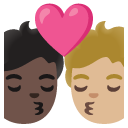
🧑🏿❤️💋🧑🏼
The Emoji
Kiss: Person, Person, Dark Skin Tone, Medium-light Skin Tone
U+1F9D1 U+1F3FF U+200D U+2764 U+FE0F U+200D U+1F48B U+200D U+1F9D1 U+1F3FC · :kiss_person_person_dark_skin_tone_mediumlight_skin_tone:
Trend 55
Meaning layers
- interpretation
- Used to celebrate interracial couples, diverse love, and skin-tone-inclusive romance. Also deployed as a statement of allyship or to normalize diverse relationships.
- tiktok usage
- Appears in couple reveal videos, interracial relationship storytimes, and #loveislove content celebrating diverse pairings.
- irony level
- 1 / 10
Platform meanings
- meaning
- Represents interracial or skin-tone-diverse romantic couples; used in couple content and diversity celebration videos.
- trend usage
- Featured in 'rate our relationship' trends, interracial couple Q&As, and skin-tone representation discussions.
- hashtags
- #interracialcouple#lovehasnocolor#diverselove#couplesoftiktok#melaninlove
- virality score
- 62 / 100
Cultural meanings
🇺🇸
Western / Gen-Z
Widely celebrated as a symbol of interracial love and skin-tone diversity; used proudly by couples and allies to normalize diverse romance in public spaces.
🇵🇰
Pakistan & India
Interracial kissing emojis can be sensitive due to conservative social norms; more likely used privately by progressive urban youth or diaspora communities.
🌍
Middle East
Generally avoided in public digital spaces due to conservative attitudes toward public displays of affection and interracial relationships; may be used privately among liberal youth.
🌐
Global Neutral
Universally readable as a romantic kiss between two people of different skin tones; interpreted as a symbol of diverse love across most global contexts.
🇧🇩
Bangladesh
Rarely used publicly given conservative social norms around romance and interracial relationships; more common among diaspora or internationally-connected youth.
🇱🇰
Sri Lanka
Used mostly in private romantic conversations; public use is uncommon due to cultural sensitivities around public displays of affection and skin-tone discussions.
🇨🇳
China
Interracial couples are a relatively niche topic; this emoji may be used in progressive urban circles or by those with international relationships but is not mainstream.
🇯🇵
Japan
Used sparingly; Japan's relatively homogeneous cultural lens may lead to curiosity about the skin tone combination rather than normalized acceptance.
🇰🇷
South Korea
Growing awareness of interracial relationships through K-pop's global reach means this emoji appears in international fan communities and among globally-minded youth.
🇹🇼
Taiwan
More progressive attitudes toward diversity mean this emoji is used comfortably in couple content and LGBTQ-adjacent spaces celebrating inclusive love.
🇭🇰
Hong Kong
Used among cosmopolitan, internationally-connected youth; Hong Kong's multicultural environment makes diverse couple emojis more normalized.
🇵🇭
Philippines
Filipinos frequently in cross-cultural relationships due to global diaspora; this emoji resonates strongly and is used warmly in couple posts and OFW family contexts.
🇮🇩
Indonesia
Primarily used in private contexts; public use of kissing emojis regardless of skin tone is uncommon due to conservative Islamic social norms in many regions.
🇹🇭
Thailand
Used in progressive, urban, and internationally-connected circles; Thailand's growing tourism and expat culture makes diverse couple representation more familiar.
🇻🇳
Vietnam
More commonly used among Vietnamese diaspora or internationally-connected youth; traditional contexts may find the interracial element less relatable.
🇲🇾
Malaysia
Conservative in Muslim-majority contexts but more openly used among non-Muslim communities and cosmopolitan urban youth celebrating diverse love.
🇸🇦
Saudi Arabia
Very rarely used publicly due to strict social norms around romance, public affection, and interracial relationships; private use among progressive youth is limited.
🇦🇪
UAE
The UAE's extremely diverse expat population makes this emoji more normalized; used among international residents and progressive locals celebrating multicultural couples.
🇪🇬
Egypt
Rarely used publicly; conservative social norms around romance and skin-tone politics make this emoji niche, used primarily by liberal urban youth.
🇹🇷
Turkey
Used among progressive, cosmopolitan Turkish youth and those in international relationships; less common in conservative or rural digital contexts.
🇮🇷
Iran
Extremely rare in public digital contexts due to social and legal conservatism; may appear in private chats among younger, internationally-oriented Iranians.
🇳🇬
Nigeria
Nigeria's complex relationship with colorism and skin tone means this emoji carries layered meanings; used positively in progressive spaces celebrating diverse love.
🇿🇦
South Africa
Given South Africa's post-apartheid history, interracial couple emojis carry deep symbolic weight; used positively by younger generations celebrating Rainbow Nation diversity.
🇬🇧
UK & Ireland
Widely used and normalized in one of Europe's most diverse societies; celebrated in couple posts, diversity campaigns, and progressive youth culture.
🇫🇷
France
Used in progressive circles; France's 'colorblind' republican ideology can sometimes create tension around explicitly skin-tone-coded emoji, but youth culture embraces it.
🇩🇪
Germany
Used in diversity-celebrating contexts and among Germany's multicultural urban communities; increasingly normalized as interracial relationships become more visible.
🇪🇸
Spain & Italy
Used by younger, cosmopolitan generations in both countries; interracial couple visibility has grown through immigration and globalization, making this emoji more relatable.
🇧🇷
Brazil
Brazil's multicultural society and history of racial mixing means this emoji resonates strongly; used to celebrate 'amor sem fronteiras' (love without borders).
🇲🇽
Mexico
Used warmly by younger generations celebrating diverse love; Mexico's mixed-heritage culture means skin-tone diversity in romance is culturally familiar.
🌎
Latin America
Across Latin America, this emoji resonates with the region's diverse racial heritage; used in romantic posts and diversity celebrations with increasing frequency.
🇦🇺
Australia & NZ
Widely embraced in two of the world's most multicultural nations; used freely in couple posts, diversity advocacy, and inclusive community spaces.
How its meaning shifted
- 2010
This specific emoji did not exist in 2010; kiss emojis were limited to simple yellow-faced or basic couple representations without skin tone or gender customization.
- 2015
Skin tone modifiers were just being introduced to Unicode; diverse couple sequences were not yet widely supported, and interracial kiss emojis were not available on most platforms.
- 2020
Gained traction as platforms rolled out full support for multi-person emoji sequences with mixed skin tones; used by early adopters in diversity conversations and interracial couple communities.
- 2026
Fully mainstream in diverse urban and global digital communities; routinely used by interracial couples across all major platforms, normalized as a standard romantic expression celebrating diverse love.
See it on every platform
Adjacent emojis
Share & embed
Frequently asked
01What does the 🧑🏿❤️💋🧑🏼 Kiss: Person, Person, Dark Skin Tone, Medium-light Skin Tone emoji mean?
A kiss emoji depicting two gender-neutral people with dark skin tone and medium-light skin tone locked in a kiss, represented by the sequence: person (dark skin tone) + zero-width joiner + red heart + zero-width joiner + kiss mark + zero-width joiner + person (medium-light skin tone).
02What does 🧑🏿❤️💋🧑🏼 mean on TikTok?
Represents interracial or skin-tone-diverse romantic couples; used in couple content and diversity celebration videos.
03What does 🧑🏿❤️💋🧑🏼 mean on WhatsApp?
A direct expression of romantic love between people of different skin tones; often used by interracial couples in personal chats.
04What does 🧑🏿❤️💋🧑🏼 mean in Gen-Z slang?
Used to celebrate interracial couples, diverse love, and skin-tone-inclusive romance. Also deployed as a statement of allyship or to normalize diverse relationships.
05Is the 🧑🏿❤️💋🧑🏼 emoji safe to use?
A wholesome, romantic emoji representing a kiss between two people of different skin tones; celebrates diverse love and interracial relationships.
06What does 🧑🏿❤️💋🧑🏼 mean in texting?
The combination of contrasting skin tones in a kiss emoji signals not just romantic love but also a conscious celebration of diversity, which can evoke feelings of pride, belonging, and visibility for interracial couples.
07What is the shortcode for 🧑🏿❤️💋🧑🏼?
The shortcode for Kiss: Person, Person, Dark Skin Tone, Medium-light Skin Tone is :kiss_person_person_dark_skin_tone_mediumlight_skin_tone:
08What does 🧑🏿❤️💋🧑🏼 mean in dating?
Sent to signal deep romantic interest with an implicit nod to interracial or skin-tone-diverse attraction; more serious than a simple kiss emoji.
Safety & usage
- Safe meaning
- A wholesome, romantic emoji representing a kiss between two people of different skin tones; celebrates diverse love and interracial relationships.
- Caution
- Could be used to fetishize interracial relationships or deployed to provoke or mock in contexts where skin-tone diversity is controversial.
While generally positive, this emoji can be weaponized in toxic online spaces to provoke racist reactions; also, in highly conservative cultural contexts, any public kissing emoji may be considered inappropriate.
How it looks across platforms
Appearance varies by platform and device. Google Noto, Twemoji, and OpenMoji are open-source.