🧑🏿❤️💋🧑🏽
The Emoji
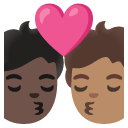
Kiss: Person, Person, Dark Skin Tone, Medium Skin Tone
U+1F9D1 U+1F3FF U+200D U+2764 U+FE0F U+200D U+1F48B U+200D U+1F9D1 U+1F3FD · :kiss_person_person_dark_skin_tone_medium_skin_tone:
Trend 58
Meaning layers
- interpretation
- Used to express deep romantic affection between partners of different skin tones, often used to celebrate interracial relationships or diverse love unapologetically.
- tiktok usage
- Appears in relationship reveal videos, 'us' couple content, and interracial couple appreciation posts as a symbol of pride and love.
- irony level
- 1 / 10
Platform meanings
- meaning
- Signals a loving interracial or diverse-toned couple relationship; used in couple reveal, anniversary, and 'relationship goals' content.
- trend usage
- Featured in duet videos, couple POVs, and trending sounds about love stories that cross cultural or racial backgrounds.
- hashtags
- #couplesoftiktok#interraciallove#relationshipgoals#couplegoals#loveislove
- virality score
- 62 / 100
Cultural meanings
🇺🇸
Western / Gen-Z
Celebrated openly as a symbol of interracial love and representation; frequently used without hesitation in both online and offline romantic expression by younger generations.
🇵🇰
Pakistan & India
Used cautiously given social sensitivities around interracial and intercaste relationships; more common among urban, progressive youth but largely avoided in conservative family contexts.
🌍
Middle East
Rarely used publicly due to conservative social norms around public displays of affection and taboos around interfaith or cross-cultural relationships; more common in private messaging among youth.
🌐
Global Neutral
Universally understood as a kiss between two people of different skin tones; interpreted as a symbol of love and romantic affection across most global contexts.
🇧🇩
Bangladesh
Uncommon in public usage due to conservative norms; may appear among younger, digitally connected users privately but carries potential social stigma in broader community contexts.
🇱🇰
Sri Lanka
Limited use in public contexts; younger urban users may employ it in private chats, but cultural expectations around same-community relationships reduce its mainstream visibility.
🇨🇳
China
Relatively rare due to cultural preferences for same-ethnicity relationships and general conservatism around interracial romance; more likely seen among internationally exposed youth.
🇯🇵
Japan
Used occasionally in pop culture fan communities shipping diverse characters; real-life interracial couple representation is growing but still niche in mainstream social media usage.
🇰🇷
South Korea
Growing visibility through K-pop and global media influence; younger Koreans increasingly use it to express support for diverse love, though social conservatism remains a factor.
🇹🇼
Taiwan
More openly used than in many East Asian neighbors due to Taiwan's progressive social climate; appears in couple posts and LGBTQ+ adjacent content with positive reception.
🇭🇰
Hong Kong
Used among cosmopolitan youth familiar with Western social media norms; carries positive associations with diversity and international love in this culturally hybrid city.
🇵🇭
Philippines
Warmly received in a culture known for expressiveness and openness to Western media; used in romantic couple posts and shared affectionately among young lovers online.
🇮🇩
Indonesia
Moderate usage among urban youth; in more conservative or religious contexts the romantic skin-tone pairing may raise eyebrows, but online communities engage with it positively.
🇹🇭
Thailand
Fairly accepted in Thailand's relatively open social climate; used in couple content and seen positively in a culture comfortable with diverse aesthetics and global media.
🇻🇳
Vietnam
Emerging usage among younger Vietnamese social media users; interracial relationships are less common but internationally connected youth use this emoji to express diverse romantic values.
🇲🇾
Malaysia
Usage varies by ethnic and religious community; among Chinese-Malaysian and younger urban Malay youth it appears in couple content, though conservative segments may avoid it.
🇸🇦
Saudi Arabia
Rarely used publicly due to strict social and religious norms around public romantic expression and intercultural relationships; confined to very private digital spaces if used at all.
🇦🇪
UAE
More visible than in other Gulf states due to the cosmopolitan expatriate population; expats and progressive locals use it freely while local Emirati culture remains more reserved.
🇪🇬
Egypt
Limited public use given conservative social values; may appear in private chats among progressive youth but interracial romantic expressions are not widely normalized in mainstream culture.
🇹🇷
Turkey
Used among urban, Western-oriented youth particularly in Istanbul; broader Turkish society holds mixed views on interracial relationships, limiting mainstream adoption.
🇮🇷
Iran
Essentially absent from public social media due to strict cultural and political restrictions; any romantic emoji usage is confined to encrypted or private messaging among youth.
🇳🇬
Nigeria
Widely used and celebrated especially among Afrobeats and diaspora communities; interracial and diverse love is a growing conversation, and this emoji is worn as a badge of modern love.
🇿🇦
South Africa
Deeply meaningful given South Africa's history with racial separation; used proudly in post-apartheid younger generations as a symbol of unity, diversity, and love across color lines.
🇬🇧
UK & Ireland
Openly and positively used in multicultural UK and Irish contexts; common in couple posts, social justice content, and everyday romantic expression across diverse communities.
🇫🇷
France
Used freely in France's cosmopolitan culture; the French tradition of romantic expression aligns naturally with this emoji, and interracial couples are common and visible in urban centers.
🇩🇪
Germany
Gaining traction among younger, diverse urban populations; used in couple and progressive social contexts, though Germany's older demographic may not engage with it as frequently.
🇪🇸
Spain & Italy
Embraced in major cities where diversity is growing; younger Spaniards and Italians use it in romantic and celebratory contexts, though rural areas may have less familiarity.
🇧🇷
Brazil
Enthusiastically used in Brazil's famously diverse and mixed-race society; represents everyday reality for many Brazilians and carries a warm, celebratory cultural resonance.
🇲🇽
Mexico
Positively received in Mexico's mestizo culture where mixed heritage is the norm; used freely in couple content and romantic expression without significant social friction.
🌎
Latin America
Generally embraced across Latin America where racial mixing is historically embedded in cultural identity; seen as a natural expression of love in diverse societies.
🇦🇺
Australia & NZ
Used openly and positively in these multicultural nations; younger Australians and New Zealanders treat it as a standard couple emoji reflecting their diverse societies.
How its meaning shifted
- 2010
This specific emoji combination did not exist in 2010; basic kiss emojis were limited and lacked skin tone or gender customization entirely.
- 2015
Skin tone modifiers began rolling out via Unicode 8.0 in 2015 but multi-person skin tone combinations for couple emojis were still years away from standardization.
- 2020
Became available as platforms expanded ZWJ sequence support; early adopters in interracial couples and diversity advocates began using it to assert visibility and representation.
- 2026
Mainstream adoption in couple content across all major platforms; recognized as a normalized symbol of diverse romantic love, appearing routinely in couple bios, posts, and messages.
See it on every platform
Adjacent emojis
- Opposite
- broken heartangry facehandshake
- Often confused with
- kiss woman mancouple with heart person personhugging face
- Can replace
- red heartkiss marksparkling heart
Share & embed
Frequently asked
01What does the 🧑🏿❤️💋🧑🏽 Kiss: Person, Person, Dark Skin Tone, Medium Skin Tone emoji mean?
A kiss emoji depicting two people of unspecified gender with dark skin tone and medium skin tone sharing a romantic kiss, represented with a heart and lips.
02What does 🧑🏿❤️💋🧑🏽 mean on TikTok?
Signals a loving interracial or diverse-toned couple relationship; used in couple reveal, anniversary, and 'relationship goals' content.
03What does 🧑🏿❤️💋🧑🏽 mean on WhatsApp?
Sent between romantic partners to express a kiss and deep affection, often used as a sign-off or a spontaneous show of love.
04What does 🧑🏿❤️💋🧑🏽 mean in Gen-Z slang?
Used to express deep romantic affection between partners of different skin tones, often used to celebrate interracial relationships or diverse love unapologetically.
05Is the 🧑🏿❤️💋🧑🏽 emoji safe to use?
A wholesome and inclusive expression of romantic love between two people of different skin tones; universally appropriate in personal romantic contexts.
06What does 🧑🏿❤️💋🧑🏽 mean in texting?
The skin tone combination adds a layer of identity affirmation and social visibility, making the emotional expression not just personal but also culturally significant for those in interracial relationships.
07What is the shortcode for 🧑🏿❤️💋🧑🏽?
The shortcode for Kiss: Person, Person, Dark Skin Tone, Medium Skin Tone is :kiss_person_person_dark_skin_tone_medium_skin_tone:
08What does 🧑🏿❤️💋🧑🏽 mean in dating?
Rarely used for casual flirting — this emoji signals serious romantic intent or an established intimate bond rather than playful teasing.
Safety & usage
- Safe meaning
- A wholesome and inclusive expression of romantic love between two people of different skin tones; universally appropriate in personal romantic contexts.
- Caution
- Can be weaponized in fetishization contexts or used mockingly in racist discourse threads to trivialize interracial relationships.
In culturally conservative contexts this emoji may provoke negative reactions if used publicly to signal an interracial relationship; users should be mindful of local social norms.
How it looks across platforms
Appearance varies by platform and device. Google Noto, Twemoji, and OpenMoji are open-source.