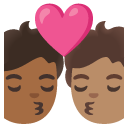
🧑🏾❤️💋🧑🏽
The Emoji
Kiss: Person, Person, Medium-dark Skin Tone, Medium Skin Tone
U+1F9D1 U+1F3FE U+200D U+2764 U+FE0F U+200D U+1F48B U+200D U+1F9D1 U+1F3FD · :kiss_person_person_mediumdark_skin_tone_medium_skin_tone:
Trend 58
Meaning layers
- interpretation
- Used to express romantic affection between any two people regardless of gender, often symbolizing an inclusive or queer-friendly relationship. Also used casually among close friends to show platonic love or as a cute sign-off.
- tiktok usage
- Appears in couple reveal videos, relationship milestone posts, and 'soft life' aesthetic content. Often dropped in comments to hype up couples or used in captions for anniversary content.
- irony level
- 2 / 10
Platform meanings
- meaning
- Represents romantic couple goals, relationship milestones, or inclusive love content. Frequently used by creators celebrating diverse relationships.
- trend usage
- Used in couple duet videos, 'how we met' storytime content, and POV relationship trends. Common in the #couplegoals and #blacklove adjacent niches.
- hashtags
- #couplegoals#relationshipcheck#blacklove#softlife#cutecouples
- virality score
- 62 / 100
Cultural meanings
🇺🇸
Western / Gen-Z
Embraced enthusiastically as a symbol of inclusive, non-binary-coded romance. Particularly popular in LGBTQ+ communities and among those who value diverse representation in digital media.
🇵🇰
Pakistan & India
Used cautiously in private chats between romantic partners due to conservative social norms around public displays of affection. More openly used among urban, liberal youth and diaspora communities.
🌍
Middle East
Generally reserved for private romantic communication and rarely used in public social media posts due to cultural norms around modesty and public displays of affection.
🌐
Global Neutral
Universally understood as a symbol of romantic love and affection between two people, transcending language barriers with its visual clarity.
🇧🇩
Bangladesh
Primarily used in private messaging between couples; public use is limited due to conservative social attitudes. Urban youth and diaspora may use it more freely.
🇱🇰
Sri Lanka
Used in private romantic contexts among younger urban populations. The gender-neutral presentation may be less commonly understood compared to gendered couple emojis.
🇨🇳
China
Used on platforms like WeChat and Weibo among couples, though the Western-centric emoji design may sometimes be replaced by localized sticker packs. Skin tone nuance is less culturally significant.
🇯🇵
Japan
Japanese users tend to prefer platform-specific kaomoji or Line stickers for romantic expression, but this emoji is understood and used by younger Westernized demographics.
🇰🇷
South Korea
Popular among K-drama-influenced youth who romanticize couple content. Used in KakaoTalk chats between couples and in fan communities shipping celebrities.
🇹🇼
Taiwan
Used freely among younger generations on LINE and Instagram. Progressive social attitudes make the gender-neutral aspect particularly welcomed.
🇭🇰
Hong Kong
Common in messaging apps among young couples. The blend of Western digital culture and local usage means it's understood as a straightforward romantic symbol.
🇵🇭
Philippines
Widely used and embraced on Facebook and TikTok, reflecting the culture's openly expressive attitude toward romance and love. Filipinos often pair it with other heart emojis.
🇮🇩
Indonesia
Used among younger urban populations in private chats; public social media use is more subdued due to conservative Islamic social norms in many regions.
🇹🇭
Thailand
Commonly used in couple messaging and LINE sticker alternatives. Thai social media culture celebrates cute couple content, making this emoji a natural fit.
🇻🇳
Vietnam
Used in private romantic messaging and couple-focused social media posts, particularly on Facebook and Zalo among younger generations.
🇲🇾
Malaysia
Usage varies significantly across ethnic and religious lines. Urban Chinese-Malaysian and younger secular Muslims may use it freely while more conservative communities avoid it.
🇸🇦
Saudi Arabia
Largely avoided in public-facing social media due to strict norms around public romance. Used discretely in private messaging between married or engaged couples.
🇦🇪
UAE
More liberal usage than other Gulf states due to the cosmopolitan expatriate population. Expats use it freely while local Emiratis tend to be more reserved in public digital spaces.
🇪🇬
Egypt
Used in private romantic chats among younger Egyptians. Public social media use is relatively rare due to conservative social norms around public displays of affection.
🇹🇷
Turkey
Used among urban, Westernized Turkish youth for romantic expression. Istanbul-based social media culture is more accepting, while rural communities may find it less relatable.
🇮🇷
Iran
Used primarily in private messaging due to strict social regulations. Among diaspora communities and urban youth, it signals romantic affection in a relatively low-risk digital format.
🇳🇬
Nigeria
Enthusiastically used across social media platforms, and the medium-dark skin tone is particularly celebrated as representative of Nigerian and broader African skin tones.
🇿🇦
South Africa
Well-received across diverse communities. The skin tone combination resonates with mixed-heritage couples and the rainbow nation's multicultural identity.
🇬🇧
UK & Ireland
Casually used in couple contexts with a laid-back, non-dramatic tone typical of British digital communication style. More common among younger multicultural urban populations.
🇫🇷
France
Used romantically but often with French understatement. The French digital culture appreciates love symbolism but may find the emoji slightly too overt compared to subtler expressions.
🇩🇪
Germany
Used straightforwardly for romantic communication. German digital culture is practical, so this emoji is deployed with clear romantic intent rather than ambiguity.
🇪🇸
Spain & Italy
Warmly embraced in both countries given their expressive romantic cultures. Used liberally in couple chats, social media captions, and family group chats when celebrating relationships.
🇧🇷
Brazil
Very popular on Instagram and WhatsApp, reflecting Brazil's warm, affectionate communication culture. Often paired with fire, heart, and other affection emojis.
🇲🇽
Mexico
Widely used in romantic contexts across all major platforms. Mexican digital culture's expressive, warm nature makes this emoji a natural fit for declaring affection.
🌎
Latin America
Broadly embraced across Latin America as a symbol of passionate romance. The inclusive skin tones resonate across the region's diverse population.
🇦🇺
Australia & NZ
Casually and openly used across couple contexts. Australia's multicultural demographics make the diverse skin tone combination particularly relatable and representative.
How its meaning shifted
- 2010
This specific emoji sequence did not exist in 2010. Basic kiss emojis like 💏 existed but lacked skin tone modifiers and gender-neutral options.
- 2015
Skin tone modifiers were introduced to Unicode in 2015, but gender-neutral person ZWJ sequences for couples were not yet standardized. Early diverse kiss emojis began appearing.
- 2020
The gender-neutral, skin-tone-specific kiss couple emoji gained traction following increased Unicode support and platform rendering improvements. Usage grew in LGBTQ+ and diversity-conscious communities.
- 2026
Widely recognized and used across all major platforms. Adopted as the default couple emoji by many users seeking inclusive representation. Increasingly normalized in mainstream digital communication across cultures.
See it on every platform
Adjacent emojis
- Often confused with
- kisssmiling face with heartsface blowing a kiss
Share & embed
Frequently asked
01What does the 🧑🏾❤️💋🧑🏽 Kiss: Person, Person, Medium-dark Skin Tone, Medium Skin Tone emoji mean?
A kiss between two people with medium-dark and medium skin tones, represented by the sequence of two person emojis with a heart and kiss mark. This is a zero-width joiner (ZWJ) sequence combining gender-neutral persons.
02What does 🧑🏾❤️💋🧑🏽 mean on TikTok?
Represents romantic couple goals, relationship milestones, or inclusive love content. Frequently used by creators celebrating diverse relationships.
03What does 🧑🏾❤️💋🧑🏽 mean on WhatsApp?
A direct digital kiss sent to a romantic partner or close loved one. Signals strong affection and warmth.
04What does 🧑🏾❤️💋🧑🏽 mean in Gen-Z slang?
Used to express romantic affection between any two people regardless of gender, often symbolizing an inclusive or queer-friendly relationship. Also used casually among close friends to show platonic love or as a cute sign-off.
05Is the 🧑🏾❤️💋🧑🏽 emoji safe to use?
A wholesome, romantic emoji representing a kiss between two people. Universally understood as an expression of love and affection.
06What does 🧑🏾❤️💋🧑🏽 mean in texting?
This emoji triggers positive associations with intimacy and bonding. The skin tone combination adds a layer of personal relatability, increasing emotional resonance for users who identify with the represented tones. It signals vulnerability and openness in expressing love.
07What is the shortcode for 🧑🏾❤️💋🧑🏽?
The shortcode for Kiss: Person, Person, Medium-dark Skin Tone, Medium Skin Tone is :kiss_person_person_mediumdark_skin_tone_medium_skin_tone:
08What does 🧑🏾❤️💋🧑🏽 mean in dating?
Used as a bold flirtatious signal when sent to a romantic interest, communicating desire for physical affection or intimacy. More committed in tone than a simple heart emoji.
Safety & usage
- Safe meaning
- A wholesome, romantic emoji representing a kiss between two people. Universally understood as an expression of love and affection.
- Caution
- Could theoretically be used in harassment contexts to mock someone's relationship or send unwanted romantic advances, though this is uncommon.
In very conservative cultural contexts, sending this emoji unsolicited could be considered inappropriate or disrespectful. Platform moderators generally consider this emoji safe and non-explicit.
How it looks across platforms
Appearance varies by platform and device. Google Noto, Twemoji, and OpenMoji are open-source.