👩🏿❤️💋👨🏻
The Emoji
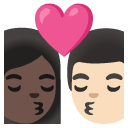
Kiss: Woman, Man, Dark Skin Tone, Light Skin Tone
U+1F469 U+1F3FF U+200D U+2764 U+FE0F U+200D U+1F48B U+200D U+1F468 U+1F3FB · :kiss_woman_man_dark_skin_tone_light_skin_tone:
Trend 58
Meaning layers
- interpretation
- Used to celebrate interracial love, flex a relationship, or show appreciation for diverse couples. Often dropped in comments under couple photos or relationship content to signal wholesome support.
- tiktok usage
- Appears in 'relationship goals' content, interracial couple duets, and POV skits about meeting someone from a different background. Used as a caption emoji on couple transition videos.
- irony level
- 1 / 10
Platform meanings
- meaning
- Symbol of interracial couple goals, used to celebrate diverse relationships and affirm representation in love.
- trend usage
- Featured in interracial couple transformation videos, 'how we met' storytime content, and comment sections of viral couple dances. Used in captions alongside #mixedcouple.
- hashtags
- #mixedcouple#interraciallove#couplegoals#representationmatters#diverselove
- virality score
- 62 / 100
Cultural meanings
🇺🇸
Western / Gen-Z
Celebrated as a symbol of progressive love and representation; Gen Z uses it proudly to showcase interracial relationships and signal inclusivity as a core value.
🇵🇰
Pakistan & India
Carries sensitive connotations given social pressures around same-community marriages; may be used quietly between progressive couples or in diaspora contexts where interracial dating is more accepted.
🌍
Middle East
Rarely used openly due to cultural and familial expectations around same-background relationships; more common among younger, cosmopolitan users in private or diaspora digital spaces.
🌐
Global Neutral
Universally understood as a romantic kiss between two people of different skin tones; interpreted broadly as an expression of love across difference.
🇧🇩
Bangladesh
Culturally sensitive given strong norms around marrying within community; largely avoided in public-facing digital spaces but may appear among urban youth or diaspora communities.
🇱🇰
Sri Lanka
Used sparingly; more visible in urban and diaspora communities where interracial or intercultural relationships are more normalized.
🇨🇳
China
Rarely used in mainstream Chinese social media; skin tone diversity in emoji is less culturally prominent and the couple combination may read simply as a generic kissing couple.
🇯🇵
Japan
Used by younger, globally-minded Japanese users to celebrate diverse relationships, though skin tone specificity in emoji is generally less emphasized in Japanese digital culture.
🇰🇷
South Korea
Increasingly visible among younger Koreans influenced by global pop culture; sometimes used in contexts celebrating multicultural couples, especially with Hallyu's growing international fanbase.
🇹🇼
Taiwan
Used similarly to South Korea, with younger urban users embracing it as a symbol of inclusive love and international relationships.
🇭🇰
Hong Kong
More openly used than mainland China due to cosmopolitan culture; seen in international couple contexts and diversity-positive communities.
🇵🇭
Philippines
Embraced warmly as OFW (overseas Filipino worker) culture means many Filipinos are in interracial relationships; used proudly in couple posts and OFW community groups.
🇮🇩
Indonesia
Used cautiously in public-facing contexts given religious and cultural conservatism, but more freely in urban, educated, and diaspora communities.
🇹🇭
Thailand
Appears in couple content and tourism-related romantic contexts; Thailand's multicultural tourism culture makes this emoji relatively neutral and accepted.
🇻🇳
Vietnam
Seen in diaspora and urban youth contexts; younger Vietnamese users in international relationships use it openly while traditional communities may view it with surprise.
🇲🇾
Malaysia
Used in diverse Malaysian digital communities that reflect the country's multicultural identity; more comfortable in Chinese-Malaysian and cosmopolitan urban communities.
🇸🇦
Saudi Arabia
Extremely rare in public digital spaces due to cultural and religious norms; may appear in very private or diaspora digital conversations.
🇦🇪
UAE
More visible given UAE's diverse expat population; used freely among international residents and in cosmopolitan digital communities.
🇪🇬
Egypt
Culturally sensitive; used rarely in public contexts but appears among younger, progressive Egyptian users and diaspora communities influenced by Western digital culture.
🇹🇷
Turkey
Used among younger, urban Turkish users who are in or support interracial relationships; more conservative communities may view it with skepticism.
🇮🇷
Iran
Rarely used openly given social norms and digital restrictions; may appear in diaspora communities or among progressive youth in private digital spaces.
🇳🇬
Nigeria
Used by urban, educated, and diaspora Nigerians celebrating interracial love; Nollywood's growing international presence has made diverse couple representation more visible.
🇿🇦
South Africa
Carries historical resonance given apartheid history; used meaningfully by younger South Africans to celebrate post-apartheid interracial love and reconciliation.
🇬🇧
UK & Ireland
Widely used and celebrated in diverse UK communities; London's multicultural identity makes this emoji very common in couple and relationship content.
🇫🇷
France
Used in diverse urban communities; France's large multicultural population and laïcité values make this emoji relatively neutral and positively received.
🇩🇪
Germany
Embraced by younger, progressive Germans and diverse urban communities; appears in couple content and diversity advocacy contexts.
🇪🇸
Spain & Italy
Used in couple content among younger, cosmopolitan users; Southern European cultures are warming to visible multicultural representation in digital spaces.
🇧🇷
Brazil
Widely embraced given Brazil's highly mixed-race population and culture; used proudly and frequently in couple content across generations.
🇲🇽
Mexico
Used in couple content, particularly in urban and border communities with diverse relationship experiences; broadly positive reception.
🌎
Latin America
Varies by country but generally used positively among younger urban users; Latin America's diverse racial heritage makes this emoji feel culturally resonant.
🇦🇺
Australia & NZ
Warmly received in these multicultural societies; commonly used in couple posts, diversity campaigns, and among interracial couples in urban centers.
How its meaning shifted
- 2010
This specific emoji did not exist in 2010; couple emoji were single, non-diverse options without skin tone modifiers, limiting representation for interracial couples.
- 2015
Skin tone modifiers were introduced to Unicode in 2015, but multi-person emoji with mixed skin tone combinations were not yet available; couples used mismatched single-person emoji as workarounds.
- 2020
Mixed skin tone couple emoji became more widely supported across platforms; used increasingly by interracial couples to represent themselves accurately in digital communication.
- 2026
Fully normalized and widely used; represents a standard option for interracial couples alongside the expanded emoji library, with growing use in diversity-forward branding and media.
See it on every platform
Adjacent emojis
- Opposite
- broken heartno entryhandshake
- Often confused with
- kiss markperson kisscouple with heart
- Can replace
- red hearttwo heartskiss mark
Share & embed
Frequently asked
01What does the 👩🏿❤️💋👨🏻 Kiss: Woman, Man, Dark Skin Tone, Light Skin Tone emoji mean?
A kiss emoji depicting a woman with dark skin tone and a man with light skin tone, shown with a heart and kiss mark between them, representing an interracial romantic couple sharing a kiss.
02What does 👩🏿❤️💋👨🏻 mean on TikTok?
Symbol of interracial couple goals, used to celebrate diverse relationships and affirm representation in love.
03What does 👩🏿❤️💋👨🏻 mean on WhatsApp?
Sent between partners in an interracial relationship as a digital kiss or expression of deep affection, especially when referencing their unique dynamic.
04What does 👩🏿❤️💋👨🏻 mean in Gen-Z slang?
Used to celebrate interracial love, flex a relationship, or show appreciation for diverse couples. Often dropped in comments under couple photos or relationship content to signal wholesome support.
05Is the 👩🏿❤️💋👨🏻 emoji safe to use?
A wholesome expression of interracial romantic love and affection between two people, used to celebrate diverse relationships.
06What does 👩🏿❤️💋👨🏻 mean in texting?
This emoji carries layered emotional weight — it signals not just romantic love but also a conscious celebration of diversity. Users who choose this specific skin tone combination often do so deliberately, signaling pride in their interracial relationship or allyship toward diverse couples.
07What is the shortcode for 👩🏿❤️💋👨🏻?
The shortcode for Kiss: Woman, Man, Dark Skin Tone, Light Skin Tone is :kiss_woman_man_dark_skin_tone_light_skin_tone:
08What does 👩🏿❤️💋👨🏻 mean in dating?
Used when flirting across racial or cultural lines to signal openness and attraction. Sending this to a crush implies serious romantic intent rather than casual interest.
Safety & usage
- Safe meaning
- A wholesome expression of interracial romantic love and affection between two people, used to celebrate diverse relationships.
- Caution
- Could be weaponized in racist online spaces to mock or attack interracial couples, or used by bad actors to demean individuals in targeted harassment campaigns.
While the emoji itself is positive and inclusive, it can attract racist commentary when used publicly on highly visible posts. Users in culturally conservative environments should be aware of potential social backlash. The specific skin tone combination may inadvertently draw negative attention in certain online communities.
How it looks across platforms
Appearance varies by platform and device. Google Noto, Twemoji, and OpenMoji are open-source.