👩🏾❤️💋👨🏿
The Emoji
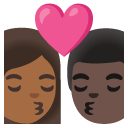
Kiss: Woman, Man, Medium-dark Skin Tone, Dark Skin Tone
U+1F469 U+1F3FE U+200D U+2764 U+FE0F U+200D U+1F48B U+200D U+1F468 U+1F3FF · :kiss_woman_man_mediumdark_skin_tone_dark_skin_tone:
Trend 68
Meaning layers
- interpretation
- Used to celebrate Black love, interracial affection, or express deep romantic feelings for a specific partner. Often signals a serious or public relationship declaration.
- tiktok usage
- Appears in couple content, 'Black love' celebration videos, relationship milestones, and POC romance appreciation posts. Frequently paired with slow-motion couple clips.
- irony level
- 1 / 10
Platform meanings
- meaning
- Symbol of Black and Brown romantic love, relationship celebration, and couple goals content. Used to signal serious partnership.
- trend usage
- Appears in couple duet videos, 'rate our relationship' trends, anniversary edits, and Black love appreciation content.
- hashtags
- #BlackLove#MelaninCouple#CoupleGoals#BlackRomance#LoveWins
- virality score
- 72 / 100
Cultural meanings
🇺🇸
Western / Gen-Z
Celebrated as a powerful symbol of Black and Brown love representation; Gen Z actively chooses this specific skin tone combination to affirm identity and push back against Eurocentric defaults in emoji use.
🇵🇰
Pakistan & India
Less commonly used due to cultural taboos around public displays of affection; when used, it typically appears in private couple chats among younger, urban demographics.
🌍
Middle East
Rarely used in public digital communication due to conservative social norms around romance; may appear in private messaging between couples in more liberal urban settings.
🌐
Global Neutral
Universally understood as a romantic kiss between two people; the skin tones add specificity that most global users either identify with or recognize as a diversity-affirming choice.
🇧🇩
Bangladesh
Uncommon in public digital spaces due to social conservatism; younger urban users may use it in private romantic communication, though generic kiss emojis are more typical.
🇱🇰
Sri Lanka
Used sparingly in private romantic contexts; the skin tone aspect resonates with darker-skinned Sri Lankans who appreciate the representation but public romantic expression remains cautious.
🇨🇳
China
The concept of a kiss emoji is understood, but skin tone specificity is less culturally relevant; Chinese users tend to prefer platform-native emoji sets and may find the skin tone combination less relatable.
🇯🇵
Japan
Romance emojis are widely used in Japan but typically with default yellow tones; skin-tone-specific kiss emojis are less common, though younger users may use them for global cultural alignment.
🇰🇷
South Korea
K-pop and hallyu culture embrace romantic expression, but darker skin tone representation is less normalized; the emoji may be used by progressive younger users advocating for diverse beauty standards.
🇹🇼
Taiwan
Used among cosmopolitan and progressive younger users; Taiwanese digital culture is open to diverse romantic expressions, though lighter skin tone variants remain more common.
🇭🇰
Hong Kong
International exposure means the emoji is understood and occasionally used; younger, globally connected Hong Kongers may use it in solidarity with Black love movements or for personal representation.
🇵🇭
Philippines
Filipinos are expressive with romantic emojis and the darker skin tones resonate with morena/moreno pride movements; used to celebrate darker-skinned Filipino beauty and romance.
🇮🇩
Indonesia
Used among younger Indonesians in private romantic contexts; darker skin tones connect with local complexion realities, and there's growing appreciation for representation in this demographic.
🇹🇭
Thailand
Thailand's beauty standards historically favor lighter skin, so this emoji's darker tones carry a counter-cultural resonance; progressive users may use it to challenge colorism.
🇻🇳
Vietnam
Romantic emojis are popular in Vietnamese digital communication; skin tone variants are less commonly differentiated, but younger users with international exposure may use this for personal expression.
🇲🇾
Malaysia
The multicultural Malaysian context makes skin tone representation relevant; used in private romantic communication across ethnic communities, with particular resonance for Malay and Indian communities.
🇸🇦
Saudi Arabia
Extremely rare in public digital contexts due to strict social norms around public romantic displays; may exist in private couple communication among younger Saudis.
🇦🇪
UAE
Dubai and Abu Dhabi's cosmopolitan, multicultural demographics mean this emoji is more accepted and understood; expat communities from Africa and South Asia may use it for cultural representation.
🇪🇬
Egypt
Romantic emojis are used in private messaging; the darker skin tones connect with Egyptian identity and Nubian heritage, though public romantic expression remains socially cautious.
🇹🇷
Turkey
Used among younger Turkish users in private romantic contexts; Turkey's diverse population means the skin tones may feel personally resonant to darker-skinned Turkish communities.
🇮🇷
Iran
Rarely used in public digital spaces; private romantic communication among younger Iranians may include it, but cultural and political conservatism limits widespread use.
🇳🇬
Nigeria
Highly resonant and celebrated; Nigerians actively use this emoji to represent Black love, pride, and romance. Popular in couple posts, wedding content, and relationship celebrations.
🇿🇦
South Africa
Strongly embraced as a symbol of Black love and rainbow nation romance; used widely in couple content, especially in the context of celebrating Black excellence and love.
🇬🇧
UK & Ireland
Used in diverse, multicultural urban communities to celebrate Black and Brown love; progressive social media users appreciate the representation it offers in everyday digital communication.
🇫🇷
France
Used among France's diverse African and Caribbean diaspora communities to celebrate Black love; also embraced by progressive French youth interested in representation and diversity.
🇩🇪
Germany
Used within Afro-German communities and among young progressive Germans who value diversity representation; less common in mainstream German digital communication.
🇪🇸
Spain & Italy
Used by Afro-descended communities and progressive younger users; southern European darker complexions may also find personal resonance, though romantic emojis are generally used more freely.
🇧🇷
Brazil
Highly relevant in Brazil's majority Black and mixed-race population; celebrated as a symbol of Black Brazilian love ('amor negro') and widely used in romantic and cultural pride content.
🇲🇽
Mexico
Resonates with Mexico's diverse Indigenous and Afro-Mexican communities; used in romantic content and by advocates celebrating Afro-Mexican identity and love.
🌎
Latin America
Connects with Afro-Latino communities across Latin America; used in romantic expression and cultural pride content, gaining traction in Black consciousness movements across the region.
🇦🇺
Australia & NZ
Used in diverse, multicultural Australian and New Zealand communities; Aboriginal, Pacific Islander, and African diaspora communities may use it for romantic expression and identity representation.
How its meaning shifted
- 2010
This specific emoji did not exist in 2010; skin tone modifiers and ZWJ sequences for diverse couples had not yet been introduced to Unicode standards.
- 2015
Skin tone modifiers were introduced to Unicode in 2015, but diverse couple ZWJ sequences with specific skin tone combinations came later; early diverse couple emojis gained significant media attention.
- 2020
Gained significant traction following the global Black Lives Matter movement; diverse couple emojis became symbols of representation and were deliberately chosen by users seeking to affirm Black and Brown love.
- 2026
Normalized as a standard romantic expression for users who identify with these skin tones; part of a broader cultural expectation that emoji sets reflect real human diversity without requiring special justification.
See it on every platform
Adjacent emojis
- Often confused with
- kiss markface blowing a kisssmiling face with heart eyes
- Can replace
- red heartkiss marksparkling heart
Share & embed
Frequently asked
01What does the 👩🏾❤️💋👨🏿 Kiss: Woman, Man, Medium-dark Skin Tone, Dark Skin Tone emoji mean?
A kiss between a woman with medium-dark skin tone and a man with dark skin tone, depicted with a heart and lips. Part of the ZWJ sequence family emoji set representing diverse romantic couples.
02What does 👩🏾❤️💋👨🏿 mean on TikTok?
Symbol of Black and Brown romantic love, relationship celebration, and couple goals content. Used to signal serious partnership.
03What does 👩🏾❤️💋👨🏿 mean on WhatsApp?
Expresses a deep kiss and romantic love, often sent between partners in private chats to affirm affection.
04What does 👩🏾❤️💋👨🏿 mean in Gen-Z slang?
Used to celebrate Black love, interracial affection, or express deep romantic feelings for a specific partner. Often signals a serious or public relationship declaration.
05Is the 👩🏾❤️💋👨🏿 emoji safe to use?
A wholesome expression of romantic love and affection between a woman and man with medium-dark and dark skin tones. Celebrates diverse representation in emoji.
06What does 👩🏾❤️💋👨🏿 mean in texting?
The specificity of skin tones adds a layer of personal representation and identity affirmation. For users of similar skin tones, this emoji feels more personally resonant and validating of their lived romantic experiences.
07What is the shortcode for 👩🏾❤️💋👨🏿?
The shortcode for Kiss: Woman, Man, Medium-dark Skin Tone, Dark Skin Tone is :kiss_woman_man_mediumdark_skin_tone_dark_skin_tone:
08What does 👩🏾❤️💋👨🏿 mean in dating?
Sent in the early-to-mid stages of a relationship to signal serious romantic interest or to transition from casual flirting to expressing deeper feelings.
Safety & usage
- Safe meaning
- A wholesome expression of romantic love and affection between a woman and man with medium-dark and dark skin tones. Celebrates diverse representation in emoji.
- Caution
- Could theoretically be used in harassing messages or unwanted romantic advances, though the emoji itself carries no inherently toxic meaning.
When sent unsolicited or in professional contexts, any kiss emoji including this one may constitute inappropriate behavior. Context is always critical.
How it looks across platforms
Appearance varies by platform and device. Google Noto, Twemoji, and OpenMoji are open-source.