👩🏾❤️💋👩🏾
The Emoji
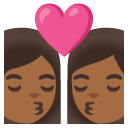
Kiss: Woman, Woman, Medium-dark Skin Tone
U+1F469 U+1F3FE U+200D U+2764 U+FE0F U+200D U+1F48B U+200D U+1F469 U+1F3FE · :kiss_woman_woman_mediumdark_skin_tone:
Trend 68
Meaning layers
- interpretation
- Used by Gen Z to openly celebrate sapphic relationships, WLW (women loving women) identity, and queer love without hesitation. Also used as a form of solidarity and affirmation in queer spaces.
- tiktok usage
- Appears in WLW couple videos, pride content, 'girlfriend reveal' videos, and queer positivity comment sections. Often paired with trending sounds about love or pride.
- irony level
- 1 / 10
Platform meanings
- meaning
- Represents WLW romance, sapphic love, and queer pride. Used in couple videos, identity reveals, and pride-themed content.
- trend usage
- Dropped in video captions and comments for girlfriend reveal trends, 'meet my partner' videos, pride month challenges, and queer positivity stitches.
- hashtags
- #WLW#SapphicTikTok#PrideTikTok#QueerCouple#GirlsWhoLikeGirls
- virality score
- 72 / 100
Cultural meanings
🇺🇸
Western / Gen-Z
Widely used and celebrated among Western Gen Z as a proud symbol of WLW love and sapphic identity, with little stigma in progressive online spaces.
🇵🇰
Pakistan & India
Rarely used openly due to significant social stigma around same-sex relationships; LGBTQ+ individuals may use it in private or anonymous digital spaces only.
🌍
Middle East
Largely avoided in public digital spaces due to legal and social prohibitions on same-sex relationships across much of the region; used only in very private or anonymous queer contexts.
🌐
Global Neutral
Universally recognized as representing a same-sex female couple kissing; reception varies dramatically based on local cultural and legal attitudes toward LGBTQ+ relationships.
🇧🇩
Bangladesh
Not commonly used publicly due to conservative social norms and legal restrictions on same-sex relationships; marginalized LGBTQ+ communities may use it privately.
🇱🇰
Sri Lanka
Rarely used in open digital communication; LGBTQ+ visibility is limited by social conservatism, though underground queer communities may use it among themselves.
🇨🇳
China
Used cautiously as LGBTQ+ content faces increasing censorship on major platforms; more visible in international or VPN-accessed spaces used by Chinese queer communities.
🇯🇵
Japan
Used in queer Japanese communities and among fans of yuri (WLW) manga and anime; relatively more accepted in younger digital culture compared to older generations.
🇰🇷
South Korea
Used in Korean LGBTQ+ digital spaces and among progressive youth; visibility has grown but still faces significant social pushback in mainstream culture.
🇹🇼
Taiwan
Embraced openly — Taiwan's legalization of same-sex marriage in 2019 has made this emoji a common and celebrated symbol in progressive Taiwanese digital culture.
🇭🇰
Hong Kong
Used in queer communities and progressive spaces; LGBTQ+ visibility exists but remains contested amid shifting political and social landscapes.
🇵🇭
Philippines
Accepted in many younger and urban Filipino digital spaces due to relatively open attitudes toward gender and sexuality; used warmly in queer and allied communities.
🇮🇩
Indonesia
Rarely used publicly due to strong religious and cultural conservatism; LGBTQ+ expression online is increasingly under pressure from authorities and social norms.
🇹🇭
Thailand
Used in queer Thai communities and among younger users; Thailand's relatively visible LGBTQ+ culture allows moderate open use, though formal legal recognition of same-sex couples remains limited.
🇻🇳
Vietnam
Used carefully in private digital spaces; Vietnam has seen growing LGBTQ+ visibility in urban youth culture but same-sex relationships still lack legal recognition.
🇲🇾
Malaysia
Largely avoided in public digital spaces due to strict religious laws and social stigma; used only in private queer communities or among diaspora communities abroad.
🇸🇦
Saudi Arabia
Extremely rare in public use due to severe legal prohibitions on same-sex relationships; effectively invisible in mainstream digital communication.
🇦🇪
UAE
Avoided in public digital expression due to legal restrictions; may appear only in private or VPN-enabled international queer communities.
🇪🇬
Egypt
Rarely used openly; LGBTQ+ expression is suppressed by legal frameworks and social conservatism, with usage confined to very private or anonymous digital spaces.
🇹🇷
Turkey
Used in Turkish LGBTQ+ communities, particularly in Istanbul's historically active queer scene, though increasing political hostility to Pride and LGBTQ+ rights has made open expression more cautious.
🇮🇷
Iran
Extremely rare in open digital use due to severe legal penalties for same-sex relationships; queer Iranians may use it in diaspora or anonymous online spaces.
🇳🇬
Nigeria
Rarely used publicly due to strict anti-gay laws and strong social conservatism; Nigerian LGBTQ+ individuals may use it only in private, encrypted, or diaspora contexts.
🇿🇦
South Africa
More openly used than elsewhere on the continent — South Africa's constitutional protections for LGBTQ+ rights support a visible queer community that uses this emoji warmly.
🇬🇧
UK & Ireland
Widely accepted and used in British and Irish LGBTQ+ communities and broadly in progressive digital culture; common in pride month content and queer relationship posts.
🇫🇷
France
Used openly in French LGBTQ+ and progressive spaces; France's strong secularism and legal equality for same-sex couples make this emoji unremarkable in queer-positive contexts.
🇩🇪
Germany
Used freely in German LGBTQ+ communities and progressive digital spaces; Germany's legal recognition of same-sex partnerships supports open use.
🇪🇸
Spain & Italy
In Spain, widely accepted given legal same-sex marriage since 2005; in Italy, used in progressive and queer communities, though the political climate has become more contested in recent years.
🇧🇷
Brazil
Used openly in Brazil's large and vibrant LGBTQ+ community; Brazil has one of the world's most active Pride scenes and this emoji appears frequently in queer digital culture.
🇲🇽
Mexico
Used in Mexican LGBTQ+ communities and progressive urban spaces; same-sex marriage legalization across many states has increased visibility and acceptance of this emoji.
🌎
Latin America
Acceptance varies significantly across Latin America — more open use in Argentina, Chile, and Uruguay where LGBTQ+ rights are advanced, with more private use in socially conservative countries.
🇦🇺
Australia & NZ
Widely used and celebrated in Australian and New Zealand LGBTQ+ communities; both countries have strong legal protections for same-sex couples and active queer digital cultures.
How its meaning shifted
- 2010
Did not exist — same-sex couple emoji with skin tone modifiers had not yet been introduced to Unicode; queer couples had no direct emoji representation.
- 2015
Basic same-sex couple emoji began appearing after Unicode 6.0+ expansions, but skin tone modifiers for ZWJ couple sequences were not yet widely supported; early LGBTQ+ emoji visibility was limited.
- 2020
Increasingly visible following broader ZWJ sequence support and platform adoption; used prominently during COVID-era Pride Month digital celebrations and growing WLW social media communities.
- 2026
Mainstream and normalized in progressive digital spaces globally; a staple of WLW, sapphic, and queer pride content with strong cultural recognition across major platforms and increasing skin tone representation in emoji culture.
See it on every platform
Adjacent emojis
- Often confused with
- kiss woman mantwo women holding handspeople hugging
- Can replace
- rainbow flagred heartkiss mark
Share & embed
Frequently asked
01What does the 👩🏾❤️💋👩🏾 Kiss: Woman, Woman, Medium-dark Skin Tone emoji mean?
Represents a romantic kiss between two women with medium-dark skin tone, composed of the ZWJ sequence: woman + medium-dark skin tone + red heart + kiss mark + woman + medium-dark skin tone.
02What does 👩🏾❤️💋👩🏾 mean on TikTok?
Represents WLW romance, sapphic love, and queer pride. Used in couple videos, identity reveals, and pride-themed content.
03What does 👩🏾❤️💋👩🏾 mean on WhatsApp?
Sent between female partners or WLW friends to express love, affection, or celebration of their relationship identity.
04What does 👩🏾❤️💋👩🏾 mean in Gen-Z slang?
Used by Gen Z to openly celebrate sapphic relationships, WLW (women loving women) identity, and queer love without hesitation. Also used as a form of solidarity and affirmation in queer spaces.
05Is the 👩🏾❤️💋👩🏾 emoji safe to use?
A wholesome, romantic emoji representing love and affection between two women; used to celebrate LGBTQ+ identity, same-sex relationships, and queer pride.
06What does 👩🏾❤️💋👩🏾 mean in texting?
For many LGBTQ+ individuals, using this emoji carries significant emotional weight — it's an act of visible self-expression and identity affirmation. Receiving it can feel validating and seen, while sending it signals openness about queer identity.
07What is the shortcode for 👩🏾❤️💋👩🏾?
The shortcode for Kiss: Woman, Woman, Medium-dark Skin Tone is :kiss_woman_woman_mediumdark_skin_tone:
08What does 👩🏾❤️💋👩🏾 mean in dating?
Sent between WLW or sapphic individuals to express romantic interest, signal attraction, or celebrate a developing relationship. A clear and warm flirtatious gesture in queer dating contexts.
Safety & usage
- Safe meaning
- A wholesome, romantic emoji representing love and affection between two women; used to celebrate LGBTQ+ identity, same-sex relationships, and queer pride.
- Caution
- In rare cases, may be used mockingly or in a fetishizing context by bad-faith actors; can also be used to provoke reactions in anti-LGBTQ+ spaces.
This emoji can attract negative or hostile responses in culturally or religiously conservative digital spaces. Users in regions with anti-LGBTQ+ laws should be mindful of visibility when using this emoji publicly. It may be filtered or flagged by content moderation in certain regional platforms.
How it looks across platforms
Appearance varies by platform and device. Google Noto, Twemoji, and OpenMoji are open-source.