🤛🏻
The Emoji
Left-facing Fist: Light Skin Tone
U+1F91B U+1F3FB · :leftfacing_fist_light_skin_tone:
Trend 58
Meaning layers
- interpretation
- Used to initiate a virtual fist bump with someone, signal agreement or hype, or express team solidarity. Also used ironically in meme contexts to bump fists with abstract concepts or fictional characters.
- tiktok usage
- Appears in comment sections as a fist bump to the creator or another commenter. Frequently used in pairs (🤛🏻🤜) across two separate comments to simulate a real bump.
- irony level
- 3 / 10
Platform meanings
- meaning
- Solidarity fist bump in comment sections; used to hype creators or co-sign another commenter's take.
- trend usage
- The 'split fist bump' comment trend where two users coordinate 🤛🏻 and 🤜 across comments went viral multiple times. Also used in duet and stitch videos to show agreement.
- hashtags
- #fistbump#solidarity#teamwork#hype#fyp
- virality score
- 62 / 100
Cultural meanings
🇺🇸
Western / Gen-Z
A wholesome internet ritual — the split fist bump comment trend is deeply embedded in Gen Z online culture as a way to build spontaneous digital community. Frequently used without irony to express genuine camaraderie.
🇵🇰
Pakistan & India
Recognized as a Western casual gesture increasingly adopted among urban youth, especially in gaming, sports, and social media contexts. Less culturally native but widely understood through global media exposure.
🌍
Middle East
Associated with Western bro culture and sports; used among younger, digitally connected users to signal friendship and team spirit online. Physical fist bumps are common in male social settings, giving this emoji relatable grounding.
🌐
Global Neutral
Broadly interpreted as a friendly, non-threatening gesture of solidarity or agreement across cultures. One of the more universally readable hand gesture emojis.
🇧🇩
Bangladesh
Primarily understood through digital media exposure; used by younger generations in gaming and social media circles to express agreement or team spirit. Less culturally embedded than in Western contexts.
🇱🇰
Sri Lanka
Adopted mainly by urban youth familiar with global internet culture; used in sports commentary and friend group chats to show excitement and solidarity.
🇨🇳
China
Used on platforms like WeChat and Bilibili among younger users to signal teamwork or hype. The gesture itself is recognized from Western sports and gaming culture but carries a relatively neutral local connotation.
🇯🇵
Japan
The fist bump (グータッチ) is a recognized gesture in Japanese sports culture, making this emoji relatable. Used online to signal sportsmanship, team effort, or friendly encouragement.
🇰🇷
South Korea
Common in gaming and esports communities where the fist bump is a celebrated post-match ritual. Used on platforms like KakaoTalk and YouTube to signal teamwork and mutual respect.
🇹🇼
Taiwan
Used in online gaming and sports fan communities to express solidarity. Younger Taiwanese users recognize it from global internet culture and use it similarly to Western contexts.
🇭🇰
Hong Kong
Recognized among bilingual, digitally active youth communities; used in casual chats and sports discussions to express support and team spirit.
🇵🇭
Philippines
Very popular in online gaming communities (e.g., Mobile Legends, MLBB fan pages) to celebrate wins and express team solidarity. Widely understood and used enthusiastically.
🇮🇩
Indonesia
Used actively in gaming and sports communities on platforms like Twitter (X) and Discord. The fist bump gesture translates culturally as a sign of mutual respect and shared victory.
🇹🇭
Thailand
Adopted from Western gaming and sports culture; used among younger users to signal hype and agreement. Appears frequently in Thai gaming Discord servers and Twitch chats.
🇻🇳
Vietnam
Used in gaming, esports, and youth social media contexts to signal team wins and mutual encouragement. Growing usage among Vietnamese Gen Z on TikTok and Facebook.
🇲🇾
Malaysia
Common among Malaysian gamers and sports fans to express excitement and solidarity. The multicultural digital youth culture in Malaysia readily adopts internet emoji conventions like the fist bump.
🇸🇦
Saudi Arabia
Used by younger, digitally engaged Saudi users — particularly in gaming and sports contexts — to signal brotherhood and team spirit. The gesture aligns with masculine friendship norms common in the culture.
🇦🇪
UAE
Popular among the cosmopolitan, multinational youth population in the UAE; used in sports fan communities and gaming groups to express solidarity and shared wins.
🇪🇬
Egypt
Recognized and used by Egyptian youth in sports fan pages, gaming groups, and meme communities. The physical fist bump is familiar in male social culture, making the emoji relatable.
🇹🇷
Turkey
Used among Turkish gamers and football (soccer) fans to celebrate wins and express team loyalty. Appears in social media posts celebrating Süper Lig goals and esports victories.
🇮🇷
Iran
Used by younger Iranians on Instagram and Telegram in sports and gaming contexts. Recognized as a positive Western gesture and adopted without significant cultural friction.
🇳🇬
Nigeria
Commonly used in Nigerian social media — especially on Twitter (X) and WhatsApp — to signal agreement, hype, and team spirit. Fits naturally into the communal, high-energy tone of Nigerian internet culture.
🇿🇦
South Africa
Used across South African social media in sports contexts (especially rugby and soccer) and friend group chats. Recognized as a universal positive gesture.
🇬🇧
UK & Ireland
Widely used in casual British and Irish texting and social media to signal respect, agreement, or a friendly 'well done.' Common in sports fan communities and banter-heavy group chats.
🇫🇷
France
Used among French youth in gaming, sports, and casual online conversations. The concept of the fist bump is culturally familiar through sports, making the emoji easily interpretable.
🇩🇪
Germany
Used in German gaming, esports, and sports communities to signal teamwork and celebration. Slightly less common in casual texting compared to Anglophone cultures but growing in usage.
🇪🇸
Spain & Italy
Popular in sports contexts — particularly football (soccer) fan groups — to celebrate goals and team wins. Also used casually among younger users to signal agreement and camaraderie.
🇧🇷
Brazil
Widely used in Brazilian social media, especially in sports and gaming communities. The fist bump ('selinha') is culturally familiar, and the emoji maps naturally to expressions of hype and solidarity.
🇲🇽
Mexico
Used among Mexican youth in gaming communities and sports fan groups, particularly around Liga MX and lucha libre discussions. Signals teamwork, excitement, and mutual respect.
🌎
Latin America
Broadly adopted across Latin American digital culture, especially in gaming, football fan communities, and friend group chats. The fist bump gesture resonates across the region's communal and sports-loving cultural values.
🇦🇺
Australia & NZ
Used casually and frequently in Australian and New Zealand social media and texting to signal support, agreement, or a friendly fist bump after a win. Fits naturally into the relaxed, mate-culture ethos of the region.
How its meaning shifted
- 2010
Barely existed in digital communication; the Unicode fist bump emoji had not yet been widely adopted, and skin tone modifiers did not exist. Physical fist bumps were already culturally popular from sports.
- 2015
Beginning to appear on smartphones after Unicode 8.0 introduced skin tone modifiers; used primarily as a literal fist bump gesture in texts and early social media posts.
- 2020
Gained momentum during the COVID-19 pandemic when physical contact was discouraged — the virtual fist bump became a touchless greeting symbol. The split comment meme format also gained traction.
- 2026
Firmly established in internet culture as a wholesome solidarity emoji. The split fist bump comment ritual is a recognized meme format across all major platforms, and the emoji is widely used in gaming, sports, and community contexts globally.
See it on every platform
Adjacent emojis
- Opposite
- waveopen handsfolded hands
- Often confused with
- oncoming fistraised fistleft facing fist medium skin tone
- Can replace
- handshakeraised fistclapping hands
Share & embed
Frequently asked
01What does the 🤛🏻 Left-facing Fist: Light Skin Tone emoji mean?
A raised fist pointing to the left, used for fist bumps, solidarity gestures, or to indicate readiness for a bump. The light skin tone modifier applies a Fitzpatrick Type 1-2 complexion.
02What does 🤛🏻 mean on TikTok?
Solidarity fist bump in comment sections; used to hype creators or co-sign another commenter's take.
03What does 🤛🏻 mean on WhatsApp?
A casual fist bump between friends; often sent in pairs with 🤜 to simulate the gesture. Means 'we're good' or 'let's go!'
04What does 🤛🏻 mean in Gen-Z slang?
Used to initiate a virtual fist bump with someone, signal agreement or hype, or express team solidarity. Also used ironically in meme contexts to bump fists with abstract concepts or fictional characters.
05Is the 🤛🏻 emoji safe to use?
Friendly fist bump, solidarity gesture, team spirit, agreement, celebration, encouragement.
06What does 🤛🏻 mean in texting?
The fist bump is a universally recognized gesture of mutual respect and low-pressure affection. Digitally, it reduces social distance and signals belonging without the vulnerability of a hug or heart emoji, making it popular among people who express warmth through action rather than sentiment.
07What is the shortcode for 🤛🏻?
The shortcode for Left-facing Fist: Light Skin Tone is :leftfacing_fist_light_skin_tone:
08What does 🤛🏻 mean in dating?
Low flirtation value on its own; used more as a friendly gesture than a romantic one. Can appear in early-stage texting to seem cool and casual rather than overly eager.
Safety & usage
- Safe meaning
- Friendly fist bump, solidarity gesture, team spirit, agreement, celebration, encouragement.
- Caution
- Rarely misused, but could be interpreted as a threatening fist in contexts stripped of tone. Occasionally used sarcastically to 'support' bad ideas.
Generally safe for all audiences. Minimal risk of misinterpretation in most contexts. In rare cases, pairing with aggressive language could make it read as a threatening gesture rather than a friendly bump.
How it looks across platforms
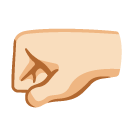


Appearance varies by platform and device. Google Noto, Twemoji, and OpenMoji are open-source.