🤛🏼
The Emoji
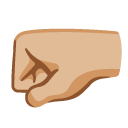
Left-facing Fist: Medium-light Skin Tone
U+1F91B U+1F3FC · :leftfacing_fist_mediumlight_skin_tone:
Trend 55
Meaning layers
- interpretation
- Used for virtual fist bumps, showing solidarity or hype with someone, or as a casual 'respect' gesture. Also used ironically to signal readiness to fight or clap back.
- tiktok usage
- Appears in comment sections to fist bump creators, hype someone up, or react to relatable content with 'we're on the same team' energy.
- irony level
- 3 / 10
Platform meanings
- meaning
- Virtual fist bump to show hype, solidarity, or shared struggle with a creator or commenter.
- trend usage
- Paired with 🤜🏼 in comment chains where users fist bump each other over relatable content or shared opinions.
- hashtags
- #fistbump#solidarity#wewin#sameteam#hype
- virality score
- 52 / 100
Cultural meanings
🇺🇸
Western / Gen-Z
Widely understood as a fist bump gesture symbolizing solidarity, hype, and mutual respect — often paired with 🤜 for a full bump exchange.
🇵🇰
Pakistan & India
Used to show camaraderie and team spirit, especially in sports and motivational contexts; the gesture is understood though fist bumping is less traditional than a handshake.
🌍
Middle East
Interpreted as a show of strength and solidarity; the fist bump is familiar in younger, urban populations and sports culture.
🌐
Global Neutral
Broadly understood as a symbol of unity, encouragement, and mutual respect across digital platforms.
🇧🇩
Bangladesh
Used mainly by younger urban users to signal solidarity and team spirit in group chats and social media.
🇱🇰
Sri Lanka
Recognized among younger generations as a friendly gesture of agreement or encouragement, especially in sports communities.
🇨🇳
China
Used on platforms like WeChat and Weibo to express strength and solidarity, though local emoji equivalents are often preferred.
🇯🇵
Japan
The fist bump is culturally familiar, and this emoji is used to signal sportsmanship, teamwork, and mutual respect.
🇰🇷
South Korea
Popular in gaming, K-pop fan communities, and sports contexts as a hype and solidarity signal.
🇹🇼
Taiwan
Used in casual digital communication to show agreement and friendship, especially among younger users.
🇭🇰
Hong Kong
Familiar in sports and youth culture as a casual gesture of respect and camaraderie.
🇵🇭
Philippines
Widely used in group chats and social media to show solidarity, team spirit, and encouragement.
🇮🇩
Indonesia
Used by younger generations to signal support and hype, especially in gaming and sports contexts.
🇹🇭
Thailand
Recognized as a modern, Western-influenced gesture of solidarity and encouragement among younger users.
🇻🇳
Vietnam
Adopted by younger, digitally active users to show agreement and team energy in online spaces.
🇲🇾
Malaysia
Used in multicultural digital spaces to signal inclusivity, solidarity, and shared goals.
🇸🇦
Saudi Arabia
Understood primarily among younger, Western-influenced users as a gesture of strength and respect.
🇦🇪
UAE
Common in cosmopolitan digital spaces to show unity and mutual respect across diverse communities.
🇪🇬
Egypt
Used by younger Egyptians on social media to signal solidarity and strength, often in sports or activist contexts.
🇹🇷
Turkey
Familiar among younger users as a gesture of friendship and mutual support, especially in online communities.
🇮🇷
Iran
Adopted by younger, digitally connected Iranians to express solidarity and strength in online communication.
🇳🇬
Nigeria
Used widely to signal team spirit, hustle culture solidarity, and mutual respect in digital spaces.
🇿🇦
South Africa
Recognized as a gesture of unity and camaraderie, fitting well within South Africa's diverse youth culture.
🇬🇧
UK & Ireland
Casually used to show respect, agreement, or to give a virtual fist bump — very natural in digital communication.
🇫🇷
France
Used among younger French users to signal solidarity and respect, though written expressions are often preferred.
🇩🇪
Germany
Understood as a pragmatic gesture of agreement and teamwork; used sparingly but effectively in digital chats.
🇪🇸
Spain & Italy
Used to show enthusiastic solidarity and friendship, fitting well with expressive Southern European communication styles.
🇧🇷
Brazil
Enthusiastically used to signal hype, solidarity, and team energy, especially in sports and gaming communities.
🇲🇽
Mexico
Used to express brotherhood, mutual respect, and shared hustle — fits naturally into Mexican youth digital culture.
🌎
Latin America
Broadly used across Latin America to signal camaraderie, strength, and collective spirit in online spaces.
🇦🇺
Australia & NZ
Casually used in digital communication to show solidarity, agreement, and a relaxed form of mutual respect.
How its meaning shifted
- 2010
Emoji did not exist yet; fist bump gestures were only possible through text emoticons or descriptions.
- 2015
Introduced as part of Unicode's diverse skin tone update; primarily used literally to represent fist bumps in texts.
- 2020
Usage expanded significantly with social media fist bump chains, solidarity movements, and gaming hype culture.
- 2026
Deeply embedded in digital culture as a casual shorthand for respect, solidarity, and team spirit across all major platforms.
See it on every platform
Adjacent emojis
- Opposite
- waving handopen handshandshake
- Often confused with
- oncoming fistraised fistbackhand index pointing left
- Can replace
- right facing fistraised fistflexed biceps
Share & embed
Frequently asked
01What does the 🤛🏼 Left-facing Fist: Medium-light Skin Tone emoji mean?
A fist pointing to the left, used to represent a fist bump, solidarity, strength, or readiness for action. The medium-light skin tone modifier personalizes the gesture.
02What does 🤛🏼 mean on TikTok?
Virtual fist bump to show hype, solidarity, or shared struggle with a creator or commenter.
03What does 🤛🏼 mean on WhatsApp?
Casual fist bump to agree, celebrate, or say 'you got this' to a friend.
04What does 🤛🏼 mean in Gen-Z slang?
Used for virtual fist bumps, showing solidarity or hype with someone, or as a casual 'respect' gesture. Also used ironically to signal readiness to fight or clap back.
05Is the 🤛🏼 emoji safe to use?
A friendly fist bump gesture symbolizing solidarity, respect, teamwork, and mutual encouragement.
06What does 🤛🏼 mean in texting?
The fist bump gesture is psychologically linked to trust, connection, and mutual respect. It conveys a non-aggressive but assertive form of bonding.
07What is the shortcode for 🤛🏼?
The shortcode for Left-facing Fist: Medium-light Skin Tone is :leftfacing_fist_mediumlight_skin_tone:
08What does 🤛🏼 mean in dating?
Rarely used as a flirt tool; more of a 'we vibe' or 'I respect you' gesture. Can signal platonic warmth rather than romantic interest.
Safety & usage
- Safe meaning
- A friendly fist bump gesture symbolizing solidarity, respect, teamwork, and mutual encouragement.
- Caution
- Can be used to signal readiness for confrontation or to intimidate when used alongside aggressive language.
Generally safe, but context matters — combined with threatening language it may signal aggression. Mostly benign in standard usage.
How it looks across platforms


Appearance varies by platform and device. Google Noto, Twemoji, and OpenMoji are open-source.