🫷
The Emoji
Leftwards Pushing Hand
U+1FAF7 · :leftwards_pushing_hand:
Trend 68
Meaning layers
- interpretation
- Used to push away negativity, bad vibes, toxic people, or unwanted situations. Often paired with 🫸 to create a 'pushing away' sandwich gesture for emphasis.
- tiktok usage
- Appears in 'pushing away [bad thing]' trend videos, used in text overlays to dramatically reject something — e.g., 🫷 trauma 🫸
- irony level
- 5 / 10
Platform meanings
- meaning
- Symbol of rejection, boundary-setting, or dramatically pushing away concepts, people, or habits in video text overlays.
- trend usage
- Used in the '🫷 [thing] 🫸' trend to sandwich undesirable elements. Also popular in 'pushing away toxic energy' POV content.
- hashtags
- #pushingaway#boundaries#nope#rejectthat#pushhand
- virality score
- 72 / 100
Cultural meanings
🇺🇸
Western / Gen-Z
Primarily used as a boundary-setting and rejection emoji, heavily embedded in the 🫷🫸 sandwich meme format. Associated with 'not my problem' energy and self-protective humor.
🇵🇰
Pakistan & India
Used among urban youth to push back on unsolicited opinions, family pressure, or unwanted advice. The gesture culturally aligns with 'ruk ja' (stop) energy in Hindi-Urdu slang online.
🌍
Middle East
Interpreted as a 'stop' or 'back off' gesture — culturally resonant since the open palm push is a recognized gesture for boundary-setting across Arabic-speaking communities.
🌐
Global Neutral
Universally understood as a pushing or stopping gesture. Rarely misinterpreted across cultures due to the intuitive physical nature of a hand pushing away.
🇧🇩
Bangladesh
Used by younger internet users to deflect criticism or push back on expectations, especially around academic pressure or familial obligations in digital conversations.
🇱🇰
Sri Lanka
Adopted by Gen Z social media users to express resistance to social norms or unwanted situations, typically in English-language online spaces.
🇨🇳
China
Used on platforms like Weibo and WeChat to reject invitations or push back on gossip. The directional nature resonates with Chinese internet aesthetics of emoji-based storytelling.
🇯🇵
Japan
Interpreted with nuance — the outward push could be seen as slightly rude in direct communication, so it's used more playfully in meme contexts rather than sincere rejection.
🇰🇷
South Korea
Popular in Korean online spaces as part of emoji chains pushing away stress, exams, or toxic relationships. Fits well with the 'I'm in my healing era' trend on Korean social media.
🇹🇼
Taiwan
Used on PTT and Instagram among younger Taiwanese users to reject drama or push away trending controversies they want no part of.
🇭🇰
Hong Kong
Common in Cantonese-language group chats to signal 'don't come near' or 'absolutely not' in a humorous way, often paired with other rejection emojis.
🇵🇭
Philippines
Widely used in Filipino internet culture to push away 'toxic' content or people, fitting naturally into the expressive, emoji-heavy communication style common on Filipino social media.
🇮🇩
Indonesia
Used among Indonesian youth on Twitter and TikTok to reject trends, peer pressure, or bad news — culturally aligns with the phrase 'udah, stop deh' (okay, stop).
🇹🇭
Thailand
Thai social media users adopt it to push away bad luck, bad vibes, or unwanted celebrity drama, often in playful group chat contexts.
🇻🇳
Vietnam
Used by Vietnamese Gen Z to signal disinterest or to push away overwhelming expectations, especially around academics and career pressure shared in youth group chats.
🇲🇾
Malaysia
Popular in Malaysian Malay and English-language chats as a dismissive but friendly gesture — often used humorously to reject suggestions or annoying memes.
🇸🇦
Saudi Arabia
Interpreted as a firm but non-aggressive 'stop' — used in social media contexts to push back on content deemed inappropriate or overwhelming.
🇦🇪
UAE
In the cosmopolitan UAE digital space, used across English and Arabic conversations to reject bad vibes or dramatically push away undesirable trends in a humorous way.
🇪🇬
Egypt
Used in Egyptian Twitter and TikTok culture to push back on public figures, opinions, or social pressures — fits the expressive and dramatic online communication style.
🇹🇷
Turkey
Common in Turkish Twitter (X) culture to reject bad takes or push away political or social content users disagree with, often in ironic or meme contexts.
🇮🇷
Iran
Used on Instagram and Telegram among Iranian youth to subtly push back on censorship, social expectations, or unwanted digital noise in coded or humorous ways.
🇳🇬
Nigeria
Widely used in Nigerian Twitter and WhatsApp to reject 'nonsense,' bad advice, or to push away haters — resonates with the culture's bold, expressive online communication.
🇿🇦
South Africa
Used in South African online spaces to push away load-shedding jokes, bad news, or social pressures — often in humorous WhatsApp group contexts.
🇬🇧
UK & Ireland
Used with dry British humor — 'me 🫷 yet another tube strike' — to push away everyday annoyances with understated comedic effect.
🇫🇷
France
Adopted among French Gen Z to reject trends or cultural impositions, sometimes used to push back on American cultural dominance in online spaces with ironic flair.
🇩🇪
Germany
Used in German social media to push away inefficiency, bureaucracy jokes, or bad weather — fits a culture that appreciates directness in both gesture and communication.
🇪🇸
Spain & Italy
Used expressively to push away drama or unwanted advice — southern European cultures resonate with the dramatic physical gesture energy embedded in this emoji.
🇧🇷
Brazil
Extremely popular in Brazilian social media to push away 'mimimi' (complaining) or drama. Fits perfectly with the expressive, high-energy emoji culture of Brazilian Twitter and TikTok.
🇲🇽
Mexico
Used in Mexican online culture to push away chismes (gossip), bad vibes, or as part of meme formats. Pairs well with the culture's love for expressive, layered digital communication.
🌎
Latin America
Broadly used across Latin America to push away toxic relationships, negativity, or bad news — resonates across Spanish-speaking communities who use emoji-heavy expressive communication.
🇦🇺
Australia & NZ
Used casually to push away bad weather, work stress, or anything cringe with the typical Aussie 'nah mate' energy — low-stakes, high-humor deployment.
How its meaning shifted
- 2010
Did not exist — Unicode 15.0 was not released until 2022, so this emoji had no usage in 2010.
- 2015
Still nonexistent in 2015. The concept would have been approximated with ✋ or 🖐️ for stop/push gestures.
- 2020
Still not available. Users in 2020 relied on ✋, 🙅, or text-based expressions for pushing away concepts.
- 2026
Fully integrated into Gen Z emoji vocabulary. Core component of the 🫷🫸 meme sandwich format, boundary-setting aesthetics, and rejection humor across all major platforms.
See it on every platform
Adjacent emojis
- Often confused with
- raised handwaving handbackhand index pointing left
- Can replace
- raised handno entryprohibited
Share & embed
Frequently asked
01What does the 🫷 Leftwards Pushing Hand emoji mean?
A hand facing left with fingers extended and palm outward, as if pushing something away or signaling someone to stop or back off.
02What does 🫷 mean on TikTok?
Symbol of rejection, boundary-setting, or dramatically pushing away concepts, people, or habits in video text overlays.
03What does 🫷 mean on WhatsApp?
Signals 'stop,' 'back off,' or 'no thank you' in a casual conversation. Less harsh than a flat-out no.
04What does 🫷 mean in Gen-Z slang?
Used to push away negativity, bad vibes, toxic people, or unwanted situations. Often paired with 🫸 to create a 'pushing away' sandwich gesture for emphasis.
05Is the 🫷 emoji safe to use?
Setting boundaries, rejecting negativity, saying no, stopping something, creating personal space, resisting peer pressure.
06What does 🫷 mean in texting?
Represents the psychological act of establishing personal space and asserting boundaries. The outward push gesture is universally associated with protective distancing behavior.
07What is the shortcode for 🫷?
The shortcode for Leftwards Pushing Hand is :leftwards_pushing_hand:
08What does 🫷 mean in dating?
Can be used playfully to 'push away' a flirtatious comment while actually inviting more attention — a coy rejection that signals interest.
Safety & usage
- Safe meaning
- Setting boundaries, rejecting negativity, saying no, stopping something, creating personal space, resisting peer pressure.
- Caution
- Can be used to push away or dismiss marginalized voices, reject help, or signal aggressive territorial behavior in heated online arguments.
Generally safe and low-risk. In rare aggressive contexts it can signal hostility or contemptuous dismissal. Not inherently coded or weaponized.
How it looks across platforms
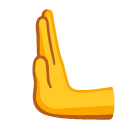

Appearance varies by platform and device. Google Noto, Twemoji, and OpenMoji are open-source.