🫷🏽
The Emoji
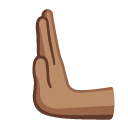
Leftwards Pushing Hand: Medium Skin Tone
U+1FAF7 U+1F3FD · :leftwards_pushing_hand_medium_skin_tone:
Trend 58
Meaning layers
- interpretation
- Used to signal 'back off,' 'not today,' or to push away unwanted energy, people, or situations. Also used to dramatize rejecting something or someone with flair.
- tiktok usage
- Appears in reaction videos and comment sections to push away cringe content, bad takes, or toxic behavior. Often paired with 🫸🏽 to create a 'pushing away' visual effect.
- irony level
- 5 / 10
Platform meanings
- meaning
- Represents pushing away bad energy, toxic people, or unwanted trends. Used as a reaction to cringe or controversial content.
- trend usage
- Frequently used in comment sections alongside text like 'pushing this away from my FYP 🫷🏽' or in duet/stitch videos reacting to content the creator disagrees with.
- hashtags
- #pushingaway#nottoday#boundaries#fypreaction#vibecheck
- virality score
- 62 / 100
Cultural meanings
🇺🇸
Western / Gen-Z
Widely understood as a boundary-setting or 'back off' gesture; frequently used in ironic meme formats and self-empowerment content.
🇵🇰
Pakistan & India
Used to signal refusal or disagreement, fitting naturally into texting culture where hand gestures carry strong communicative weight. Also used playfully among friends to reject teasing.
🌍
Middle East
Interpreted as a 'stop' or 'hold on' gesture; culturally resonant given the significance of hand gestures in Arabic communication. Can signal both seriousness and playful banter.
🌐
Global Neutral
Generally understood as a pushing or stopping gesture universally; safe to use across most cultural contexts without major misinterpretation.
🇧🇩
Bangladesh
Used similarly to Indian subcontinent norms — signals refusal, pushing back, or playful rejection in casual conversation.
🇱🇰
Sri Lanka
Understood as a stop or refusal gesture; used in casual digital communication among younger generations to express boundary-setting.
🇨🇳
China
The leftward push may be interpreted as directional rather than emotional; younger WeChat and Weibo users may use it for 'pushing away' in meme contexts but it's less mainstream.
🇯🇵
Japan
Carries a polite yet firm 'please stop' nuance; Japanese users may appreciate the non-verbal subtlety of this gesture as a soft rejection without direct confrontation.
🇰🇷
South Korea
Popular in K-drama fan communities to react to dramatic moments; used to 'push away' second-hand embarrassment or cringe content online.
🇹🇼
Taiwan
Used in a similar meme-forward way to South Korea; often seen in LINE and Instagram contexts to humorously reject someone's terrible idea.
🇭🇰
Hong Kong
Used casually in Cantonese-speaking digital spaces; conveys 'not having it' with an informal, modern tone common in Hong Kong youth culture.
🇵🇭
Philippines
Very expressive digital culture embraces this emoji enthusiastically; used to dramatically push away problems, bad luck, or unwanted news.
🇮🇩
Indonesia
Used to signal rejection or disagreement while maintaining social politeness; fits well in Indonesian WhatsApp group culture where direct refusal can be softened by emoji.
🇹🇭
Thailand
Fits into Thai digital communication as a gentle but firm rejection; used in reaction to content that is 'mai ao' (don't want) without causing direct confrontation.
🇻🇳
Vietnam
Used among Vietnamese youth to signal 'pushing away' negativity or drama; popular in Facebook and Zalo chats for expressive emotional communication.
🇲🇾
Malaysia
Common in Malaysian group chats across WhatsApp and Telegram; used to push back on bad suggestions in a light-hearted way that maintains group harmony.
🇸🇦
Saudi Arabia
Interpreted as a respectful but firm 'stop' gesture; used among younger Saudis on Snapchat and X to signal disengagement from drama or unsolicited opinions.
🇦🇪
UAE
Used in the cosmopolitan UAE context to signal boundary-setting in a culturally neutral way; resonates across the expat and local youth digital communities.
🇪🇬
Egypt
Used expressively in Egyptian social media to push away 'alf 3een' (evil eye) vibes or drama; integrates naturally into the humor-heavy Egyptian digital communication style.
🇹🇷
Turkey
Fits into Turkish internet culture as a reaction to unwanted commentary or drama; used in Instagram and Twitter contexts to signal 'get out of here' with a comic touch.
🇮🇷
Iran
Used on Instagram and Telegram — primary digital spaces — to push away censored content jokes or as a symbol of rejecting societal pressures among youth.
🇳🇬
Nigeria
Embraced in Naija internet culture to 'push away' bad energy, enemies, or bad luck; often used in spiritual contexts like 'pushing away generational curses 🫷🏽'.
🇿🇦
South Africa
Used by South African youth on TikTok and Twitter to push away load-shedding jokes, political drama, or people trying to dim their shine.
🇬🇧
UK & Ireland
Used with dry British/Irish humor to dismiss something with understated flair; fits into the 'I simply won't be having that' tone common in UK Twitter culture.
🇫🇷
France
Used in French digital communication to signal a 'non merci' (no thank you) rejection; appreciated for its visual subtlety matching the French preference for indirect communication.
🇩🇪
Germany
Used more literally and earnestly — Germans may use it to signal a genuine stop or directional instruction rather than ironic dismissal.
🇪🇸
Spain & Italy
In expressive Spanish and Italian digital culture, this emoji adds physical flair to text-based arguments; used dramatically to push away bad opinions or rivals.
🇧🇷
Brazil
Brazilian users love expressive emojis and use this to dramatically push away bad vibes, exes, or anything 'não tô afim' (not feeling it); highly popular on TikTok Brazil.
🇲🇽
Mexico
Used in Mexican internet culture to push away chismes (gossip), drama, or bad luck; often combined with other hand emojis for comedic effect.
🌎
Latin America
Across Latin America, used as a vibrant rejection gesture in meme culture and casual chat; resonates strongly with the hand-gesture-heavy communication styles of the region.
🇦🇺
Australia & NZ
Used casually in Australian and New Zealand digital culture to signal 'yeah nah' — a uniquely ANZ way of agreeing to disagree or firmly but politely pushing something away.
How its meaning shifted
- 2010
This emoji did not exist in 2010; Unicode 14.0 was years away and hand gesture emojis were limited to a few basic options.
- 2015
Still non-existent; the emoji landscape had expanded but directional push hand emojis had not yet been conceived or proposed.
- 2020
The emoji was proposed and in development; conversations around the need for directional and interactive gesture emojis were growing in the Unicode Consortium.
- 2026
Firmly established in Gen Z and millennial digital vocabulary as a boundary-setting, rejection, and meme gesture; increasingly used in mental health, self-empowerment, and ironic internet content.
See it on every platform
Adjacent emojis
- Often confused with
- backhand index pointing leftraised back of handwaving hand
Share & embed
Frequently asked
01What does the 🫷🏽 Leftwards Pushing Hand: Medium Skin Tone emoji mean?
A hand pushing or gesturing to the left with a medium skin tone modifier, introduced in Unicode 14.0 (2021). It depicts an open palm facing left as if pushing something away or signaling 'stop' in a leftward direction.
02What does 🫷🏽 mean on TikTok?
Represents pushing away bad energy, toxic people, or unwanted trends. Used as a reaction to cringe or controversial content.
03What does 🫷🏽 mean on WhatsApp?
Sending this in a chat typically means 'back off,' 'slow down,' or 'I need space.' Also used playfully to reject a friend's suggestion.
04What does 🫷🏽 mean in Gen-Z slang?
Used to signal 'back off,' 'not today,' or to push away unwanted energy, people, or situations. Also used to dramatize rejecting something or someone with flair.
05Is the 🫷🏽 emoji safe to use?
Boundary-setting, playful rejection, directional communication, self-empowerment, humor in meme contexts.
06What does 🫷🏽 mean in texting?
The pushing gesture psychologically mirrors real-world boundary enforcement — using this emoji signals an internalized need to create distance, often as a defense mechanism or self-empowerment statement.
07What is the shortcode for 🫷🏽?
The shortcode for Leftwards Pushing Hand: Medium Skin Tone is :leftwards_pushing_hand_medium_skin_tone:
08What does 🫷🏽 mean in dating?
Playfully used to 'push away' a flirty comment while actually enjoying the attention — a classic push-pull dynamic in text flirting.
Safety & usage
- Safe meaning
- Boundary-setting, playful rejection, directional communication, self-empowerment, humor in meme contexts.
- Caution
- Can be used in harassment contexts to 'push away' or dismiss marginalized groups or individuals in a dehumanizing way when paired with toxic language.
Generally safe; context-dependent toxicity is low. Monitor for use in coordinated harassment where the gesture is used to collectively dismiss or push out specific users.
How it looks across platforms

Appearance varies by platform and device. Google Noto, Twemoji, and OpenMoji are open-source.