🦵🏾
The Emoji
Leg: Medium-dark Skin Tone
U+1F9B5 U+1F3FE · :leg_mediumdark_skin_tone:
Trend 52
Meaning layers
- interpretation
- Used to flex leg day results, hype up someone's physique, or humorously reference running away from problems or responsibilities. Also used in body positivity contexts.
- tiktok usage
- Appears in gym transformation videos, 'leg day' fitness content, and self-deprecating humor about skipping leg workouts. Sometimes used to say 'I'm out of here' symbolically.
- irony level
- 4 / 10
Platform meanings
- meaning
- Represents leg day, fitness progress, running away from something, or general lower-body flex content.
- trend usage
- Used in gym transformation TikToks, 'POV: leg day hits different' videos, and dance content showing off footwork.
- hashtags
- #legday#gymtok#fitnessmotivation#legworkout#bodypositive
- virality score
- 58 / 100
Cultural meanings
🇺🇸
Western / Gen-Z
Strongly tied to gym culture and the 'never skip leg day' meme; used confidently to celebrate fitness or humorously admit skipping leg workouts. The medium-dark skin tone is valued for representation.
🇵🇰
Pakistan & India
Primarily used in fitness and sports contexts; gaining popularity among urban youth in gym culture on Instagram and WhatsApp. The skin tone modifier resonates with many South Asian users seeking better representation.
🌍
Middle East
Used in fitness and sports contexts, particularly among youth active on Instagram and Snapchat. The medium-dark skin tone is relatably representative for many users in the region.
🌐
Global Neutral
Universally understood as a leg symbol; used for fitness, sports, injury discussions, or physical movement across cultures without strong secondary meanings.
🇧🇩
Bangladesh
Used mainly in fitness contexts among urban youth; straightforward representation of the leg with the skin tone being a point of cultural relatability for many Bangladeshi users.
🇱🇰
Sri Lanka
Appears in fitness and sports social media among younger demographics; the medium-dark tone resonates with many Sri Lankan users as a representation of their own skin.
🇨🇳
China
Used in fitness and health content on platforms like WeChat and Weibo; less culturally specific meaning beyond the literal leg, but valued in sports and exercise discussions.
🇯🇵
Japan
Adopted in fitness and sports content; Japanese users may use it in running or gym contexts. The skin tone modifier is less culturally charged in Japan but acknowledged in diverse representation discussions.
🇰🇷
South Korea
Popular in K-fitness and idol culture contexts; used to comment on leg aesthetics, dance workouts, or K-pop training routines. Legs are culturally noted as an aesthetic feature in Korean beauty standards.
🇹🇼
Taiwan
Used in fitness and outdoor activity content; straightforward usage similar to global norms with the skin tone being appreciated in representation conversations.
🇭🇰
Hong Kong
Common in fitness and running communities; used in gym posts and sports updates. The medium-dark skin tone is less locally specific but accepted in global representation discussions.
🇵🇭
Philippines
Used casually in fitness, dance, and sports content; the medium-dark skin tone is highly relatable for many Filipino users and appreciated as inclusive representation.
🇮🇩
Indonesia
Popular in fitness content and sports discussions; the medium-dark tone is relatably representative for many Indonesian users. Used humorously in gym meme culture among youth.
🇹🇭
Thailand
Appears in fitness, Muay Thai, and sports content; Muay Thai culture makes leg references particularly meaningful. Used in sports communities to celebrate kicking techniques.
🇻🇳
Vietnam
Used in sports and fitness contexts, especially among urban youth; straightforward representation with growing appreciation for skin tone diversity in emoji usage.
🇲🇾
Malaysia
Common in fitness and sports social media; the medium-dark skin tone resonates with many Malaysian users. Used in gym culture content and running communities.
🇸🇦
Saudi Arabia
Used in fitness and sports contexts, particularly in men's gym culture and soccer discussions. Modest cultural norms mean it's kept in purely athletic or medical contexts.
🇦🇪
UAE
Popular in fitness and lifestyle content among the diverse UAE population; the medium-dark tone broadly represents many residents. Used in gym culture and sports event discussions.
🇪🇬
Egypt
Used in sports and fitness contexts; soccer culture makes leg references meaningful. The medium-dark skin tone is relatably representative for many Egyptian users.
🇹🇷
Turkey
Appears in fitness and sports content; used in gym culture and soccer discussions. Straightforward usage with the skin tone appreciated in body diversity conversations.
🇮🇷
Iran
Used primarily in sports and fitness contexts; gym culture among youth drives usage. Kept to athletic and health-related discussions given cultural context.
🇳🇬
Nigeria
Widely relatable due to the medium-dark skin tone; used confidently in fitness, sports, and everyday expression. Nigerian gym culture and football discussions frequently feature this emoji.
🇿🇦
South Africa
The medium-dark skin tone is broadly representative; used in fitness, running culture, and sports discussions. South African running events and rugby culture give it particular resonance.
🇬🇧
UK & Ireland
Used in fitness and gym culture similar to US usage; tied to leg day memes and running content. The medium-dark skin tone is valued for diversity and representation.
🇫🇷
France
Used in sports and fitness contexts; cycling and football culture give legs specific cultural relevance. The skin tone modifier is appreciated in French diversity and inclusion conversations.
🇩🇪
Germany
Appears in fitness and sports content; used practically in gym and running communities. Germans may use it in Bundesliga or athletics discussions.
🇪🇸
Spain & Italy
Used in football and cycling culture, where leg strength is highly valued. Appears in fitness posts and sports commentary; the skin tone adds inclusive representation.
🇧🇷
Brazil
Highly relatable given the medium-dark skin tone's broad representation in Brazil; used in football, capoeira, and fitness content. Legs carry cultural significance in Brazilian sports and dance.
🇲🇽
Mexico
Used in fitness, football, and sports contexts; the skin tone resonates with many Mexican users. Appears in gym culture content and sports event discussions.
🌎
Latin America
Broadly relatable across Latin America for the skin tone and athletic cultural significance; used in football, fitness, and dance content across the region.
🇦🇺
Australia & NZ
Used in fitness and outdoor activity content; running, surfing, and sports culture give it relevance. The medium-dark skin tone supports multicultural representation valued in Australian and NZ social media.
How its meaning shifted
- 2010
This emoji did not exist yet; skin tone modifiers were not introduced until 2015, and body part emojis came later.
- 2015
Skin tone modifiers were introduced; early adoption of the leg emoji with tone modifiers was limited and primarily literal in meaning — used for medical or anatomical discussions.
- 2020
Gained traction in gym culture, fitness TikTok, and body positivity movements; 'never skip leg day' meme culture solidified its humorous usage. Skin tone modifier became more celebrated for representation.
- 2026
Firmly embedded in fitness social media, body positivity discourse, and gym meme culture. The medium-dark skin tone version is actively chosen by users who value accurate self-representation in digital communication.
See it on every platform
Adjacent emojis
- Often confused with
- footboothiking boot
- Can replace
- flexed bicepsperson runningfoot
Share & embed
Frequently asked
01What does the 🦵🏾 Leg: Medium-dark Skin Tone emoji mean?
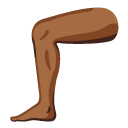
A human leg depicted with medium-dark skin tone, showing the lower limb from hip to foot. Part of the inclusive skin tone modifier system introduced to represent diverse human appearances.
02What does 🦵🏾 mean on TikTok?
Represents leg day, fitness progress, running away from something, or general lower-body flex content.
03What does 🦵🏾 mean on WhatsApp?
Casual reference to legs, working out, or going for a walk/run. Used to indicate physical activity.
04What does 🦵🏾 mean in Gen-Z slang?
Used to flex leg day results, hype up someone's physique, or humorously reference running away from problems or responsibilities. Also used in body positivity contexts.
05Is the 🦵🏾 emoji safe to use?
Represents the human leg for fitness, sports, medical, anatomy, or body positivity discussions in a completely neutral and safe way.
06What does 🦵🏾 mean in texting?
The skin tone modifier adds a layer of personal identity and representation, making the emoji emotionally resonant for users who see themselves reflected. It can also evoke pride in physical achievement or body positivity.
07What is the shortcode for 🦵🏾?
The shortcode for Leg: Medium-dark Skin Tone is :leg_mediumdark_skin_tone:
08What does 🦵🏾 mean in dating?
Can be used flirtatiously to compliment someone's legs or physique, especially in athletic or gym dating contexts. 'Those legs tho 🦵🏾' is a common flirty expression.
Safety & usage
- Safe meaning
- Represents the human leg for fitness, sports, medical, anatomy, or body positivity discussions in a completely neutral and safe way.
- Caution
- Could be used in unsolicited or objectifying contexts to comment on someone's body in a sexual or harassing manner.
Generally safe; however, like any body part emoji, it can be misused in harassment or unsolicited sexual commentary. Context is key — monitor for usage in combination with other suggestive emojis in unwanted messages.
How it looks across platforms


Appearance varies by platform and device. Google Noto, Twemoji, and OpenMoji are open-source.