🦵🏼
The Emoji
Leg: Medium-light Skin Tone
U+1F9B5 U+1F3FC · :leg_mediumlight_skin_tone:
Trend 52
Meaning layers
- interpretation
- Used to flex on someone ('I walked so you didn't have to'), represent leg day at the gym, or humorously comment on skipping leg day. Also used sarcastically when someone is 'running' from problems or commitments.
- tiktok usage
- Appears in gym content, 'leg day' culture, and fitness transformation videos. Also used in humorous 'I have legs and I will use them to walk away from this situation' captions.
- irony level
- 5 / 10
Platform meanings
- meaning
- Primarily used in gym, fitness, and leg day content. Also appears in dance videos, running challenges, and body transformation posts.
- trend usage
- Featured in #LegDay challenges, fitness transformation duets, and humorous 'my legs after hiking' reaction content.
- hashtags
- #LegDay#NeverSkipLegDay#LegWorkout#FitnessCheck#GymLife
- virality score
- 55 / 100
Cultural meanings
🇺🇸
Western / Gen-Z
Heavily associated with gym culture and 'never skip leg day' meme humor. Also used in body confidence and fitness transformation content on social media.
🇵🇰
Pakistan & India
Generally used literally to discuss legs, walking, or fitness. In urban youth contexts it appears in gym content, cricket-related running commentary, and Bollywood dance posts.
🌍
Middle East
Used in fitness and sports contexts, particularly among gym-going youth. Body part emojis are generally used conservatively and contextually.
🌐
Global Neutral
Universally understood as a representation of the human leg. Used in fitness, medical, and general physical activity discussions without cultural baggage.
🇧🇩
Bangladesh
Primarily literal usage related to walking, sports like cricket and football, or general physical activity. Less tied to gym meme culture.
🇱🇰
Sri Lanka
Used in sports and fitness contexts, particularly around cricket and walking/hiking. Literal interpretation dominates.
🇨🇳
China
Associated with fitness content on Douyin (Chinese TikTok) and WeChat fitness groups. Leg exercises and dance content commonly feature this emoji.
🇯🇵
Japan
Used in fitness apps, running clubs, and dance culture content. Japanese users may also use it in onsen (hot spring) related content discussing leg fatigue.
🇰🇷
South Korea
Common in K-pop dance practice content, fitness culture, and idol workout references. Leg strength and dance moves are culturally celebrated.
🇹🇼
Taiwan
Used in fitness and hiking content, particularly as Taiwan has a strong outdoor activity culture. Also appears in dance and exercise posts.
🇭🇰
Hong Kong
Seen in urban fitness content, hiking posts (Hong Kong has popular trails), and general health discussions.
🇵🇭
Philippines
Used in fitness and basketball content, as well as dance culture posts. Literal and humorous uses coexist in social media.
🇮🇩
Indonesia
Appears in fitness content, badminton (a hugely popular sport) discussions, and general physical activity posts. Conservative interpretations prevail.
🇹🇭
Thailand
Common in Muay Thai and fitness content, where leg strength is culturally significant. Also used in running and wellness posts.
🇻🇳
Vietnam
Used in fitness and sports content, particularly around football and running. Generally literal with emerging gym culture usage.
🇲🇾
Malaysia
Appears in fitness, running, and sports content. Badminton and football communities use it alongside sports-related commentary.
🇸🇦
Saudi Arabia
Used primarily in sports and fitness contexts, especially among youth engaging in gym culture. Body part emojis are used conservatively in public contexts.
🇦🇪
UAE
Popular in fitness and gym culture content in a cosmopolitan context. Running events like Dubai Marathon bring seasonal usage spikes.
🇪🇬
Egypt
Used in sports commentary, particularly around football, and general fitness discussions. Humor around tired legs after fasting-season activities is common.
🇹🇷
Turkey
Appears in fitness, football, and general health content. Turkish gym culture is growing, making leg day references increasingly relatable.
🇮🇷
Iran
Used in sports and fitness contexts, particularly around football and wrestling. Conservative in public social media but common in private fitness chats.
🇳🇬
Nigeria
Associated with football, running, and dancing. Nigeria's vibrant dance culture means this emoji appears frequently in Afrobeats and party content.
🇿🇦
South Africa
Used in running culture (South Africa has major marathons like Comrades), gym content, and sports discussions. Also in rugby and football contexts.
🇬🇧
UK & Ireland
Tied to football culture, gym humor, and running content. 'Leg day' meme culture is popular among British gym-goers. Also used humorously about walking in rainy weather.
🇫🇷
France
Appears in fitness, football, and cycling content. French users may also reference it in fashion contexts (long legs as an aesthetic).
🇩🇪
Germany
Used in fitness, football (Bundesliga), and cycling content. Germans with a strong running culture use it in marathon and jogging posts.
🇪🇸
Spain & Italy
Associated with football, cycling, and beach/summer aesthetics. Leg aesthetics in fashion and sport are culturally appreciated.
🇧🇷
Brazil
Strongly linked to football, capoeira, and beach culture. Leg strength and aesthetic are culturally celebrated, making this a popular emoji in fitness and sports content.
🇲🇽
Mexico
Used in football content, gym culture, and dance posts (cumbia, bachata). Also appears in humorous contexts about long walks or tired legs.
🌎
Latin America
Broadly used across Latin America in football, dancing, and fitness content. Body confidence culture makes leg-related emojis popular in positive self-expression.
🇦🇺
Australia & NZ
Used in running, surfing, hiking, and gym content. Australia's outdoor culture and events like City2Surf make this emoji seasonally popular.
How its meaning shifted
- 2010
The leg emoji did not exist in 2010. Body part emojis were extremely limited in early Unicode, and the concept of skin tone modifiers was years away.
- 2015
Still pre-release; the leg emoji had not yet been introduced. Body-related expression relied on stick figures or generic human emojis.
- 2020
Freshly adopted into gym culture and fitness social media following its 2018 Unicode introduction. 'Never skip leg day' meme culture began incorporating it heavily.
- 2026
Firmly embedded in fitness, dance, and body positivity content. Skin tone variants are actively used for representation. Appears regularly in gym TikTok, running content, and summer aesthetics.
See it on every platform
Adjacent emojis
- Often confused with
- foothigh heeled shoeperson in lotus position
- Can replace
- flexed bicepsperson runningfoot
Share & embed
Frequently asked
01What does the 🦵🏼 Leg: Medium-light Skin Tone emoji mean?
A human leg depicted with medium-light skin tone, typically showing the lower limb from hip or thigh down to the foot. Used to reference legs, walking, running, fitness, or physical movement.
02What does 🦵🏼 mean on TikTok?
Primarily used in gym, fitness, and leg day content. Also appears in dance videos, running challenges, and body transformation posts.
03What does 🦵🏼 mean on WhatsApp?
Casually used to talk about legs, walking distances, or gym sessions. Friends use it to say 'my legs are dead after that walk.'
04What does 🦵🏼 mean in Gen-Z slang?
Used to flex on someone ('I walked so you didn't have to'), represent leg day at the gym, or humorously comment on skipping leg day. Also used sarcastically when someone is 'running' from problems or commitments.
05Is the 🦵🏼 emoji safe to use?
A straightforward representation of a human leg used in fitness, sports, dance, and body-positive content.
06What does 🦵🏼 mean in texting?
The leg emoji often conveys a sense of physical empowerment or bodily awareness. In gym culture it can evoke pride or humor (leg day). In body positivity contexts it signals self-acceptance and confidence in one's physical form.
07What is the shortcode for 🦵🏼?
The shortcode for Leg: Medium-light Skin Tone is :leg_mediumlight_skin_tone:
08What does 🦵🏼 mean in dating?
Can be used flirtatiously to compliment someone's legs or hint at physical attraction. Sometimes paired with fire emoji to indicate someone has great legs.
Safety & usage
- Safe meaning
- A straightforward representation of a human leg used in fitness, sports, dance, and body-positive content.
- Caution
- Can be used in unsolicited commentary about someone's body or legs, which may constitute harassment. Rarely weaponized but possible in body-shaming contexts.
Generally safe. In rare cases may be used in inappropriate body-focused messages or unsolicited flirtatious comments about physical appearance. Context is key.
How it looks across platforms
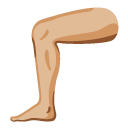


Appearance varies by platform and device. Google Noto, Twemoji, and OpenMoji are open-source.