🏌🏼♂️
The Emoji
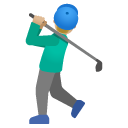
Man Golfing: Medium-light Skin Tone
U+1F3CC U+1F3FC U+200D U+2642 U+FE0F · :man_golfing_mediumlight_skin_tone:
Trend 55
Meaning layers
- interpretation
- Used to represent privilege, old-money aesthetics, prep culture, or bougie lifestyle. Also used ironically to mock wealthy out-of-touch behavior or 'country club dad' energy.
- tiktok usage
- Appears in 'old money' aesthetic content, preppy lifestyle videos, and ironically in jokes about rich dads or corporate nepotism. Often paired with khaki and polo shirt references.
- irony level
- 7 / 10
Platform meanings
- meaning
- Represents old-money aesthetics, preppy culture, or ironic wealth commentary. Used in lifestyle content and privilege humor.
- trend usage
- Featured in 'old money aesthetic' trend, 'things rich dads do' videos, and ironic commentary on wealth disparity. Also in actual golf content from younger golfers.
- hashtags
- #OldMoney#GolfLife#PrepCulture#CountryClub#GolfTok
- virality score
- 52 / 100
Cultural meanings
🇺🇸
Western / Gen-Z
Used ironically to mock boomer or wealthy elite culture, but also genuinely embraced in 'old money' and prep aesthetic trends gaining popularity among younger generations.
🇵🇰
Pakistan & India
Golf is associated with upper-class elite culture and colonial legacy; the emoji signals wealth, club membership, and aspirational status in major metros like Mumbai or Lahore.
🌍
Middle East
Golf is a popular leisure activity among affluent classes in the region; the emoji straightforwardly represents sport, luxury leisure, and high-society lifestyle.
🌐
Global Neutral
Universally understood as representing golf — a sport with global participation at various levels, though widely associated with wealth and leisure.
🇧🇩
Bangladesh
Golf is a niche elite sport; this emoji signals significant wealth and upper-class status, associated with exclusive Dhaka golf clubs and corporate executives.
🇱🇰
Sri Lanka
Associated with colonial-era golf clubs that remain symbols of elite social standing; the emoji carries connotations of old money and high society.
🇨🇳
China
Golf has grown among China's nouveau riche and business class; the emoji signals success, business networking, and aspirational middle-to-upper class lifestyle.
🇯🇵
Japan
Golf is extremely popular among Japanese businessmen and professionals; the emoji is associated with corporate culture, weekend leisure, and business relationship-building.
🇰🇷
South Korea
Golf has boomed in popularity, especially after Korean golfers achieved global success; used to represent both elite leisure and genuine sports enthusiasm.
🇹🇼
Taiwan
Similar to Japan and Korea — golf represents business culture and upscale weekend leisure, commonly used among professionals and business communities.
🇭🇰
Hong Kong
Golf is tied to the finance and business elite; the emoji signals wealth, exclusivity, and corporate networking in a highly competitive professional environment.
🇵🇭
Philippines
Golf is associated with the wealthy elite and business class; the emoji signals high social status and is used literally among golf enthusiasts in exclusive clubs.
🇮🇩
Indonesia
Golf is a status symbol for Indonesia's business elite; the emoji represents luxury leisure and is used literally among corporate executives and wealthy communities.
🇹🇭
Thailand
Golf is popular among both locals and expats, particularly in tourism-heavy areas; the emoji represents leisure, tourism, and upscale lifestyle.
🇻🇳
Vietnam
Golf is a growing symbol of the emerging wealthy class; used to signal affluence and modern luxury lifestyle among Vietnam's growing middle and upper class.
🇲🇾
Malaysia
Golf is popular across business communities; the emoji represents weekend leisure, corporate networking, and status among Malaysia's professional class.
🇸🇦
Saudi Arabia
Golf is growing in popularity, especially with Vision 2030 sports investments; the emoji represents modern luxury leisure and is used straightforwardly in sports contexts.
🇦🇪
UAE
Golf is extremely popular in Dubai and Abu Dhabi as part of the luxury lifestyle ecosystem; used literally and as a signal of premium leisure culture.
🇪🇬
Egypt
Golf is a niche activity for Egypt's elite class, associated with exclusive Cairo clubs; the emoji signals wealth and upper-class social standing.
🇹🇷
Turkey
Golf is gradually growing as a leisure sport among Turkey's professional class; the emoji represents affluent lifestyle and is used straightforwardly by enthusiasts.
🇮🇷
Iran
Golf is a very niche sport with limited association; the emoji would primarily be understood literally as a sport but carries little cultural resonance for most people.
🇳🇬
Nigeria
Golf is popular among Lagos and Abuja elites and business figures; the emoji signals high social status, corporate success, and exclusive club membership.
🇿🇦
South Africa
Golf has strong historical roots and a passionate following; used straightforwardly by sports enthusiasts while also carrying some legacy associations with elite white culture.
🇬🇧
UK & Ireland
Golf has broad appeal from working class to royalty; used both sincerely by enthusiasts and sarcastically to mock out-of-touch politicians or aristocrats on the course.
🇫🇷
France
Golf is seen as a bourgeois leisure activity; the emoji can carry ironic class commentary alongside genuine use by the sport's growing French enthusiast community.
🇩🇪
Germany
Golf is an increasingly popular leisure sport among professionals; used straightforwardly to represent the sport, golf trips, or weekend leisure activities.
🇪🇸
Spain & Italy
Golf is popular in resort and tourist regions; used by leisure enthusiasts and in travel content, though it carries some associations with northern European tourist culture.
🇧🇷
Brazil
Golf is growing but remains an elite sport; the emoji signals upper-class status and is used by affluent communities and in country club social circles.
🇲🇽
Mexico
Golf is popular among Mexico's business elite and in tourist regions; used to signal luxury lifestyle and is commonly associated with resort and business culture.
🌎
Latin America
Across Latin America, golf represents the upper-class and business elite; the emoji signals wealth and exclusivity, used literally by enthusiasts and ironically in class commentary.
🇦🇺
Australia & NZ
Golf is widely popular across all social classes; used sincerely by the sport's large enthusiastic community and with light irony when referencing weekend dad culture.
How its meaning shifted
- 2010
Rarely used — emoji representation of golf was limited and skin tone modifiers didn't yet exist. Primarily used in straightforward sports contexts by early emoji adopters.
- 2015
Gained traction following Unicode 8.0 skin tone support rollout. Used mostly literally to represent golf plans, sports content, and leisure activities.
- 2020
Expanded into ironic usage — heavily deployed in political memes (especially US political Twitter) mocking leaders who golf during crises. 'Old money' aesthetic uses began emerging.
- 2026
Deeply embedded in 'old money' and 'quiet luxury' aesthetic discourse, Gen Z irony about class and privilege, golf's viral renaissance among younger audiences via social media, and genuine golf enthusiasm among a growing diverse player base.
See it on every platform
Adjacent emojis
- Often confused with
- baseballcricket gamefield hockey
- Can replace
- golfflag in holetrophy
Share & embed
Frequently asked
01What does the 🏌🏼♂️ Man Golfing: Medium-light Skin Tone emoji mean?
A man depicted swinging a golf club, shown with a medium-light skin tone modifier. Represents the sport of golf, golfing activities, or anything golf-related.
02What does 🏌🏼♂️ mean on TikTok?
Represents old-money aesthetics, preppy culture, or ironic wealth commentary. Used in lifestyle content and privilege humor.
03What does 🏌🏼♂️ mean on WhatsApp?
Used to say someone is playing golf or busy with a leisure activity. Also used casually to represent a relaxed, carefree afternoon.
04What does 🏌🏼♂️ mean in Gen-Z slang?
Used to represent privilege, old-money aesthetics, prep culture, or bougie lifestyle. Also used ironically to mock wealthy out-of-touch behavior or 'country club dad' energy.
05Is the 🏌🏼♂️ emoji safe to use?
Represents the sport of golf, leisure time, and outdoor recreation. Completely safe and appropriate in all standard contexts.
06What does 🏌🏼♂️ mean in texting?
Golf culturally signals status and affluence; emotionally it evokes leisure time, patience, and a certain aspirational calm. It can also trigger feelings of exclusion in those who associate golf with elite social circles.
07What is the shortcode for 🏌🏼♂️?
The shortcode for Man Golfing: Medium-light Skin Tone is :man_golfing_mediumlight_skin_tone:
08What does 🏌🏼♂️ mean in dating?
Rarely used as a direct flirt but may signal 'I have disposable income and leisure time' — occasionally used as a humble-brag in dating profiles to imply a wealthy, active lifestyle.
Safety & usage
- Safe meaning
- Represents the sport of golf, leisure time, and outdoor recreation. Completely safe and appropriate in all standard contexts.
- Caution
- Can be weaponized in class warfare rhetoric or used mockingly to demean someone perceived as out-of-touch, privileged, or wastefully wealthy.
No NSFW risk. Minimal toxicity potential — mainly used in political sarcasm targeting public figures. Skin tone modifier (medium-light) carries no specific controversy beyond general skin tone emoji sensitivity discussions.
How it looks across platforms
Appearance varies by platform and device. Google Noto, Twemoji, and OpenMoji are open-source.