🧘🏽♂️
The Emoji
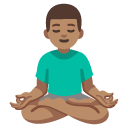
Man In Lotus Position: Medium Skin Tone
U+1F9D8 U+1F3FD U+200D U+2642 U+FE0F · :man_in_lotus_position_medium_skin_tone:
Trend 65
Meaning layers
- interpretation
- Used ironically to signal 'I'm so unbothered' or 'I'm in my healing era.' Also used genuinely for self-care, mental health days, and wellness content. Often signals someone is processing emotions or avoiding drama.
- tiktok usage
- Appears in 'healing arc' videos, shadow work content, and ironically in videos about pretending to be calm while actually stressed.
- irony level
- 6 / 10
Platform meanings
- meaning
- Represents healing eras, mindfulness trends, shadow work, and the ironic 'unbothered' aesthetic.
- trend usage
- Used in healing arc videos, 'this is your sign to rest' content, morning routine aesthetics, and ironic calm-during-chaos edits.
- hashtags
- #healingera#mindfulness#shadowwork#unbothered#morningroutine
- virality score
- 62 / 100
Cultural meanings
🇺🇸
Western / Gen-Z
Primarily used ironically to signal 'unbothered energy' or genuinely within the booming wellness, self-care, and healing era trend. Deeply embedded in therapy-speak adjacent digital culture.
🇵🇰
Pakistan & India
Carries strong cultural resonance with yoga's South Asian origins; used respectfully in wellness contexts and increasingly in urban youth wellness culture, though also used humorously to signal relaxation.
🌍
Middle East
Used in wellness and self-care content among younger, urban populations; yoga and meditation are growing in popularity especially in Gulf states, so the emoji is increasingly recognized and adopted.
🌐
Global Neutral
Universally understood as representing meditation, peace, and mindfulness with minimal negative connotations across most global contexts.
🇧🇩
Bangladesh
Emerging usage among urban youth in wellness and self-care digital content; less culturally embedded than in neighboring India but growing with global wellness trend influence.
🇱🇰
Sri Lanka
Resonates positively given the country's strong Buddhist meditation heritage; used genuinely to represent spiritual practice and mindfulness in both personal and public digital spaces.
🇨🇳
China
Used in wellness content particularly among younger urban users engaged with meditation apps like Keep and Headspace China; also seen in content about '躺平' (lying flat) culture ironically.
🇯🇵
Japan
Associated with mindfulness and Zen tradition; used in wellness content, productivity culture discussions, and increasingly in 'ikigai' themed posts about purposeful living.
🇰🇷
South Korea
Used in self-care and mental health content among youth; wellness culture is growing rapidly alongside K-wellness trends, though yoga is more associated with Western influence than traditional practice.
🇹🇼
Taiwan
Common in wellness, yoga, and mindfulness social media content; urban youth culture has broadly adopted self-care aesthetics in which this emoji fits naturally.
🇭🇰
Hong Kong
Used in wellness content particularly as stress management and mental health conversations have grown significantly among the urban population in recent years.
🇵🇭
Philippines
Seen in wellness, yoga, and mental health content; increasingly popular among young urban users engaging with global self-care digital trends.
🇮🇩
Indonesia
Used in wellness and self-care content; Bali's global reputation as a wellness destination adds cultural resonance to meditation imagery in Indonesian digital spaces.
🇹🇭
Thailand
Strong cultural alignment with Buddhism and meditation practice gives this emoji genuine spiritual weight; used both authentically for practice and casually for chill vibes.
🇻🇳
Vietnam
Growing use in wellness and self-care content among younger urban users; meditation and yoga are gaining popularity alongside broader Southeast Asian wellness trends.
🇲🇾
Malaysia
Used in wellness and fitness content; multicultural context means it's generally received positively across communities as a universal symbol of relaxation and mindfulness.
🇸🇦
Saudi Arabia
Yoga and meditation have faced some cultural restrictions historically but are increasingly practiced, particularly among younger urbanites; emoji used mainly in private wellness contexts.
🇦🇪
UAE
Very common in Dubai and Abu Dhabi's active wellness culture; the UAE has a massive yoga and meditation scene that embraces this emoji enthusiastically in digital content.
🇪🇬
Egypt
Emerging use in urban wellness content; younger Egyptians engaged with global wellness trends use it in self-care and mental health posts.
🇹🇷
Turkey
Used in wellness and yoga content among urban youth; Istanbul's growing wellness scene has made meditation imagery more recognizable and culturally accepted.
🇮🇷
Iran
Used carefully in wellness content, particularly among younger users on platforms like Instagram; yoga has a private following despite some official restrictions.
🇳🇬
Nigeria
Growing use in wellness content among Lagos and Abuja's urban professional class who have embraced global self-care culture, though less embedded than in Eastern cultures.
🇿🇦
South Africa
Used in wellness and yoga content, particularly in Cape Town's active wellness community; broadly understood and accepted across urban populations.
🇬🇧
UK & Ireland
Widely used in wellness content, often ironically in British internet culture to signal sarcastic calm; genuine use is strong in the booming UK wellness market.
🇫🇷
France
Used in wellness contexts; France has a strong yoga and meditation culture particularly in Paris, and the emoji is used both genuinely and with gentle irony.
🇩🇪
Germany
Used in wellness and mindfulness content; Germans tend to use it more straightforwardly to represent actual meditation or yoga practice rather than ironically.
🇪🇸
Spain & Italy
Used in wellness content with a Mediterranean leisure association; often paired with content about slowing down, summer routines, and holistic living.
🇧🇷
Brazil
Very popular in wellness content; Brazil has a massive yoga community and strong wellness culture, making this emoji highly recognizable and frequently used genuinely.
🇲🇽
Mexico
Used in wellness and self-care content; growing yoga and meditation culture in Mexican cities means the emoji is increasingly recognized and adopted by younger users.
🌎
Latin America
Broadly used across Latin America in wellness content; the growing mindfulness movement in major cities across the region has made this emoji a recognizable wellness symbol.
🇦🇺
Australia & NZ
Heavily used in wellness content given both countries' strong outdoor and wellness cultures; used both genuinely and ironically, fitting naturally into Australian laid-back digital tone.
How its meaning shifted
- 2010
Emoji did not exist yet; meditation concepts were represented through text or basic symbols. Wellness culture was emerging online but lacked specific emoji representation.
- 2015
Basic meditation emoji variants were beginning to appear; used mostly in spiritual and yoga-specific communities with little mainstream penetration.
- 2020
Exploded in usage due to global pandemic-driven interest in mental health, meditation apps, and self-care culture; became mainstream shorthand for mindfulness and wellbeing.
- 2026
Deeply embedded in digital wellness culture; used both genuinely in the thriving mindfulness content economy and heavily ironically in 'unbothered' and 'healing era' meme culture, with skin tone variants being deliberately chosen for personal identity expression.
See it on every platform
Adjacent emojis
- Often confused with
- person sitting cross leggedperson bowingfolded hands
- Can replace
- sparklesleaf fluttering in windwhite flower
Share & embed
Frequently asked
01What does the 🧘🏽♂️ Man In Lotus Position: Medium Skin Tone emoji mean?
A man sitting in the lotus position (cross-legged meditation pose) with hands resting on knees, displayed with a medium skin tone. Used to represent meditation, yoga, mindfulness, and spiritual practice.
02What does 🧘🏽♂️ mean on TikTok?
Represents healing eras, mindfulness trends, shadow work, and the ironic 'unbothered' aesthetic.
03What does 🧘🏽♂️ mean on WhatsApp?
Signals someone is relaxing, meditating, or needs a mental health break. Often sent in group chats to indicate stepping back from drama.
04What does 🧘🏽♂️ mean in Gen-Z slang?
Used ironically to signal 'I'm so unbothered' or 'I'm in my healing era.' Also used genuinely for self-care, mental health days, and wellness content. Often signals someone is processing emotions or avoiding drama.
05Is the 🧘🏽♂️ emoji safe to use?
Meditation, yoga, mindfulness, self-care, inner peace, spiritual practice, mental health awareness.
06What does 🧘🏽♂️ mean in texting?
Signals a desire for or achievement of calmness. Often used as aspirational shorthand for mindfulness, frequently deployed when the user is actually overwhelmed and signaling an intention to decompress.
07What is the shortcode for 🧘🏽♂️?
The shortcode for Man In Lotus Position: Medium Skin Tone is :man_in_lotus_position_medium_skin_tone:
08What does 🧘🏽♂️ mean in dating?
Low flirt potential; used to signal emotional maturity or that someone is 'working on themselves' — can be attractive to partners who value stability and self-awareness.
Safety & usage
- Safe meaning
- Meditation, yoga, mindfulness, self-care, inner peace, spiritual practice, mental health awareness.
- Caution
- Occasionally used to dismiss others' concerns with a passive-aggressive 'I'm too zen for your drama' attitude, which can come across as emotionally avoidant or condescending.
Generally very safe. Minor concern around cultural appropriation discourse when non-South Asian users use it to commodify yoga and meditation without acknowledging their roots. Not a hate symbol.
How it looks across platforms
Appearance varies by platform and device. Google Noto, Twemoji, and OpenMoji are open-source.