👨🏼🦼➡️
The Emoji
Man In Motorized Wheelchair Facing Right: Medium-light Skin Tone
U+1F468 U+1F3FC U+200D U+1F9BC U+200D U+27A1 U+FE0F · :man_in_motorized_wheelchair_facing_right_mediumlight_skin_tone:
Trend 28
Meaning layers
- interpretation
- Used authentically to represent disability, accessibility, or personal identity. Also used humorously in meme culture to depict someone dramatically exiting a conversation or moving forward in life.
- tiktok usage
- Appears in disability advocacy content, accessibility awareness videos, and occasionally in humorous 'rolling out of a situation' skits or transition videos.
- irony level
- 3 / 10
Platform meanings
- meaning
- Disability representation, accessibility advocacy, or humorous depiction of someone zooming away from a situation.
- trend usage
- Appears in POV skits, disability awareness challenges, and transition-effect videos where the creator 'exits' the frame.
- hashtags
- #DisabilityRepresentation#AccessibilityMatters#WheelchairLife#RollingOut#DisabledAndVisible
- virality score
- 32 / 100
Cultural meanings
🇺🇸
Western / Gen-Z
Gen Z in Western countries use this emoji both for authentic disability representation and humorously in 'zooming away from problems' meme formats, treating it with general cultural sensitivity.
🇵🇰
Pakistan & India
Used primarily in literal contexts to represent wheelchair users or disability awareness; less common in meme usage but growing in disability advocacy online spaces.
🌍
Middle East
Generally interpreted literally as a disability representation emoji; used in accessibility awareness content and by disability advocates on social media.
🌐
Global Neutral
Universally recognized as a symbol for a person using a motorized wheelchair; used cross-culturally in disability representation and accessibility contexts.
🇧🇩
Bangladesh
Primarily used in literal disability representation contexts; appears in NGO and social welfare content focused on persons with disabilities.
🇱🇰
Sri Lanka
Used mostly in disability awareness campaigns and posts about accessibility infrastructure; meme usage is minimal.
🇨🇳
China
Used in disability representation content and accessibility discussions on platforms like Weibo; skin tone specificity is noted but not culturally central.
🇯🇵
Japan
Interpreted respectfully as a symbol of disability and mobility; Japan's strong accessibility culture means it appears in transport, tourism, and public service content.
🇰🇷
South Korea
Used in disability representation and accessibility awareness; K-content creators occasionally use it in humorous exit gags but generally respectfully.
🇹🇼
Taiwan
Appears in disability rights discussions and accessibility campaigns; the rightward direction may be read as progressive movement symbolically.
🇭🇰
Hong Kong
Used in accessibility advocacy and disability representation; also occasionally in social media humor for dramatic exits from online debates.
🇵🇭
Philippines
Used in disability community posts and OFW content about accessible facilities; also appears in humorous meme captions about leaving bad situations.
🇮🇩
Indonesia
Primarily used in disability awareness and social welfare content; the medium-light skin tone is noted as closer to local complexions, aiding relatability.
🇹🇭
Thailand
Featured in disability rights content and accessibility tourism posts; also occasionally used humorously in local meme culture.
🇻🇳
Vietnam
Used in disability awareness campaigns and social media posts about mobility aids; meme usage is emerging among younger Vietnamese netizens.
🇲🇾
Malaysia
Used in disability representation and accessibility discussions; the skin tone modifier is appreciated for reflecting diverse Malaysian complexions.
🇸🇦
Saudi Arabia
Appears in disability awareness and charity content; used by organizations working with people with mobility challenges in Gulf contexts.
🇦🇪
UAE
Featured in accessibility and inclusive design discussions; the UAE's smart city initiatives mean this emoji appears in tech and infrastructure content.
🇪🇬
Egypt
Used in disability advocacy and awareness posts; social media users occasionally use it humorously to indicate leaving an argument.
🇹🇷
Turkey
Appears in disability rights discussions and accessibility posts; also used in meme culture on platforms like Twitter to indicate a dramatic exit.
🇮🇷
Iran
Used in disability representation and social welfare content; less common in meme contexts due to platform restrictions but present in Telegram communities.
🇳🇬
Nigeria
Used in disability awareness content and advocacy posts; also adopted in Naija Twitter meme culture to humorously depict leaving a situation at speed.
🇿🇦
South Africa
Featured in disability rights and inclusive society discussions; used across racial communities given the medium-light skin tone's ambiguity.
🇬🇧
UK & Ireland
Used with characteristic British dry humor in 'getting out of here' jokes and memes, as well as sincerely in disability representation and NHS accessibility content.
🇫🇷
France
Appears in disability rights discussions and accessibility advocacy; French social media users sometimes incorporate it in comedic exit memes.
🇩🇪
Germany
Used primarily in disability representation and accessibility engineering discussions; Germany's strong disability rights framework gives it a serious, respectful connotation.
🇪🇸
Spain & Italy
Used in disability awareness campaigns and accessibility posts; southern European social media users sometimes use it humorously in exit meme formats.
🇧🇷
Brazil
Adopted in disability representation content and Brazil's vibrant meme culture; commonly used in funny exit memes on platforms like Twitter and Instagram.
🇲🇽
Mexico
Featured in disability awareness posts and meme culture; Mexican internet users frequently use it in humorous 'exiting the chat' contexts.
🌎
Latin America
Broadly used across Latin America in disability representation and accessibility advocacy, with growing meme usage among youth populations.
🇦🇺
Australia & NZ
Used with Aussie/Kiwi humor in exit memes and genuinely in disability representation and NDIS-related accessibility content.
How its meaning shifted
- 2010
This specific emoji did not exist in 2010; wheelchair representation was minimal in emoji sets and disability-specific emojis were not yet standardized.
- 2015
Basic wheelchair emoji variants were beginning to emerge but directional and motorized wheelchair sequences were not yet available; disability emoji advocacy was growing.
- 2020
The motorized wheelchair emoji and directional ZWJ sequences were newly introduced, primarily used in disability representation, accessibility advocacy, and early meme adoption.
- 2026
Widely recognized in both sincere disability representation contexts and as a versatile meme emoji for dramatic exits; normalized in Gen Z digital language and disability community spaces.
See it on every platform
Compare with
Adjacent emojis
Share & embed
Frequently asked
01What does the 👨🏼🦼➡️ Man In Motorized Wheelchair Facing Right: Medium-light Skin Tone emoji mean?
A man using a motorized wheelchair and facing to the right, with medium-light skin tone. This is a ZWJ sequence combining the man emoji, medium-light skin tone modifier, motorized wheelchair emoji, and rightward arrow.
02What does 👨🏼🦼➡️ mean on TikTok?
Disability representation, accessibility advocacy, or humorous depiction of someone zooming away from a situation.
03What does 👨🏼🦼➡️ mean on WhatsApp?
Used to represent someone leaving a conversation, identify as a wheelchair user, or show support for disability awareness.
04What does 👨🏼🦼➡️ mean in Gen-Z slang?
Used authentically to represent disability, accessibility, or personal identity. Also used humorously in meme culture to depict someone dramatically exiting a conversation or moving forward in life.
05Is the 👨🏼🦼➡️ emoji safe to use?
Represents a man using a motorized wheelchair, symbolizing disability, mobility, independence, and accessibility.
06What does 👨🏼🦼➡️ mean in texting?
Symbolizes autonomy and independence for people with mobility challenges. Seeing representation in emoji form can evoke validation and a sense of visibility for disabled individuals, while for allies it signals support and awareness.
07What is the shortcode for 👨🏼🦼➡️?
The shortcode for Man In Motorized Wheelchair Facing Right: Medium-light Skin Tone is :man_in_motorized_wheelchair_facing_right_mediumlight_skin_tone:
08What does 👨🏼🦼➡️ mean in dating?
Rarely used in flirting contexts. Could be used to indicate someone is literally a wheelchair user, or humorously to say they are 'rolling into your DMs'.
Safety & usage
- Safe meaning
- Represents a man using a motorized wheelchair, symbolizing disability, mobility, independence, and accessibility.
- Caution
- Could potentially be used mockingly in ableist contexts, though this is uncommon and generally socially condemned.
Use respectfully; avoid using this emoji as a punchline in ways that demean or stereotype people with disabilities. When used in humor, ensure it punches up or represents the community positively.
How it looks across platforms
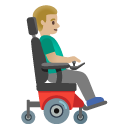
Appearance varies by platform and device. Google Noto, Twemoji, and OpenMoji are open-source.