🧎🏾♂️
The Emoji
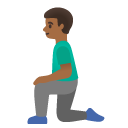
Man Kneeling: Medium-dark Skin Tone
U+1F9CE U+1F3FE U+200D U+2642 U+FE0F · :man_kneeling_mediumdark_skin_tone:
Trend 62
Meaning layers
- interpretation
- Used to express submission, worship, being humbled, taking a knee in solidarity or protest, or sarcastically 'bowing down' to someone impressive. Also used in a simp or fangirl/fanboy context.
- tiktok usage
- Appears in comments when someone is absolutely floored by another creator's talent or looks — 'I'm 🧎🏾♂️ for you.' Also used in protest or Black Lives Matter solidarity content.
- irony level
- 5 / 10
Platform meanings
- meaning
- Symbol of awe, submission to greatness, or solidarity with protest movements. High usage in Black creator spaces and sports content.
- trend usage
- Frequently used in duet reactions to incredible performances or athletic feats. Also appears in protest-solidarity TikToks referencing Colin Kaepernick or BLM movements.
- hashtags
- #TakingAKnee#KneelingInRespect#IKneel#BowDown#BlackExcellence
- virality score
- 68 / 100
Cultural meanings
🇺🇸
Western / Gen-Z
Used playfully to express being absolutely humbled or floored by someone's talent, looks, or words — heavily tied to simping and fandom culture.
🇵🇰
Pakistan & India
Interpreted primarily as a gesture of prayer, reverence, or showing respect to elders and the divine — deeply spiritual connotation.
🌍
Middle East
Strongly associated with Islamic prayer postures and acts of devotion; may be used sincerely in religious contexts around Salah.
🌐
Global Neutral
Universally understood as a gesture of humility, respect, or submission — context determines whether it reads as protest, prayer, or admiration.
🇧🇩
Bangladesh
Carries strong religious undertones, often seen as representing prayer or bowing before God in Islamic tradition.
🇱🇰
Sri Lanka
May evoke Buddhist or Hindu prayer gestures; used to express deep respect or supplication in spiritual conversations.
🇨🇳
China
Less commonly used but understood as submission or reverence; may be used in gaming and fandom contexts among younger users.
🇯🇵
Japan
Associated with deep bowing culture — read as an act of profound apology, respect, or sincere admiration in digital conversations.
🇰🇷
South Korea
Used in K-pop fan communities to express worshipping a favourite idol; also carries sincere connotations of respectful submission.
🇹🇼
Taiwan
Understood through both traditional reverence culture and modern internet meme contexts — fans kneel for their idols figuratively.
🇭🇰
Hong Kong
Used in protest contexts referencing solidarity movements, as well as in fandom and gaming communities to signal respect.
🇵🇭
Philippines
Strong religious resonance — Catholic kneeling traditions make this emoji feel devout and sincere; also used in pop culture admiration.
🇮🇩
Indonesia
Carries Islamic prayer associations; also used in social media among youth to signal humility or being totally impressed.
🇹🇭
Thailand
Resonates with Buddhist traditions of kneeling before monks or sacred figures; used genuinely in spiritual and respectful contexts.
🇻🇳
Vietnam
Associated with ancestral reverence and spiritual practices; younger users also adopt the internet meaning of deep admiration.
🇲🇾
Malaysia
Split between Islamic prayer interpretation among older users and the modern meme/admiration usage among younger, online-active Malaysians.
🇸🇦
Saudi Arabia
Primarily read through an Islamic lens — associated with Salah (prayer) and acts of submission to God; used respectfully in religious discourse.
🇦🇪
UAE
Similar to Saudi Arabia — religious undertones are dominant, but cosmopolitan youth culture also uses it in pop culture and fandom contexts.
🇪🇬
Egypt
Islamic prayer and religious devotion is the primary reading; also used in casual admiration among younger Egyptians on social media.
🇹🇷
Turkey
Dual reading: religious humility in conservative contexts and modern ironic admiration in urban youth and meme culture.
🇮🇷
Iran
Associated with prayer and spiritual devotion; used carefully in public digital spaces, more freely in private or youth-oriented platforms.
🇳🇬
Nigeria
Used across Christian and Muslim communities for prayer and reverence; also widely adopted in Afrobeats and pop culture hype contexts.
🇿🇦
South Africa
Strongly tied to protest symbolism — echoes the kneeling solidarity movements; also used in township slang to hype someone's greatness.
🇬🇧
UK & Ireland
Carries protest connotations from Premier League kneeling campaigns; also used in Gen Z slang for being totally in awe of someone.
🇫🇷
France
Linked to debates around athletes kneeling in French sports — a politically charged symbol; younger users also use it for admiration.
🇩🇪
Germany
Understood as a gesture of humility and respect; also tied to broader European discussions on kneeling as protest symbolism.
🇪🇸
Spain & Italy
Primarily read as reverence or prayer given strong Catholic cultural traditions; also used in football fan contexts for admiring a player.
🇧🇷
Brazil
Used in Afro-Brazilian cultural and religious contexts for reverence; also extremely common in football fandom to worship elite players.
🇲🇽
Mexico
Strong Catholic resonance — kneeling in pilgrimages and prayer; also used casually online to hype someone's exceptional talent or beauty.
🌎
Latin America
Across Latin America, religious humility is the foundational reading, overlaid with modern internet culture of showing admiration for idols.
🇦🇺
Australia & NZ
Used in Indigenous solidarity contexts referencing land acknowledgment and protest; also mainstream slang for being utterly impressed.
How its meaning shifted
- 2010
Emoji did not exist yet; kneeling was not represented in early emoji sets — the concept was conveyed through text like '*bows*' or prayer hands.
- 2015
Still not introduced — basic human emojis existed but specific action poses like kneeling were absent from the Unicode standard.
- 2020
Introduced and immediately became culturally significant during the global BLM movement and discussions around Colin Kaepernick's protest; skin tone variants added urgency and representation.
- 2026
Evolved into a multi-layered emoji used for protest solidarity, simping culture, fandom worship, prayer, and ironic submission — one of the more culturally dense human action emojis.
See it on every platform
Adjacent emojis
- Often confused with
- person bowingfolded handsperson in lotus position
- Can replace
- folded handsraised fistcrown
Share & embed
Frequently asked
01What does the 🧎🏾♂️ Man Kneeling: Medium-dark Skin Tone emoji mean?
A man with medium-dark skin tone in a kneeling position, depicted on one knee or both knees depending on platform rendering.
02What does 🧎🏾♂️ mean on TikTok?
Symbol of awe, submission to greatness, or solidarity with protest movements. High usage in Black creator spaces and sports content.
03What does 🧎🏾♂️ mean on WhatsApp?
Expresses that someone is overwhelmed with admiration or respect — 'That meal was incredible 🧎🏾♂️'
04What does 🧎🏾♂️ mean in Gen-Z slang?
Used to express submission, worship, being humbled, taking a knee in solidarity or protest, or sarcastically 'bowing down' to someone impressive. Also used in a simp or fangirl/fanboy context.
05Is the 🧎🏾♂️ emoji safe to use?
Represents humility, prayer, protest solidarity, deep admiration, or reverence — generally positive and safe in most contexts.
06What does 🧎🏾♂️ mean in texting?
Kneeling is a deeply embodied gesture tied to vulnerability, respect, and surrender. Psychologically it signals willingness to lower oneself — whether out of devotion, grief, protest, or admiration — making it emotionally weighted across contexts.
07What is the shortcode for 🧎🏾♂️?
The shortcode for Man Kneeling: Medium-dark Skin Tone is :man_kneeling_mediumdark_skin_tone:
08What does 🧎🏾♂️ mean in dating?
Used romantically to imply someone is so attractive or amazing that the sender is metaphorically on their knees — e.g., 'You did that 🧎🏾♂️' — can also hint at a marriage proposal context.
Safety & usage
- Safe meaning
- Represents humility, prayer, protest solidarity, deep admiration, or reverence — generally positive and safe in most contexts.
- Caution
- Can be used to mock someone for being overly submissive, a simp, or desperate — occasionally weaponized as an insult in toxic online spaces.
May be politically sensitive in contexts involving kneeling protests — could provoke strong reactions from politically polarized communities. Not inherently harmful but context-dependent.
How it looks across platforms
Appearance varies by platform and device. Google Noto, Twemoji, and OpenMoji are open-source.