🏋🏻♂️
The Emoji
Man Lifting Weights: Light Skin Tone
U+1F3CB U+1F3FB U+200D U+2642 U+FE0F · :man_lifting_weights_light_skin_tone:
Trend 70
Meaning layers
- interpretation
- Used to flex gym progress, signal 'gym bro' identity, or ironically represent any kind of grind or hustle. Often used without being at the gym at all.
- tiktok usage
- Appears in gym transformation videos, 'day in the life' fitness content, or ironically in lazy/couch content to mock fitness culture.
- irony level
- 6 / 10
Platform meanings
- meaning
- Represents gym culture, fitness goals, or ironic 'grind' content. Heavily used in fitness transformation videos.
- trend usage
- Featured in gym POV videos, 'What I eat in a day' fitness content, and 'sigma grindset' parody trends.
- hashtags
- #GymTok#FitnessTok#GymBro#LiftingLife#GymMotivation
- virality score
- 74 / 100
Cultural meanings
🇺🇸
Western / Gen-Z
A staple of gym bro identity and ironic fitness content — used both sincerely for workout posts and sarcastically in memes about skipping leg day or faking productivity.
🇵🇰
Pakistan & India
Used to represent gym culture which is growing rapidly among urban youth; signals aspirational fitness goals and masculine strength in social media posts.
🌍
Middle East
Represents gym culture popular among young men; gyms are major social spaces especially in Gulf countries and this emoji signals active participation in that culture.
🌐
Global Neutral
Universally understood as representing weightlifting, gym activity, or physical strength without much cultural ambiguity.
🇧🇩
Bangladesh
Used among urban gym-going youth as fitness culture grows; signals modernity and physical discipline in a culture increasingly embracing gym lifestyles.
🇱🇰
Sri Lanka
Emerging use among fitness-conscious urban youth; represents gym workouts and physical training aspirations in social media content.
🇨🇳
China
Used in fitness content on platforms like WeChat and Weibo; associated with the growing gym and bodybuilding culture among Chinese urban youth.
🇯🇵
Japan
Associated with gym culture and physical discipline; used in fitness content though gym culture in Japan tends to be more private and less performative than Western equivalents.
🇰🇷
South Korea
Tied to the strong Korean gym and health culture; used alongside body care and fitness content, though sometimes associated with idol training regimens.
🇹🇼
Taiwan
Used in fitness and wellness content; reflects growing gym culture especially among younger urban Taiwanese populations.
🇭🇰
Hong Kong
Represents gym lifestyle in a city with a strong fitness culture; used in workout posts and health-oriented social media content.
🇵🇭
Philippines
Popular among Filipino fitness enthusiasts on Facebook and TikTok; signals gym dedication and is often paired with transformation photos.
🇮🇩
Indonesia
Growing use as gym culture expands among Indonesian youth; appears in fitness content on Instagram and TikTok as part of the health and wellness trend.
🇹🇭
Thailand
Associated with both traditional Muay Thai training and modern gym culture; used in fitness content by Thai social media users.
🇻🇳
Vietnam
Used by Vietnamese fitness enthusiasts on Zalo and Facebook; reflects the growing gym trend among young urban Vietnamese.
🇲🇾
Malaysia
Common in Malaysian gym culture content; appears in fitness posts by young Malaysians on Instagram and TikTok.
🇸🇦
Saudi Arabia
Represents a booming gym culture in Saudi Arabia, particularly since Vision 2030 reforms; used by young Saudis in fitness and lifestyle content.
🇦🇪
UAE
Associated with the very active gym and fitness culture in Dubai and Abu Dhabi; used in lifestyle content reflecting the UAE's wellness-focused urban culture.
🇪🇬
Egypt
Used among Egyptian gym enthusiasts; gym culture has grown significantly among Egyptian youth and this emoji represents that aspiration and dedication.
🇹🇷
Turkey
Represents gym culture popular among Turkish youth; used in fitness posts and motivational content on Instagram and Twitter.
🇮🇷
Iran
Used in fitness content as gym culture is popular among Iranian youth despite restrictions; signals physical dedication and masculine strength.
🇳🇬
Nigeria
Popular in Nigerian fitness content especially among Lagos urban youth; signals gym dedication and is part of the growing Nigerian body transformation social media trend.
🇿🇦
South Africa
Used in South African fitness content across racial communities; gym culture is strong and this emoji is a common fixture in workout posts.
🇬🇧
UK & Ireland
Used similarly to other Western Gen Z contexts — represents gym culture, January resolution memes, and the 'lad gym' stereotype with varying degrees of irony.
🇫🇷
France
Less associated with 'gym bro' stereotype than in the US; used more straightforwardly to represent sport and physical activity in French social media.
🇩🇪
Germany
Associated with fitness discipline and sport in a culture that values physical activity; used in gym content with less irony than in Anglo-American contexts.
🇪🇸
Spain & Italy
Used in fitness and lifestyle content; gym culture is popular especially among younger generations, often paired with beach body and summer aesthetics.
🇧🇷
Brazil
Heavily used in Brazilian fitness content — Brazil has one of the world's highest gym memberships per capita and this emoji is ubiquitous in workout and transformation posts.
🇲🇽
Mexico
Used in Mexican gym and fitness content; represents the growing gym culture among Mexican urban youth on Instagram and TikTok.
🌎
Latin America
Broadly represents gym culture and physical fitness aspirations across Latin America, where gym attendance and fitness content are increasingly popular.
🇦🇺
Australia & NZ
Used in Aussie and Kiwi fitness content with a blend of sincerity and self-deprecating humor; common in gym content and occasionally in summer body prep posts.
How its meaning shifted
- 2010
Emoji did not exist yet; weightlifting was represented by text or basic sports emoji.
- 2015
Newly introduced as part of Unicode 8.0 with skin tone support; used mostly literally to indicate gym activity or sports.
- 2020
Became embedded in fitness influencer culture and gym bro identity; grew ironic use in memes about pandemic home workouts and skipping the gym.
- 2026
Deeply embedded in both sincere fitness culture and ironic meme usage; part of the visual language of gym TikTok, sigma grindset content, and self-improvement aesthetics.
See it on every platform
Adjacent emojis
- Opposite
- person in bedcouch and lampzzz
- Often confused with
- man dancingperson doing cartwheelwrestler
- Can replace
- flexed bicepsperson runningsports medal
Share & embed
Frequently asked
01What does the 🏋🏻♂️ Man Lifting Weights: Light Skin Tone emoji mean?
A man with light skin tone lifting weights, depicting strength training or weightlifting activity.
02What does 🏋🏻♂️ mean on TikTok?
Represents gym culture, fitness goals, or ironic 'grind' content. Heavily used in fitness transformation videos.
03What does 🏋🏻♂️ mean on WhatsApp?
Telling someone you're at the gym or just finished working out.
04What does 🏋🏻♂️ mean in Gen-Z slang?
Used to flex gym progress, signal 'gym bro' identity, or ironically represent any kind of grind or hustle. Often used without being at the gym at all.
05Is the 🏋🏻♂️ emoji safe to use?
Represents gym activity, fitness, weightlifting, and physical self-improvement.
06What does 🏋🏻♂️ mean in texting?
Signals a desire to project strength, discipline, and dedication. Can reflect genuine fitness pride or performative masculinity depending on context.
07What is the shortcode for 🏋🏻♂️?
The shortcode for Man Lifting Weights: Light Skin Tone is :man_lifting_weights_light_skin_tone:
08What does 🏋🏻♂️ mean in dating?
Used on dating apps to signal physical fitness and an active lifestyle. Light skin tone version may be used by the sender to represent themselves more accurately.
Safety & usage
- Safe meaning
- Represents gym activity, fitness, weightlifting, and physical self-improvement.
- Caution
- Can be used in body-shaming contexts, toxic masculinity reinforcement, or to mock people for not going to the gym.
Generally safe. Rarely used in harmful ways, but may appear in contexts glorifying unhealthy body image or extreme dieting combined with other content.
How it looks across platforms
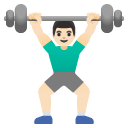
Appearance varies by platform and device. Google Noto, Twemoji, and OpenMoji are open-source.