🖕🏽
The Emoji
Middle Finger: Medium Skin Tone
U+1F595 U+1F3FD · :middle_finger_medium_skin_tone:
Trend 72
Meaning layers
- interpretation
- Used both as a genuine expression of frustration or defiance and increasingly as a playful, ironic, or self-empowering gesture among Gen Z. Often deployed humorously to signal 'I don't care' or to clap back at norms, obligations, or cringe situations.
- tiktok usage
- Appears in reaction videos, POV skits, and comment sections to express irreverence, hype, or savage energy. Frequently used when a creator is flexing unapologetically or calling out toxic behavior.
- irony level
- 7 / 10
Platform meanings
- meaning
- Signals savage energy, defiance, or playful irreverence. Used in comment sections to hype creators being bold or to dismiss haters.
- trend usage
- Appears in 'villain era' trends, 'unbothered' transitions, and 'POV: you don't care anymore' skits. Also used in comment battles and duet clap-backs.
- hashtags
- #villainera#unbothered#nofilterfriday#savagemood#clapback
- virality score
- 78 / 100
Cultural meanings
🇺🇸
Western / Gen-Z
Widely used and largely desensitized among Gen Z in North America as a humorous or empowerment symbol, though still recognized as vulgar in formal contexts. Often stripped of its offensive sting in ironic or meme usage.
🇵🇰
Pakistan & India
Considered highly offensive and deeply inappropriate in most social and family contexts. Its digital use is limited to very Westernized urban youth or anonymous online spaces, where it may appear in meme formats borrowed from global internet culture.
🌍
Middle East
Extremely offensive and culturally taboo, potentially seen as a serious insult or even a legally problematic gesture in some countries. Digital use is heavily discouraged and mostly confined to anonymous accounts or expat communities.
🌐
Global Neutral
Universally recognized as an offensive gesture across most cultures, though the severity of the offense varies greatly. In digital contexts it is increasingly treated as a meme or ironic symbol by younger internet-native users globally.
🇧🇩
Bangladesh
Considered vulgar and deeply disrespectful, particularly in conservative social circles. Its use online is largely confined to anonymous meme accounts or youth heavily exposed to Western internet culture.
🇱🇰
Sri Lanka
Seen as a foreign, imported vulgarity — recognized from Western media but not traditionally part of local gesture culture. Urban youth may use it online ironically, but it remains taboo in most contexts.
🇨🇳
China
The gesture is understood as offensive due to Western media exposure, though it is not a traditional Chinese insult. Online use is relatively muted due to platform content moderation but appears on international-facing social media profiles.
🇯🇵
Japan
Understood as a Western offensive gesture through media exposure but not organically embedded in Japanese gesture culture. May appear in anime-fan communities or gaming contexts but is generally avoided due to politeness norms.
🇰🇷
South Korea
Recognized primarily through Western pop culture and internet memes. K-pop fan communities and gaming spaces may use it in ironic or humorous contexts, but it remains socially inappropriate in most Korean communication.
🇹🇼
Taiwan
Understood from Western media exposure and used similarly to mainland East Asian interpretations — recognized as offensive but occasionally employed ironically by younger, internet-savvy users on global platforms.
🇭🇰
Hong Kong
Due to high Western media exposure and a historically cosmopolitan culture, it is more recognizable and occasionally used in protest or meme contexts. Still considered vulgar in formal or traditional settings.
🇵🇭
Philippines
Widely recognized through heavy Western pop culture consumption. Among Filipino youth it appears in meme culture and social media, but it carries significant offensive weight and is inappropriate in most social contexts.
🇮🇩
Indonesia
Considered an imported foreign vulgarity. Recognized by younger Indonesians through social media but largely avoided due to conservative social norms, particularly in Muslim-majority communities.
🇹🇭
Thailand
Understood as a Western rude gesture, primarily through media. Its use online is limited to edgy youth communities and gaming spaces. Thailand has its own gesture-based insults that are more culturally resonant.
🇻🇳
Vietnam
Recognized from Western internet culture, particularly among younger generations on TikTok and Facebook. Still considered rude and inappropriate in most Vietnamese social contexts.
🇲🇾
Malaysia
Understood as offensive through Western media exposure. In a multicultural and largely conservative society, its use online is limited to anonymous meme accounts or communities heavily influenced by Western internet culture.
🇸🇦
Saudi Arabia
Extremely offensive and culturally and legally sensitive. Digital use of this emoji could be considered highly inappropriate or disrespectful and is strongly avoided in most online communication.
🇦🇪
UAE
Recognized as offensive due to cosmopolitan media exposure, but its use in public digital communication is culturally and potentially legally risky. Expat communities may use it more freely in private digital spaces.
🇪🇬
Egypt
Understood from Western media but carries strong cultural stigma as a vulgar foreign gesture. Online use is largely confined to anonymous spaces or young people deeply embedded in global internet culture.
🇹🇷
Turkey
Recognized as a Western rude gesture and occasionally used by younger, internet-native Turks in meme or gaming contexts. Still considered inappropriate in most social and professional digital communication.
🇮🇷
Iran
Considered a foreign, Western offensive symbol. Its use is very limited online, and the heavily moderated internet environment further restricts its visibility on Iranian platforms.
🇳🇬
Nigeria
Recognized through Western media and increasingly used in Nigerian internet culture among youth on Twitter/X and TikTok, often in humorous or defiant meme contexts. Still considered rude in formal or older-generation communication.
🇿🇦
South Africa
Well-recognized given heavy Western cultural influence. Used similarly to Western Gen Z contexts among younger South Africans online, particularly in meme and gaming communities, while remaining offensive in formal settings.
🇬🇧
UK & Ireland
Widely understood and used similarly to North American contexts, though the 'V-sign' is a more culturally native rude gesture. The middle finger emoji is common in social media, memes, and casual digital communication among youth.
🇫🇷
France
Recognized and used in digital communication, particularly among younger generations. French internet culture has embraced it in meme formats, though the 'bras d'honneur' is a more native French offensive gesture.
🇩🇪
Germany
Well understood and used in online meme culture. Germany's directness in communication means this emoji is used bluntly to express frustration. Still inappropriate in professional contexts but common in casual digital spaces.
🇪🇸
Spain & Italy
Both cultures have their own rich gesture-based insult traditions, but the middle finger emoji is well understood from global media. It appears commonly in social media, gaming, and meme culture among youth.
🇧🇷
Brazil
Widely recognized and used freely in Brazilian digital culture, particularly among younger users on social media. Brazil has a vibrant meme culture where this emoji features prominently in humorous and defiant contexts.
🇲🇽
Mexico
Broadly understood and used in Mexican internet culture, particularly in meme and gaming communities. The gesture is part of everyday informal expression and appears frequently in social media comment sections.
🌎
Latin America
Recognized across Latin America through shared media culture and the internet. Usage varies by country and age group but is generally understood as a strong insult or bold expression of defiance, widely used in youth digital culture.
🇦🇺
Australia & NZ
Used freely in casual digital communication, consistent with Australian and Kiwi cultures' relatively blunt, irreverent humor. Common in meme formats, sports fan communities, and everyday social media banter.
How its meaning shifted
- 2010
The emoji did not exist yet. The middle finger gesture in digital communication was primarily represented through ASCII art (╖ or similar) or explicit text, and was considered highly controversial in online spaces.
- 2015
Recently introduced to Unicode (2014), the middle finger emoji quickly became notorious and controversial. Major tech companies debated whether to include it in their emoji keyboards. Its use was still relatively taboo and seen as genuinely offensive.
- 2020
Increasingly normalized in internet culture, particularly among Millennials and Gen Z. Widely used in meme formats, ironic contexts, and social media clap-backs. The skin tone variants (including medium) saw increased use as part of broader emoji diversity adoption.
- 2026
Largely desensitized in Gen Z and Gen Alpha digital communication. Functions as much as a humor or empowerment symbol as a genuine insult. The medium skin tone variant is commonly used by users matching or approximating their own skin tone, reflecting normalized emoji personalization.
See it on every platform
Compare with
Adjacent emojis
- Opposite
- folded handsthumbs upred heart
- Often confused with
- hand with fingers splayedraised handvictory hand
Share & embed
Frequently asked
01What does the 🖕🏽 Middle Finger: Medium Skin Tone emoji mean?
The middle finger gesture with a medium skin tone modifier, representing the universally recognized offensive hand gesture of extending the middle finger upward as a sign of contempt, defiance, or insult.
02What does 🖕🏽 mean on TikTok?
Signals savage energy, defiance, or playful irreverence. Used in comment sections to hype creators being bold or to dismiss haters.
03What does 🖕🏽 mean on WhatsApp?
Direct expression of frustration or insult toward someone or a situation. Between close friends it can signal playful exasperation or humorous defiance.
04What does 🖕🏽 mean in Gen-Z slang?
Used both as a genuine expression of frustration or defiance and increasingly as a playful, ironic, or self-empowering gesture among Gen Z. Often deployed humorously to signal 'I don't care' or to clap back at norms, obligations, or cringe situations.
05Is the 🖕🏽 emoji safe to use?
Between close friends or in clearly humorous, ironic meme contexts, this emoji can represent playful defiance, 'I don't care' energy, or cathartic frustration about impersonal things like Mondays or bad traffic.
06What does 🖕🏽 mean in texting?
Psychologically, the middle finger gesture activates the fight response and signals social dominance or boundary assertion. In digital contexts, it can also serve as emotional release without physical confrontation, reducing actual aggression while still communicating strong displeasure or bold self-expression.
07What is the shortcode for 🖕🏽?
The shortcode for Middle Finger: Medium Skin Tone is :middle_finger_medium_skin_tone:
08What does 🖕🏽 mean in dating?
Rarely used flirtatiously unless in a very established, playful relationship where both partners use edgy humor. Could signal a teasing 'come at me' attitude in banter-heavy dynamics.
Safety & usage
- Safe meaning
- Between close friends or in clearly humorous, ironic meme contexts, this emoji can represent playful defiance, 'I don't care' energy, or cathartic frustration about impersonal things like Mondays or bad traffic.
- Caution
- Directed at individuals it constitutes a digital insult or harassment. In heated arguments it escalates conflict. In professional, school, or family communication it is highly inappropriate and can have real social or professional consequences.
- NSFW
- Not safe for work — use with care.
This emoji should never be sent to strangers, colleagues, acquaintances, or in professional contexts. In some countries, using this gesture — even digitally — in certain public or semi-public communications could be subject to harassment or conduct policies. Parental controls on many platforms flag or filter this emoji. Its use in targeting specific individuals during online conflicts can constitute cyberbullying.
How it looks across platforms
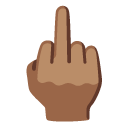


Appearance varies by platform and device. Google Noto, Twemoji, and OpenMoji are open-source.