🗿
The Emoji
Moai
U+1F5FF · :moai:
Trend 91
Meaning layers
- interpretation
- Used to express a blank, deadpan, or stoic reaction — often conveying 'I have no words,' silent judgment, or the feeling of being emotionally unmoved. Also signals dry humor and unimpressed endurance.
- tiktok usage
- Spammed in comment sections to signal collective speechlessness, hype, or ironic solidarity. Frequently used as a reaction to absurd or unhinged content.
- irony level
- 9 / 10
Platform meanings
- meaning
- Silent reaction to chaotic, unhinged, or extremely relatable content. Also signals collective hype or speechless amazement in comment floods.
- trend usage
- Spammed in comment sections ('🗿🗿🗿') to indicate mass speechlessness or to build hype. Used in duet/stitch reactions to absurd videos.
- hashtags
- #moai#🗿#stoicface#noreaction#sigmaface
- virality score
- 92 / 100
Cultural meanings
🇺🇸
Western / Gen-Z
The definitive symbol of Gen Z internet humor — used to express stoic detachment, ironic silence, and 'I have seen too much to be surprised anymore' energy across all platforms.
🇵🇰
Pakistan & India
Adopted heavily by Gen Z and millennial social media users as a meme emoji; widely understood in its deadpan internet context, often spammed in comment sections on viral reels and YouTube videos.
🌍
Middle East
Used among younger Arabic-speaking social media users in meme contexts; also occasionally used sincerely to reference ancient civilizations in educational or travel content.
🌐
Global Neutral
Universally recognized as a representation of Easter Island statues; the meme interpretation has spread globally enough that it functions as a cross-cultural 'no words' emoji.
🇧🇩
Bangladesh
Gaining traction among Bangladeshi Gen Z users on Facebook and TikTok; used in meme contexts similarly to India and Pakistan, signaling silent reaction to chaotic or relatable content.
🇱🇰
Sri Lanka
Used by younger social media users in meme and reaction contexts; some familiarity with Easter Island cultural significance from school curricula.
🇨🇳
China
Less commonly used on domestic platforms (WeChat, Weibo) due to different emoji ecosystems; on international platforms like TikTok, Chinese Gen Z users engage with it in standard meme contexts.
🇯🇵
Japan
Recognized and used in ironic internet humor circles; Japanese social media users also connect it to the concept of 'ishi no kao' (stone face), aligning with cultural appreciation for stoicism.
🇰🇷
South Korea
Popular among Korean internet users on platforms like Twitter/X and Discord; associated with 'mwodeor' (emotionless) humor and often paired with K-pop meme content.
🇹🇼
Taiwan
Used by Taiwanese youth on PTT and social media in meme contexts; also appears in travel and cultural discussion threads about world heritage sites.
🇭🇰
Hong Kong
Adopted in Hong Kong meme culture on platforms like LIHKG; used to express collective speechlessness about current events or absurd internet content.
🇵🇭
Philippines
Extremely popular in Filipino internet culture — spammed enthusiastically in comment sections to signal hype, shock, or collective laughter at something unhinged.
🇮🇩
Indonesia
Widely used by Indonesian Gen Z on TikTok and Twitter as a deadpan reaction emoji; part of mainstream meme vocabulary in Indonesian internet communities.
🇹🇭
Thailand
Used in Thai social media circles among younger users; the stoic expression aligns with Thai cultural humor that often masks emotion with a flat exterior.
🇻🇳
Vietnam
Gaining popularity among Vietnamese TikTok and Facebook users; deployed in comment floods and meme reactions to chaotic or relatable content.
🇲🇾
Malaysia
Common in Malaysian group chats and social media as a 'no words' reaction; the multicultural internet culture of Malaysia has absorbed the emoji's Gen Z meme meaning rapidly.
🇸🇦
Saudi Arabia
Used by younger Saudi social media users in meme and reaction contexts; the blank expression resonates with Gulf humor styles that value understated wit.
🇦🇪
UAE
Popular in the diverse, internationally connected UAE social media scene; used in both Arabic and English meme contexts by Gen Z residents.
🇪🇬
Egypt
Egyptian internet users, known for vibrant meme culture, have adopted it as a silent reaction to political absurdity, viral moments, and relatable daily chaos.
🇹🇷
Turkey
Used in Turkish Twitter and Discord communities in standard meme contexts; sometimes deployed in response to absurd political or social news with dark humor undertones.
🇮🇷
Iran
Used among Iranian youth on Telegram and Instagram (accessed via VPN) in meme contexts; the stoic stone face resonates with humor about perseverance through difficult circumstances.
🇳🇬
Nigeria
Adopted in Nigerian Twitter and TikTok communities; used in reaction to Nollywood drama, political news, and relatable everyday chaos — sometimes combined with other reaction emojis for comedic effect.
🇿🇦
South Africa
Used by South African Gen Z on Twitter/X and TikTok; part of the local meme vocabulary for reacting to load-shedding frustrations, political news, and general absurdity.
🇬🇧
UK & Ireland
Heavily used in UK and Irish internet culture; aligns perfectly with the British tradition of dry, deadpan humor — 'absolutely nothing phases me, I am a statue' energy.
🇫🇷
France
Used among French social media users in meme contexts; resonates with French cultural appreciation for irony and existential detachment — 'je suis la statue, je ne ressens rien.'
🇩🇪
Germany
Adopted in German internet communities, particularly on Discord and Twitter; the stoic, unemotional aesthetic aligns well with stereotypical German directness humor.
🇪🇸
Spain & Italy
Used in Spanish and Italian social media in meme and reaction contexts; expressive cultures use it ironically to signal the rare moment when words genuinely fail.
🇧🇷
Brazil
Massively popular in Brazilian internet culture — used in comment floods, meme pages, and reaction content; Brazilian Gen Z has fully absorbed the emoji into mainstream meme language.
🇲🇽
Mexico
Widely used in Mexican social media to react to chaotic content, dark humor situations, and relatable struggle; often paired with other reaction emojis for layered comedic effect.
🌎
Latin America
Broadly adopted across Latin America in meme and reaction contexts; the emoji travels seamlessly through regional meme communities on TikTok and Twitter.
🇦🇺
Australia & NZ
Used extensively in Australian and New Zealand internet culture; fits the antipodean tradition of deadpan, self-deprecating humor — 'yeah nah, I am a rock about it.'
How its meaning shifted
- 2010
Introduced in Unicode 6.0; used almost exclusively in sincere contexts to represent Easter Island, ancient history, archaeology, and Polynesian culture in travel and educational content.
- 2015
Still primarily used in cultural and travel contexts, but beginning to appear in early internet humor for 'ancient' or 'old' jokes; occasional ironic use in niche meme communities.
- 2020
Transition period — meme usage begins to overtake sincere usage as Gen Z colonizes emoji communication; starts appearing in TikTok comments and Discord servers as a deadpan reaction.
- 2026
Fully entrenched as one of the defining Gen Z irony emojis; one of the most spammed emojis in comment sections globally; the original Easter Island meaning is now a secondary interpretation known mainly to older users or cultural contexts.
See it on every platform
Compare with
Emoji combinations
Adjacent emojis
- Often confused with
- new moon facejapanese ogrestatue of liberty
- Can replace
- neutral faceskullexpressionless face
Share & embed
Frequently asked
01What does the 🗿 Moai emoji mean?
The Moai emoji depicts a stone statue resembling the famous Easter Island moai sculptures, shown as a gray stone face with a prominent brow and flat expression.
02What does 🗿 mean on TikTok?
Silent reaction to chaotic, unhinged, or extremely relatable content. Also signals collective hype or speechless amazement in comment floods.
03What does 🗿 mean on WhatsApp?
Sent alone as a 'I have no words for this' response. Reacts to something so absurd the person has shut down emotionally.
04What does 🗿 mean in Gen-Z slang?
Used to express a blank, deadpan, or stoic reaction — often conveying 'I have no words,' silent judgment, or the feeling of being emotionally unmoved. Also signals dry humor and unimpressed endurance.
05Is the 🗿 emoji safe to use?
A culturally significant emoji representing Easter Island's moai statues; in meme contexts, expresses deadpan humor, stoic silence, and ironic detachment.
06What does 🗿 mean in texting?
Represents emotional dissociation used as a coping mechanism — the person has processed so much absurdity that they default to a stone-faced exterior. Often masks high internal amusement or stress.
07What is the shortcode for 🗿?
The shortcode for Moai is :moai:
08What does 🗿 mean in dating?
Rarely used as a genuine flirt tool; sent ironically after a bold or risky text to signal 'I said what I said' with zero vulnerability. Can mean 'your move.'
Safety & usage
- Safe meaning
- A culturally significant emoji representing Easter Island's moai statues; in meme contexts, expresses deadpan humor, stoic silence, and ironic detachment.
- Caution
- Can be used in passive-aggressive pile-ons or mob comment flooding, where mass deployment of 🗿 constitutes coordinated dismissal or mockery of an individual.
Generally low-risk emoji; primary concern is participation in comment-section pile-ons where mass 🗿 flooding can constitute coordinated harassment. No NSFW connotations.
How it looks across platforms
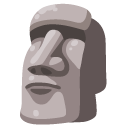


Appearance varies by platform and device. Google Noto, Twemoji, and OpenMoji are open-source.