💅🏼
The Emoji
Nail Polish: Medium-light Skin Tone
U+1F485 U+1F3FC · :nail_polish_mediumlight_skin_tone:
Trend 85
Meaning layers
- interpretation
- Universally adopted as a symbol of unbothered confidence, self-satisfaction, and petty nonchalance. Used after a sassy or shady statement to signal 'I said what I said and I don't care.' Transcends gender — used by all identities.
- tiktok usage
- Appears at the end of callout videos, confidence affirmations, and 'not my problem' commentary. Often paired with voiceovers where someone shades another person and ends with this emoji.
- irony level
- 7 / 10
Platform meanings
- meaning
- Unbothered queen energy; used to punctuate confident, petty, or shady statements. Signals 'I'm thriving and I don't care what you think.'
- trend usage
- Appears in 'girlies who...' trends, confidence affirmation audios, drag culture references, and POV videos where someone is dramatically unbothered by adversity.
- hashtags
- #unbothered#nailsofinstagram#slay#selfcare#notmyproblem
- virality score
- 88 / 100
Cultural meanings
🇺🇸
Western / Gen-Z
The dominant cultural carrier of the 'unbothered' meaning — deeply embedded in Gen Z internet language as a shorthand for smug confidence and self-satisfaction after delivering a read.
🇵🇰
Pakistan & India
Primarily used in the literal sense for nail beauty and grooming content; younger urban users adopt the 'unbothered' meaning via Western social media influence, especially on Instagram and TikTok.
🌍
Middle East
Used in beauty and self-care contexts among women, particularly in private or female-only digital spaces. The ironic/sarcastic layer is emerging among younger Gulf-region users.
🌐
Global Neutral
Universally recognized as related to nail care and beauty; the attitudinal meaning is understood by digitally connected youth globally but remains secondary to its literal interpretation in many regions.
🇧🇩
Bangladesh
Primarily beauty-literal; used in nail art sharing communities and beauty influencer content. The Western ironic usage is slowly adopted by urban youth on TikTok.
🇱🇰
Sri Lanka
Used mainly in beauty and fashion contexts. Self-care and personal grooming are the primary associations; sarcastic usage is rare but visible among English-speaking youth.
🇨🇳
China
Used in beauty contexts on platforms like Weibo and Xiaohongshu (RED) for nail art content. The 'unbothered' irony layer is not deeply rooted but growing among youth influenced by Western media.
🇯🇵
Japan
Strongly tied to nail art culture, which is highly developed in Japan. Used earnestly for kawaii nail inspo sharing; the sarcastic layer is rarely applicable in Japanese social norms.
🇰🇷
South Korea
Associated with the highly popular K-beauty nail care culture. Used in beauty content, self-care routines, and aesthetic posts. Some adoption of the confidence/slay meaning via global pop culture.
🇹🇼
Taiwan
Used in beauty and lifestyle content. Taiwanese youth on TikTok and Instagram adopt the confidence-signaling usage, blending it naturally with local self-care culture.
🇭🇰
Hong Kong
Used across beauty and fashion contexts, with bilingual (English-Cantonese) users more likely to adopt the Western ironic meaning. Beauty literal use dominates.
🇵🇭
Philippines
Both the beauty and the 'slay/unbothered' meanings are well-understood due to high English proficiency and strong Western pop culture integration. Frequently used in SFS (shoutout for shoutout) and beauty content.
🇮🇩
Indonesia
Primarily beauty and grooming associations. The 'unbothered' layer is gaining traction among young women on TikTok Indonesia who consume Western content.
🇹🇭
Thailand
Used in beauty and nail salon promotion content extensively. Thai influencer culture uses it for self-care and luxury aesthetics; confident/sassy usage is emerging.
🇻🇳
Vietnam
Associated with nail culture — Vietnam has a strong nail industry globally. Used in beauty content and increasingly among youth for the self-confidence layer.
🇲🇾
Malaysia
Multilingual context means it's used both literally in beauty Malay-language posts and with the English-influenced ironic slay meaning among English-speaking youth.
🇸🇦
Saudi Arabia
Primarily used in beauty and grooming contexts among women, often in female-only digital spaces. The bold/unbothered reading is adopted by more progressive youth users.
🇦🇪
UAE
Used in the cosmopolitan Dubai/Abu Dhabi context across beauty, luxury, and lifestyle content. Both the literal and 'slay' meanings are well-understood due to the international population.
🇪🇬
Egypt
Used in beauty and fashion contexts. Egyptian youth on TikTok and Instagram are beginning to adopt the ironic Western usage, often mixed with Arabic slang.
🇹🇷
Turkey
Used for nail and beauty content. Turkish influencer culture embraces self-care aesthetics; the confident/sassy undertone is gaining recognition among younger users.
🇮🇷
Iran
Used in beauty content on Instagram, which is popular despite restrictions. Primarily beauty-literal; the ironic layer is adopted by internationally-connected youth.
🇳🇬
Nigeria
The 'slay' and 'unbothered queen' interpretation maps perfectly onto Nigerian Afrobeats/Afropop culture where slaying and self-confidence are central values. Heavily used in both beauty and attitude contexts.
🇿🇦
South Africa
Strong adoption of both the beauty literal and the 'slay queen' cultural meaning, which resonates deeply with South African youth slang and drag/queer culture.
🇬🇧
UK & Ireland
The sarcastic and unbothered layer is strongly understood. Often used in the distinctly British context of passive-aggressive politeness or a smug 'I told you so' energy.
🇫🇷
France
Used in beauty and fashion contexts — appropriate given France's strong association with beauty culture. The ironic layer is less dominant; French social media tends toward more verbal sarcasm.
🇩🇪
Germany
Primarily literal beauty meaning. The ironic/sarcastic usage exists but is less widespread; German social media culture tends to favor directness over this kind of emoji-coded snark.
🇪🇸
Spain & Italy
Used in beauty and fashion content across Instagram and TikTok. The confident/fierce meaning resonates with Mediterranean self-expression culture, blending naturally with local slang.
🇧🇷
Brazil
Very popular in both beauty and the 'arrasou' (slayed it) cultural context. Brazilian internet culture is highly expressive, and this emoji maps onto 'rainha' (queen) and empowerment energy perfectly.
🇲🇽
Mexico
Used in beauty content and increasingly in the 'reina' (queen) empowerment context. Mexican Gen Z users blend it with local slang on TikTok for the unbothered energy.
🌎
Latin America
Broadly recognized across Latin America for both beauty and confident self-expression. Maps onto 'empoderada' (empowered woman) narratives that are widespread in Latin American social media.
🇦🇺
Australia & NZ
The unbothered/sarcastic meaning is well-understood, fitting Australian laconic humor. Used in casual chats to signal a mix of 'couldn't care less' and self-satisfaction.
How its meaning shifted
- 2010
Emoji was not yet widely available in this form; nail polish emojis existed in limited sets and were used almost exclusively in their literal sense for beauty and grooming discussions.
- 2015
Growing use in beauty communities on Instagram and early Twitter. Skin tone variants were introduced in Unicode 8.0 (2015), expanding personal representation. Still largely literal in usage.
- 2020
Exploded in popularity as the definitive 'unbothered' and 'slay' emoji, driven by LGBTQ+ internet culture, Black Twitter, TikTok, and meme proliferation. Became a staple of Gen Z digital communication.
- 2026
Deeply embedded cultural shorthand across all demographics and platforms. Usage has become reflexive — its ironic, confident, and petty connotations are now as recognizable as its literal meaning, functioning almost as punctuation for self-assurance.
See it on every platform
Adjacent emojis
- Often confused with
- hand with fingers splayedraised handOK hand
- Can replace
- crownsparklesface with sunglasses
Share & embed
Frequently asked
01What does the 💅🏼 Nail Polish: Medium-light Skin Tone emoji mean?
A hand with painted fingernails using a nail polish brush, shown with a medium-light skin tone modifier. Represents nail care, beauty, grooming, and self-pampering.
02What does 💅🏼 mean on TikTok?
Unbothered queen energy; used to punctuate confident, petty, or shady statements. Signals 'I'm thriving and I don't care what you think.'
03What does 💅🏼 mean on WhatsApp?
Self-care mood, treating yourself, or ending a shady comment with nonchalance.
04What does 💅🏼 mean in Gen-Z slang?
Universally adopted as a symbol of unbothered confidence, self-satisfaction, and petty nonchalance. Used after a sassy or shady statement to signal 'I said what I said and I don't care.' Transcends gender — used by all identities.
05Is the 💅🏼 emoji safe to use?
Nail care, beauty, self-care, self-confidence, empowerment, and unbothered attitude.
06What does 💅🏼 mean in texting?
Psychologically mirrors the 'unbothered' archetype — a defense mechanism that converts vulnerability into performative nonchalance. It signals emotional detachment from criticism while projecting high self-esteem.
07What is the shortcode for 💅🏼?
The shortcode for Nail Polish: Medium-light Skin Tone is :nail_polish_mediumlight_skin_tone:
08What does 💅🏼 mean in dating?
Used to signal that someone is high-maintenance or has high standards. Can be flirtatiously self-aware: 'I expect the best 💅🏼'.
Safety & usage
- Safe meaning
- Nail care, beauty, self-care, self-confidence, empowerment, and unbothered attitude.
- Caution
- Can be used to dismiss or belittle someone's valid concerns by signaling performative indifference. In passive-aggressive contexts, it can dehumanize or mock.
Generally very safe. Rare edge cases where it's used to pile on or mock someone in harassment contexts, but this is not its primary function. No sexual connotation.
How it looks across platforms
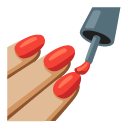


Appearance varies by platform and device. Google Noto, Twemoji, and OpenMoji are open-source.