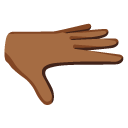
🫳🏾
The Emoji
Palm Down Hand: Medium-dark Skin Tone
U+1FAF3 U+1F3FE · :palm_down_hand_mediumdark_skin_tone:
Trend 62
Meaning layers
- interpretation
- Used to signal dismissal, dropping something (literally or metaphorically), letting go of drama, or 'dropping the mic' energy. Also used when dunking on someone or signaling 'I'm putting this down and walking away.'
- tiktok usage
- Appears at the end of a roast or call-out video to signal the creator is 'dropping the mic' or leaving a situation behind. Often paired with 🎤 for maximum effect.
- irony level
- 5 / 10
Platform meanings
- meaning
- Signals a mic drop, dismissal, or the act of releasing/dropping something significant — a point, a truth, or an argument.
- trend usage
- Frequently appears in 'drop everything and do this' trend videos, storytime endings, and call-out stitches where creators emphasize finality.
- hashtags
- #micdrop#droppingfacts#letitgo#droptheact#palmdown
- virality score
- 58 / 100
Cultural meanings
🇺🇸
Western / Gen-Z
Widely understood as a mic-drop or dismissal gesture — used to signal confidence, finality, and unbothered energy in digital communication.
🇵🇰
Pakistan & India
Can be interpreted as a gesture of placing something respectfully or offering something downward; in younger urban digital circles it takes on the Western mic-drop meaning.
🌍
Middle East
The downward palm can carry cultural connotations of pushing away or refusing something; digitally among youth it aligns with 'I'm done with this' energy.
🌐
Global Neutral
Broadly understood as a hand gesture indicating downward movement, placement, or release — interpretation depends heavily on context.
🇧🇩
Bangladesh
Interpreted similarly to South Asian neighbors — a placing or offering gesture in traditional contexts, with younger users adopting the dismissal meaning online.
🇱🇰
Sri Lanka
Seen as a neutral hand gesture; digital-savvy users understand the dismissal or mic-drop connotation from Western internet culture.
🇨🇳
China
Less commonly used as a cultural gesture natively; interpreted through Western internet culture lens by younger users as a 'letting go' or release symbol.
🇯🇵
Japan
The downward palm can evoke the concept of 'oshimai' (it's over/finished); used in casual digital spaces to signal the end of a matter.
🇰🇷
South Korea
Adopted from Western meme culture; used in Korean online communities to signal dropping facts or finishing an argument stylishly.
🇹🇼
Taiwan
Used similarly to broader East Asian interpretations — signaling finality or release, often borrowed from Western internet meme usage.
🇭🇰
Hong Kong
Bilingual internet culture means this emoji is understood in both its literal and mic-drop meme sense; popular among Cantonese-speaking youth online.
🇵🇭
Philippines
Widely used in Filipino digital culture in the Western meme sense — 'dropping' receipts, facts, or drama conclusions in group chats and social media.
🇮🇩
Indonesia
Used in Indonesian digital slang to signal 'sudah cukup' (that's enough) — closing out a conversation or dropping a truth bomb.
🇹🇭
Thailand
Understood through K-pop and Western internet influence; used among Thai youth to signal dropping something important or walking away from drama.
🇻🇳
Vietnam
Adopted through meme culture; Vietnamese youth use it in contexts of releasing, letting go, or ending a discussion decisively.
🇲🇾
Malaysia
Used in Malay internet culture to signal walking away from drama or releasing a bold statement — familiar from meme formats.
🇸🇦
Saudi Arabia
The gesture is culturally sensitive — downward palm can signal rejection or refusal in some contexts; younger Saudis online use it in the Western dismissal sense.
🇦🇪
UAE
Cosmopolitan digital culture means the mic-drop and release interpretations coexist with awareness of the gesture's traditional connotations in Arab culture.
🇪🇬
Egypt
Egyptian youth online culture has adopted the dismissal meaning; the downward palm can also culturally signal pushing something away or disapproval.
🇹🇷
Turkey
Used in Turkish social media among youth to signal 'bıraktım' (I dropped it/let it go) — especially in arguments or when releasing a hot take.
🇮🇷
Iran
Among Iranian youth on social platforms, used to signal letting go of something or making a definitive statement — borrowed from global meme culture.
🇳🇬
Nigeria
Extremely popular in Nigerian internet culture; used to signal dropping bars, dropping receipts, or ending a discussion with undeniable evidence.
🇿🇦
South Africa
Used across South African digital spaces in its Western meme sense — frequently in Afro-centric content creation to signal dropping fire content.
🇬🇧
UK & Ireland
Fully adopted into British and Irish internet slang; used to signal 'I've said my piece' or 'dropping this here and walking away, innit.'
🇫🇷
France
French digital users employ it to signal finality or the act of 'lâcher prise' (letting go) — both literally and in online debate contexts.
🇩🇪
Germany
Used in German internet spaces to signal Schluss (the end) or dropping something definitively; less ironic than in Anglo-American usage.
🇪🇸
Spain & Italy
Mediterranean digital users use it expressively to signal the end of an argument or dropping a bold statement — fits naturally with expressive communication styles.
🇧🇷
Brazil
Widely used in Brazilian meme culture — 'dropando' (dropping) something iconic, a receipt, or a truth bomb is a common usage in Portuguese-language content.
🇲🇽
Mexico
Mexican internet users adopt it to signal dropping facts or ending drama — fits into the 'ya estuvo' (that's it, it's done) vibe online.
🌎
Latin America
Across Latin America, used to signal releasing something into the world — a statement, a song, a fact — with confidence and finality.
🇦🇺
Australia & NZ
Aussie and Kiwi internet culture uses it in the mic-drop sense — often paired with slang like 'dropping this and heading to the barbie.'
How its meaning shifted
- 2010
Did not exist; hand gesture emojis with skin tone modifiers were not yet part of Unicode. General hand emojis existed but lacked diversity options.
- 2015
Skin tone modifiers became available via Unicode 8.0 in 2015; early adoption was mostly celebratory of diversity rather than meme or cultural usage.
- 2020
Gained traction during the rise of 'dropping receipts' culture on social media; used alongside cancel culture discourse and mic-drop meme formats.
- 2026
Established as a versatile dismissal, release, and mic-drop emoji; deeply embedded in Gen Z digital vocabulary and increasingly used across all age groups for signaling finality.
See it on every platform
Adjacent emojis
- Often confused with
- backhand index pointing downoncoming fiststop sign
- Can replace
- microphoneok handraised fist
Share & embed
Frequently asked
01What does the 🫳🏾 Palm Down Hand: Medium-dark Skin Tone emoji mean?
A hand with palm facing downward, displayed with a medium-dark skin tone. Represents a downward-facing open hand gesture.
02What does 🫳🏾 mean on TikTok?
Signals a mic drop, dismissal, or the act of releasing/dropping something significant — a point, a truth, or an argument.
03What does 🫳🏾 mean on WhatsApp?
Used to say 'I'm putting this conversation down' or 'dropping this topic.' Can also mean literally placing something down.
04What does 🫳🏾 mean in Gen-Z slang?
Used to signal dismissal, dropping something (literally or metaphorically), letting go of drama, or 'dropping the mic' energy. Also used when dunking on someone or signaling 'I'm putting this down and walking away.'
05Is the 🫳🏾 emoji safe to use?
Represents placing something down, letting go, releasing, or a mic-drop moment. Generally positive and expressive.
06What does 🫳🏾 mean in texting?
The downward palm gesture psychologically signals dominance, conclusion, or the act of setting something aside. It can evoke a sense of authority or closure, similar to a judge's gavel coming down.
07What is the shortcode for 🫳🏾?
The shortcode for Palm Down Hand: Medium-dark Skin Tone is :palm_down_hand_mediumdark_skin_tone:
08What does 🫳🏾 mean in dating?
Rarely used in direct flirting; may appear when someone is playfully 'dropping' their number or signaling they're putting down their walls and opening up.
Safety & usage
- Safe meaning
- Represents placing something down, letting go, releasing, or a mic-drop moment. Generally positive and expressive.
- Caution
- Can be used condescendingly to signal dismissal of another person's opinion or to 'drop' someone publicly in a humiliating way.
The downward palm gesture carries culturally specific meanings in some Middle Eastern and South Asian contexts where it can signal rejection or disrespect — users should be context-aware.
How it looks across platforms


Appearance varies by platform and device. Google Noto, Twemoji, and OpenMoji are open-source.