🧑🏿🤝🧑🏻
The Emoji
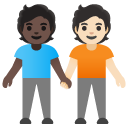
People Holding Hands: Dark Skin Tone, Light Skin Tone
U+1F9D1 U+1F3FF U+200D U+1F91D U+200D U+1F9D1 U+1F3FB · :people_holding_hands_dark_skin_tone_light_skin_tone:
Trend 58
Meaning layers
- interpretation
- Used to celebrate interracial friendships, relationships, or solidarity between people of different backgrounds. Often deployed as a casual symbol of allyship or to show genuine cross-cultural connection.
- tiktok usage
- Appears in videos about interracial couples, best friendships across racial lines, or diversity content. Sometimes used ironically in 'we're so different but we work' relationship content.
- irony level
- 2 / 10
Platform meanings
- meaning
- Represents interracial connection, diverse friendship, or cross-cultural romance in video captions and comments.
- trend usage
- Used in 'expectation vs reality' interracial couple content, diversity celebration videos, and unity trend sounds. Also appears in comment sections supporting interracial couples.
- hashtags
- #interracialcouple#diversity#loveislove#mixedcouple#unitynothate
- virality score
- 62 / 100
Cultural meanings
🇺🇸
Western / Gen-Z
Casually used to represent interracial friendships or romantic relationships with pride, often seen as a natural expression of diverse social circles. Gen Z in the West treats it as a normalizing symbol rather than a statement.
🇵🇰
Pakistan & India
Less commonly used due to relatively lower cultural prevalence of publicly discussing interracial or inter-community relationships online; when used, it often appears in progressive urban youth circles celebrating friendship across religious or regional divides.
🌍
Middle East
Primarily interpreted as a general friendship or unity symbol; the skin tone contrast may be noted but not always specifically read as an interracial statement, more often used in pan-Arab or multicultural community contexts.
🌐
Global Neutral
Universally readable as a symbol of two people from different backgrounds holding hands in friendship or love, widely used in international diversity and inclusion campaigns.
🇧🇩
Bangladesh
Used mainly in urban, educated social media circles to signal cosmopolitan values or friendship across social boundaries; the skin tone nuance is recognized by younger, globally connected users.
🇱🇰
Sri Lanka
Appears in content about ethnic harmony, particularly given the country's history of ethnic tension; used by peace advocates and youth groups to symbolize Sinhalese-Tamil or broader multicultural unity.
🇨🇳
China
The skin tone modifier is less culturally emphasized; the emoji may be read simply as 'two friends holding hands.' Used in international contexts or by globally exposed youth to signal diversity appreciation.
🇯🇵
Japan
Interpreted as a symbol of international friendship, particularly in the context of Japan's increasing global engagement. Used in multicultural or international exchange community content.
🇰🇷
South Korea
Popular in content about K-pop's global fandom, where international collaborations across racial lines are celebrated. Used by fans to show diverse fan community solidarity.
🇹🇼
Taiwan
Used in progressive and LGBTQ+-friendly spaces to signal inclusivity and cross-cultural connection, given Taiwan's reputation as the most progressive country in Asia on social issues.
🇭🇰
Hong Kong
Used in contexts of cross-cultural solidarity, particularly among the expat community and in Hong Kong's diverse cosmopolitan social fabric. Also appears in democracy and unity advocacy content.
🇵🇭
Philippines
Commonly used to represent OFW (Overseas Filipino Worker) friendships across cultures or to show solidarity with Filipino communities abroad connecting with local populations.
🇮🇩
Indonesia
Used in interfaith and inter-ethnic harmony content, especially given Indonesia's diverse 300+ ethnic group composition. Appears frequently in Bhinneka Tunggal Ika (Unity in Diversity) themed posts.
🇹🇭
Thailand
Used in tourism-related content celebrating Thailand's international visitors and cross-cultural friendships, as well as in content about the diverse expat community in Bangkok.
🇻🇳
Vietnam
Appears in content about international friendships, particularly Vietnam-Korea or Vietnam-Japan cultural exchange, which is highly popular among Vietnamese youth due to K-pop and J-pop influence.
🇲🇾
Malaysia
Highly resonant in Malaysia's multiracial society (Malay, Chinese, Indian communities); used to celebrate the Muhibbah (goodwill across races) concept and inter-ethnic friendships.
🇸🇦
Saudi Arabia
Used sparingly in public social media; more common in private chats between internationally educated Saudis or in contexts celebrating Saudi Arabia's Vision 2030 cultural openness initiatives.
🇦🇪
UAE
Extremely relevant in the UAE's hyper-diverse expat society where over 200 nationalities coexist; used to celebrate cross-cultural friendships and the multicultural fabric of cities like Dubai and Abu Dhabi.
🇪🇬
Egypt
Used in contexts of Arab-African solidarity or Egyptian diaspora content celebrating connections across cultural lines; also appears in youth-led diversity and anti-racism content.
🇹🇷
Turkey
Used to represent Turkey's position as a cultural bridge between East and West; appears in content about Turkish-European or Turkish-Middle Eastern friendships and multicultural communities.
🇮🇷
Iran
Used by the Iranian diaspora to signal cross-cultural solidarity and by youth inside Iran on platforms like Instagram to signal cosmopolitan and inclusive values, often in subtle resistance to cultural isolationism.
🇳🇬
Nigeria
Highly resonant given Nigeria's 500+ ethnic groups; used to celebrate inter-ethnic friendships (e.g., Yoruba-Igbo-Hausa unity) and in Afrobeats content celebrating Nigeria's global cross-cultural connections.
🇿🇦
South Africa
Deeply meaningful in post-apartheid South Africa, used to celebrate Rainbow Nation ideals and cross-racial friendships. Appears frequently in content about reconciliation and multicultural togetherness.
🇬🇧
UK & Ireland
Used to celebrate British and Irish multicultural society; appears in content about diverse friend groups, interracial relationships, and anti-racism campaigns, especially after events like the 2020 BLM movement.
🇫🇷
France
Used in contexts navigating France's complex relationship with race and identity; appears in youth content celebrating métissage (mixing) and diverse friendships, though France's official colorblind republican values mean less explicit racial framing.
🇩🇪
Germany
Used in diversity and Willkommenskultur (welcome culture) content, celebrating Germany's multicultural society; appears in content about German-Turkish, German-Arab, or other cross-cultural friendships.
🇪🇸
Spain & Italy
Used in content celebrating Latin-African or European-immigrant cross-cultural friendships; appears in diversity campaigns and in content from multicultural urban areas like Madrid, Barcelona, Milan, and Rome.
🇧🇷
Brazil
Extremely resonant in Brazil's mixed-race society; used naturally to represent the country's celebrated mestiçagem (racial mixing) culture, interracial relationships, and Afro-Brazilian solidarity.
🇲🇽
Mexico
Used to celebrate mestizo identity, cross-cultural friendships between Indigenous and non-Indigenous communities, and Mexico-US cross-border relationships. Also used in migrant solidarity content.
🌎
Latin America
Broadly used across Latin America to celebrate the region's mixed racial heritage and cross-cultural solidarity; appears in content about Afro-Latino identity, Indigenous-mestizo friendship, and pan-Latin American unity.
🇦🇺
Australia & NZ
Used to celebrate multicultural Australia and New Zealand, particularly in content about Aboriginal-settler reconciliation, Māori-Pākehā friendship, and the diverse immigrant communities in cities like Sydney and Auckland.
How its meaning shifted
- 2010
This specific emoji combination did not exist in 2010, as skin tone modifiers for multi-person emoji were not yet part of Unicode. Basic holding hands emoji without skin tones were just beginning to appear.
- 2015
Skin tone modifiers were introduced to Unicode in 2015, but multi-person emoji with mixed skin tones were not yet available. Single-person emoji with skin tones existed, but combined pairs were still years away.
- 2020
By 2020, mixed skin tone holding hands emoji were widely available and gained significant traction during the global BLM movement, used heavily in solidarity posts, interracial couple representation, and diversity campaigns.
- 2026
By 2026, this emoji is used naturally and casually without needing to make a political statement — interracial representation in emoji is normalized. Still used intentionally in DEI content but equally common in everyday affectionate messages between diverse friends and couples.
See it on every platform
Compare with
Adjacent emojis
Share & embed
Frequently asked
01What does the 🧑🏿🤝🧑🏻 People Holding Hands: Dark Skin Tone, Light Skin Tone emoji mean?
Two people holding hands with dark skin tone on the left figure and light skin tone on the right figure, representing partnership, unity, and companionship across different skin tones.
02What does 🧑🏿🤝🧑🏻 mean on TikTok?
Represents interracial connection, diverse friendship, or cross-cultural romance in video captions and comments.
03What does 🧑🏿🤝🧑🏻 mean on WhatsApp?
Sent between friends of different racial backgrounds to symbolize their bond, or used in group chats celebrating diversity.
04What does 🧑🏿🤝🧑🏻 mean in Gen-Z slang?
Used to celebrate interracial friendships, relationships, or solidarity between people of different backgrounds. Often deployed as a casual symbol of allyship or to show genuine cross-cultural connection.
05Is the 🧑🏿🤝🧑🏻 emoji safe to use?
A positive symbol of interracial friendship, love, and cross-cultural solidarity. Used widely in inclusive and affirming contexts.
06What does 🧑🏿🤝🧑🏻 mean in texting?
The deliberate choice of contrasting skin tones signals intentional acknowledgment of diversity, which psychologically communicates active inclusivity rather than passive tolerance, evoking feelings of acceptance and cross-cultural love.
07What is the shortcode for 🧑🏿🤝🧑🏻?
The shortcode for People Holding Hands: Dark Skin Tone, Light Skin Tone is :people_holding_hands_dark_skin_tone_light_skin_tone:
08What does 🧑🏿🤝🧑🏻 mean in dating?
Used by individuals in or seeking interracial relationships to signal openness and pride in cross-cultural romance. Can be placed in bios to subtly indicate dating across racial lines.
Safety & usage
- Safe meaning
- A positive symbol of interracial friendship, love, and cross-cultural solidarity. Used widely in inclusive and affirming contexts.
- Caution
- Rarely weaponized, but can appear in racist troll contexts where it is used mockingly or sarcastically in threads opposing interracial relationships.
Generally very safe. Minimal risk of misuse. Monitor context in spaces with known racist activity where the emoji may be used sarcastically or negatively to mock interracial relationships.
How it looks across platforms


Appearance varies by platform and device. Google Noto, Twemoji, and OpenMoji are open-source.