🧑🏿🤝🧑🏾
The Emoji
People Holding Hands: Dark Skin Tone, Medium-dark Skin Tone
U+1F9D1 U+1F3FF U+200D U+1F91D U+200D U+1F9D1 U+1F3FE · :people_holding_hands_dark_skin_tone_mediumdark_skin_tone:
Trend 58
Meaning layers
- interpretation
- Used to signal allyship, interracial friendship or romance, solidarity, and inclusive vibes. Often dropped in captions to celebrate diverse friendships or relationships without needing words.
- tiktok usage
- Appears in videos about interracial couples, best friend content, anti-racism posts, or wholesome diversity moments. Sometimes used ironically in 'we're so different but the same' content.
- irony level
- 2 / 10
Platform meanings
- meaning
- Represents interracial friendship, romance, or solidarity in video captions and comments. Signals inclusive, progressive values.
- trend usage
- Used heavily in diversity storytimes, interracial couple POVs, and Black-Brown solidarity content. Also in anti-racism educational videos.
- hashtags
- #InterracialCouple#BlackAndBrownUnity#DiverseFriendships#SkinTonePride#LoveIsLove
- virality score
- 62 / 100
Cultural meanings
🇺🇸
Western / Gen-Z
Widely used to celebrate interracial friendships and relationships, signal progressive values, and represent diversity positively. Seen as an affirming, low-effort way to show solidarity.
🇵🇰
Pakistan & India
Used to represent cross-cultural or interfaith friendship and occasionally romantic relationships, though the latter can carry sensitivity given social pressures around inter-community relationships. Also used in diaspora communities abroad to signal solidarity.
🌍
Middle East
Primarily interpreted as a friendship or solidarity symbol. Romantic connotations may be downplayed in more conservative contexts, while diaspora and younger urban users embrace it more freely for diverse relationship representation.
🌐
Global Neutral
Universally readable as two people holding hands in friendship or love, with the skin tone variation adding a layer of diversity and inclusion that resonates positively across most global contexts.
🇧🇩
Bangladesh
Most commonly understood as a symbol of friendship or unity. Cross-cultural romantic connotations are less prominent in mainstream usage, but younger, urban, and diaspora Bangladeshis use it more expressively.
🇱🇰
Sri Lanka
Used to represent friendship and community solidarity. The diversity skin tone aspect may be less culturally prominent but is understood positively in urban and internationally connected communities.
🇨🇳
China
Interpreted as a symbol of friendship or partnership, with the skin tone detail sometimes noted as a Western diversity feature. Used in international and multicultural contexts more than domestic ones.
🇯🇵
Japan
Read as a wholesome friendship or couple emoji. The skin tone pairing is noted but Japan's emoji culture tends to flatten diversity nuances — used more for the gesture than the skin tone message.
🇰🇷
South Korea
Commonly used to represent friendship and warmth. In K-pop and global fandom spaces, it's used to celebrate diverse fan communities and international friendships.
🇹🇼
Taiwan
Used positively for friendship, inclusivity, and cross-cultural connection. Taiwan's progressive social culture means the diversity symbolism is often recognized and appreciated.
🇭🇰
Hong Kong
In HK's cosmopolitan context, used to represent diverse friendships and solidarity. Also appears in social and political discourse about unity and cross-community bonds.
🇵🇭
Philippines
Used warmly for friendship and partnership. In OFW communities, it resonates as a symbol of cross-cultural bonds formed abroad and diverse friendships built across nationalities.
🇮🇩
Indonesia
Primarily a friendship symbol. The skin tone diversity aspect is appreciated in urban, educated, and internationally connected communities, with less prominence in rural contexts.
🇹🇭
Thailand
Used to represent friendship and connection. In Thailand's tourism-forward culture, cross-cultural friendships are common and this emoji resonates with those international bonds.
🇻🇳
Vietnam
Interpreted as friendship and partnership. Younger, urban Vietnamese users are increasingly aware of the diversity symbolism and use it in international friendship and multicultural content contexts.
🇲🇾
Malaysia
Resonates strongly given Malaysia's multicultural society of Malay, Chinese, Indian, and other communities. Used to celebrate cross-ethnic friendships and national unity, especially during multicultural celebrations.
🇸🇦
Saudi Arabia
Primarily used for friendship and solidarity. Romantic connotations are largely set aside in more conservative usage. In youth culture and online spaces, the diversity message is positively received.
🇦🇪
UAE
Highly relevant in the UAE's extremely multicultural expat-heavy environment. Used frequently to celebrate the diverse friendships and partnerships that naturally form in this international hub.
🇪🇬
Egypt
Used mainly for friendship and solidarity. Younger Egyptians and those with international exposure recognize the diversity message and use it positively in cross-cultural contexts.
🇹🇷
Turkey
Used for friendship and connection across Turkey's diverse communities. In the context of Turkey's bridge-between-cultures identity, the cross-skin-tone meaning resonates with international and cosmopolitan users.
🇮🇷
Iran
Primarily used as a friendship symbol in private chats. The diversity connotation is recognized but less prominent. Used more freely by diaspora communities and internationally connected young Iranians.
🇳🇬
Nigeria
Resonates strongly as a symbol of solidarity within Nigeria's diverse ethnic landscape and in the context of Black pride and Pan-African connections. Also used to represent Nigerian diaspora bonds with other communities of color.
🇿🇦
South Africa
Deeply meaningful given South Africa's apartheid history and rainbow nation identity. Used powerfully to represent cross-racial friendship and solidarity, echoing the nation's ideals of multiracial unity.
🇬🇧
UK & Ireland
Used frequently to celebrate multicultural British and Irish society. Appears in posts about diverse friendships, mixed-heritage families, and cross-cultural community bonds in major cities.
🇫🇷
France
Used to represent friendship and solidarity. Given France's complex relationship with racial identity and its official colorblind approach, the skin tone specificity is sometimes noted but also celebrated in younger, progressive communities.
🇩🇪
Germany
Seen positively as a symbol of integration, multiculturalism, and solidarity. Used in contexts celebrating Germany's diverse communities and cross-cultural friendships, particularly in urban centers.
🇪🇸
Spain & Italy
Used for friendship and partnership. In coastal and urban communities with diverse immigrant populations, the diversity symbolism is appreciated. Also appears in anti-racism and solidarity contexts.
🇧🇷
Brazil
Highly relevant in Brazil's racially complex society. Used to celebrate the country's mixed heritage, cross-racial friendships, and romantic relationships, while also appearing in racial justice and afro-Brazilian solidarity contexts.
🇲🇽
Mexico
Used for friendship and solidarity. In Mexico's context of mestizaje and mixed heritage, the emoji resonates with celebrations of diverse backgrounds and cross-cultural connections, especially in urban and youth communities.
🌎
Latin America
Broadly used across Latin America to represent friendship, diverse community bonds, and solidarity. The Afro-Latino and indigenous solidarity dimensions add particular resonance in regional conversations about racial identity.
🇦🇺
Australia & NZ
Frequently used to celebrate Australia's multicultural society and New Zealand's biculturalism and diversity. Appears in content about Indigenous and non-Indigenous solidarity, multicultural friendships, and inclusive community values.
How its meaning shifted
- 2010
Emoji with skin tone modifiers did not yet exist in 2010. The base people holding hands concept was represented by generic yellow-toned figures without diversity options.
- 2015
Skin tone modifiers began rolling out in 2015 but multi-person skin tone combinations were not yet supported. Basic people holding hands emoji existed but without the nuanced skin tone pairing available today.
- 2020
Multi-skin-tone people holding hands combinations became widely supported. Usage spiked dramatically during the 2020 Black Lives Matter movement and global racial justice conversations, with this specific dark and medium-dark combination gaining visibility as a symbol of Black and Brown solidarity.
- 2026
Established as a go-to emoji for representing interracial relationships, cross-cultural friendships, and diversity solidarity. Normalized in everyday usage from casual friend chats to professional DEI communications, with ironic and meme usage also developing alongside sincere applications.
See it on every platform
Adjacent emojis
- Opposite
- broken heartangry faceprohibited
- Can replace
- red hearthandshakehugging face
Share & embed
Frequently asked
01What does the 🧑🏿🤝🧑🏾 People Holding Hands: Dark Skin Tone, Medium-dark Skin Tone emoji mean?
Two people holding hands, depicted with dark skin tone and medium-dark skin tone combination, representing human connection, partnership, and solidarity across skin tone variations.
02What does 🧑🏿🤝🧑🏾 mean on TikTok?
Represents interracial friendship, romance, or solidarity in video captions and comments. Signals inclusive, progressive values.
03What does 🧑🏿🤝🧑🏾 mean on WhatsApp?
Sent between close friends of different backgrounds to express 'we're tight like this' or as a warm sign-off in affectionate messages.
04What does 🧑🏿🤝🧑🏾 mean in Gen-Z slang?
Used to signal allyship, interracial friendship or romance, solidarity, and inclusive vibes. Often dropped in captions to celebrate diverse friendships or relationships without needing words.
05Is the 🧑🏿🤝🧑🏾 emoji safe to use?
Represents friendship, love, solidarity, and human connection between people of different skin tones. Universally positive when used sincerely.
06What does 🧑🏿🤝🧑🏾 mean in texting?
Holding hands is one of the most primal human gestures of safety and trust. The intentional skin tone pairing activates psychological associations with cross-cultural empathy and inclusion, triggering feelings of social belonging and reduced otherness.
07What is the shortcode for 🧑🏿🤝🧑🏾?
The shortcode for People Holding Hands: Dark Skin Tone, Medium-dark Skin Tone is :people_holding_hands_dark_skin_tone_mediumdark_skin_tone:
08What does 🧑🏿🤝🧑🏾 mean in dating?
Used by people in or pursuing interracial relationships to subtly signal openness to or celebration of their dynamic. Can be a gentle way to hint at attraction to someone of a different background.
Safety & usage
- Safe meaning
- Represents friendship, love, solidarity, and human connection between people of different skin tones. Universally positive when used sincerely.
- Caution
- Can be weaponized in performative allyship contexts or used mockingly in racist online spaces to parody diversity messaging, though this is uncommon.
Minimal risk emoji. Rare edge cases include ironic use in anti-diversity spaces or tokenistic corporate diversity washing contexts, but generally safe across all platforms and age groups.
How it looks across platforms
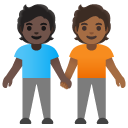


Appearance varies by platform and device. Google Noto, Twemoji, and OpenMoji are open-source.