🧑🏿🤝🧑🏼
The Emoji
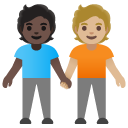
People Holding Hands: Dark Skin Tone, Medium-light Skin Tone
U+1F9D1 U+1F3FF U+200D U+1F91D U+200D U+1F9D1 U+1F3FC · :people_holding_hands_dark_skin_tone_mediumlight_skin_tone:
Trend 58
Meaning layers
- interpretation
- Used to signal interracial friendship, allyship, solidarity, or romantic relationships. Often dropped in comments to show support for multicultural or interracial couples and friendships without needing words.
- tiktok usage
- Appears in comments under interracial couple content, diversity celebration videos, and BFF content showing people of different backgrounds. Also used ironically in 'we are so different but the same' content.
- irony level
- 2 / 10
Platform meanings
- meaning
- Represents interracial friendship or romance, solidarity across differences, and multicultural relationships in video comments and captions.
- trend usage
- Dropped in comment sections of interracial couple content, diversity duets, and 'we are the same' challenge videos. Also used in travel content showing cross-cultural friendships.
- hashtags
- #interracialcouple#diversityandinclusion#holdinghandsacrosscultures#friendshipgoals#weareone
- virality score
- 62 / 100
Cultural meanings
🇺🇸
Western / Gen-Z
Widely used to represent interracial couples and friendships, signal allyship, and celebrate multicultural identity without needing explanation. Seen as progressive and positive.
🇵🇰
Pakistan & India
Used to represent cross-community or interfaith friendships and partnerships, though interracial or inter-caste relationships remain sensitive topics in some conservative circles.
🌍
Middle East
Generally interpreted as a symbol of friendship and unity; skin-tone diversity aspect may be less emphasized culturally, with the focus remaining on the partnership or friendship itself.
🌐
Global Neutral
Universally understood as two people holding hands in partnership or friendship, with the skin-tone variation adding a layer of diversity representation readable across cultures.
🇧🇩
Bangladesh
Interpreted primarily as a symbol of friendship or togetherness; the dual skin-tone meaning may not be as culturally prominent but is increasingly recognized among younger, globally connected users.
🇱🇰
Sri Lanka
Used to represent friendship and solidarity, particularly among younger urban users who are aware of its diversity symbolism. May also appear in multicultural community content.
🇨🇳
China
Tends to be interpreted straightforwardly as two friends or partners holding hands. The skin-tone diversity aspect is less culturally emphasized but is understood in internationally-minded contexts.
🇯🇵
Japan
Used to represent friendship and partnership, often in wholesome or kawaii contexts. The interracial symbolism is recognized but not always the primary interpretation due to Japan's relatively homogeneous cultural lens.
🇰🇷
South Korea
Appears in content about international friendships, K-pop fandoms crossing cultural lines, or multicultural relationships. Younger Koreans may use it in contexts celebrating global connectivity.
🇹🇼
Taiwan
Used by younger, globally-minded users to celebrate multicultural friendships or international connections. Taiwan's relatively progressive stance on diversity makes the emoji's symbolism more legible.
🇭🇰
Hong Kong
Recognized in its diversity context due to Hong Kong's cosmopolitan character. Used by locals to represent cross-cultural partnerships, international friendships, or multicultural solidarity.
🇵🇭
Philippines
Popular among Filipinos who use it to represent OFW (overseas Filipino worker) communities building friendships across cultures, as well as interracial relationships which are quite common.
🇮🇩
Indonesia
Used to represent friendship and unity across different backgrounds, resonating in a country proud of its 'Bhinneka Tunggal Ika' (Unity in Diversity) national motto.
🇹🇭
Thailand
Interpreted as a symbol of friendship and togetherness. The skin-tone diversity element is increasingly appreciated among Thai youth who engage with global culture and international tourism.
🇻🇳
Vietnam
Used primarily among younger, internationally connected Vietnamese users to represent cross-cultural friendships or partnerships, particularly in the context of studying abroad or global networking.
🇲🇾
Malaysia
Highly resonant in Malaysia's multiracial context, where it can represent cross-ethnic friendships between Malay, Chinese, and Indian communities, as well as international relationships.
🇸🇦
Saudi Arabia
Used to represent friendship and partnership in general. The diversity aspect may carry less cultural weight in a society where same-nationality bonds are often emphasized, but global awareness is growing.
🇦🇪
UAE
Very relevant in the UAE's hyper-multicultural expat environment, where friendships and partnerships across dozens of nationalities are the norm. The emoji resonates strongly with the cosmopolitan local context.
🇪🇬
Egypt
Interpreted as a friendship or unity symbol. Among younger Egyptians connected to global culture, the diversity symbolism is understood, often used in content about cross-cultural exchanges or international friendships.
🇹🇷
Turkey
Used among younger, globally-connected Turks to represent multicultural friendships or relationships, particularly in contexts celebrating Turkey's position as a cultural bridge between East and West.
🇮🇷
Iran
Used cautiously in public-facing social content, but among younger Iranians it symbolizes cross-cultural friendship and solidarity, often appearing in international student or diaspora community content.
🇳🇬
Nigeria
Widely used to represent Afro-diasporic solidarity and cross-cultural friendships. In Nigeria's diverse internal ethnic landscape, it also resonates as a symbol of intertribal unity.
🇿🇦
South Africa
Highly meaningful in post-apartheid South Africa, where the emoji resonates as a symbol of rainbow nation ideals, cross-racial friendship, and the ongoing work of social integration.
🇬🇧
UK & Ireland
Used frequently in multicultural British and Irish urban contexts to celebrate interracial friendships, diverse social circles, and cross-cultural partnerships. Appears in allyship and anti-racism content.
🇫🇷
France
Used in contexts of multicultural friendship and solidarity, though French republican ideals sometimes de-emphasize racial or ethnic categorization. The emoji is appreciated in younger, progressive communities.
🇩🇪
Germany
Used to represent cross-cultural partnership and solidarity, especially in contexts related to immigration, integration, and multicultural Germany. Appears in anti-racism and diversity advocacy content.
🇪🇸
Spain & Italy
Used to represent friendship and togetherness; younger users in urban centers increasingly use it in diversity and inclusion contexts, particularly around immigration and multicultural community narratives.
🇧🇷
Brazil
Very resonant in Brazil's racially diverse society, where interracial relationships and friendships are extremely common. The emoji is used warmly to celebrate the country's mixed cultural heritage.
🇲🇽
Mexico
Used to represent friendship and partnership across different backgrounds, increasingly in contexts celebrating Mexico's diverse mestizo, indigenous, and Afro-Mexican communities.
🌎
Latin America
Used across Latin America to represent cross-cultural and interracial solidarity, resonating in societies with rich mixed-race heritages and ongoing conversations about racial equality.
🇦🇺
Australia & NZ
Used to represent multicultural friendships and reconciliation between Indigenous and non-Indigenous communities, as well as in the context of Australia's and New Zealand's diverse immigrant populations.
How its meaning shifted
- 2010
This specific multi-skin-tone variant did not exist in 2010. Basic holding hands representations were not yet part of the emoji standard, and skin tone diversity was years away from implementation.
- 2015
Skin tone modifiers were introduced in 2015, but multi-person skin tone combinations were not yet available. Simple couple/friends holding hands emojis existed without tone customization.
- 2020
The multi-skin-tone holding hands emoji combinations became more widely available and supported across platforms. Usage grew significantly during the racial justice movements of 2020, adopted as a symbol of cross-racial solidarity.
- 2026
Established as a go-to emoji for representing interracial relationships, multicultural friendships, and diversity advocacy. Used fluidly across social platforms with strong recognition of its dual skin-tone symbolism by younger generations.
See it on every platform
Adjacent emojis
- Opposite
- broken heartprohibitedcollision
- Often confused with
- handshake medium dark skin tonecouple with heartpeople hugging
- Can replace
- red hearthandshakepeople hugging
Share & embed
Frequently asked
01What does the 🧑🏿🤝🧑🏼 People Holding Hands: Dark Skin Tone, Medium-light Skin Tone emoji mean?
Two people holding hands, with the left person having a dark skin tone and the right person having a medium-light skin tone, representing togetherness, partnership, and human connection across different skin tones.
02What does 🧑🏿🤝🧑🏼 mean on TikTok?
Represents interracial friendship or romance, solidarity across differences, and multicultural relationships in video comments and captions.
03What does 🧑🏿🤝🧑🏼 mean on WhatsApp?
Sent between close friends of different backgrounds to say 'we are together no matter what' or to affirm a multicultural friendship or relationship.
04What does 🧑🏿🤝🧑🏼 mean in Gen-Z slang?
Used to signal interracial friendship, allyship, solidarity, or romantic relationships. Often dropped in comments to show support for multicultural or interracial couples and friendships without needing words.
05Is the 🧑🏿🤝🧑🏼 emoji safe to use?
A positive, inclusive symbol of friendship, love, partnership, and cross-cultural solidarity between two people of different skin tones.
06What does 🧑🏿🤝🧑🏼 mean in texting?
Psychologically evokes feelings of unity and cross-cultural acceptance. The dual skin tone pairing activates associations with bridging differences and celebrating diversity, tapping into humanity's deep need for belonging and connection regardless of background.
07What is the shortcode for 🧑🏿🤝🧑🏼?
The shortcode for People Holding Hands: Dark Skin Tone, Medium-light Skin Tone is :people_holding_hands_dark_skin_tone_mediumlight_skin_tone:
08What does 🧑🏿🤝🧑🏼 mean in dating?
Used subtly by people in interracial relationships or those expressing openness to dating across racial lines. Can signal 'I see and celebrate our differences' in a flirtatious context.
Safety & usage
- Safe meaning
- A positive, inclusive symbol of friendship, love, partnership, and cross-cultural solidarity between two people of different skin tones.
- Caution
- Rarely used toxically, but could appear sarcastically in posts mocking performative diversity or be used in bad-faith framing around interracial relationship controversies.
Generally considered safe and positive. Minimal risk of misuse, though like any diversity symbol it can be weaponized in ironic or bad-faith contexts online. No significant NSFW risk.
How it looks across platforms


Appearance varies by platform and device. Google Noto, Twemoji, and OpenMoji are open-source.