🧑🏿🤝🧑🏽
The Emoji
People Holding Hands: Dark Skin Tone, Medium Skin Tone
U+1F9D1 U+1F3FF U+200D U+1F91D U+200D U+1F9D1 U+1F3FD · :people_holding_hands_dark_skin_tone_medium_skin_tone:
Trend 58
Meaning layers
- interpretation
- Used to show interracial friendship, allyship, or a relationship. Often dropped in captions to signal inclusivity, diverse friend groups, or solidarity across racial lines.
- tiktok usage
- Appears in videos celebrating interracial friendships, diverse squad content, or allyship moments. Sometimes used ironically when two people with wildly different opinions unexpectedly agree.
- irony level
- 2 / 10
Platform meanings
- meaning
- Represents diverse friendships, interracial couples, or allyship. Used to celebrate multicultural connections or tag a bestie of a different background.
- trend usage
- Populates POVs about interracial friendships, diversity appreciation posts, and 'us vs. the world' couple content. Also appears in allyship-themed trends and Black History Month content.
- hashtags
- #InterracialFriendship#DiverseSquad#UnityVibes#AlliesForever#MelaninAndMore
- virality score
- 62 / 100
Cultural meanings
🇺🇸
Western / Gen-Z
Seen as a natural, casual signifier of diverse friendships and interracial relationships. Gen Z in Western contexts use it freely to represent their multicultural social worlds without making it a big deal.
🇵🇰
Pakistan & India
Can be sensitive in certain contexts given historical tensions, but increasingly used by younger urban users to celebrate cross-cultural or interfaith friendships. The skin tone difference may not be the primary focus — the gesture of holding hands itself is the meaningful element.
🌍
Middle East
Holding hands between two people is generally acceptable for same-gender friendships, which is culturally normal in many Middle Eastern societies. Used to express close male or female friendship rather than a romantic couple.
🌐
Global Neutral
Universally readable as friendship, partnership, or solidarity. The skin tone combination signals diversity and cross-cultural connection to a global audience.
🇧🇩
Bangladesh
Primarily interpreted as a symbol of close friendship or kinship. The cross-skin-tone aspect may be less noticed — focus is on the togetherness gesture which is culturally warm and familiar.
🇱🇰
Sri Lanka
Used to represent friendship and unity, particularly in multicultural contexts given the country's multi-ethnic society. Can symbolize Sinhalese-Tamil harmony in progressively minded online spaces.
🇨🇳
China
Generally interpreted as two friends or a couple. Diversity connotations may be less emphasized; the emoji is used more for expressing friendship or partnership in everyday chat.
🇯🇵
Japan
Read as a symbol of friendship or a couple holding hands. The cross-skin-tone nuance is understood but Japan's relatively homogeneous self-image means this is more commonly used to represent international friendships.
🇰🇷
South Korea
Popular among younger Koreans to represent diverse K-pop fan communities or international friendships made through Hallyu culture. The skin tone diversity is increasingly appreciated in progressive online spaces.
🇹🇼
Taiwan
Used to symbolize friendship and partnership. Taiwan's progressive culture makes the interracial/diverse connotation a positive signal, often used in LGBTQ+ ally and multicultural contexts.
🇭🇰
Hong Kong
Reflects Hong Kong's multicultural identity — used to celebrate diverse friendships, expat-local connections, and cross-cultural solidarity in a city known for its international character.
🇵🇭
Philippines
Used warmly to represent diverse friendships and OFW (Overseas Filipino Worker) connections with people from other cultures. Filipinos abroad use it to show their cross-cultural bonds.
🇮🇩
Indonesia
Interpreted as a symbol of friendship and national unity, resonating with Indonesia's 'Bhinneka Tunggal Ika' (Unity in Diversity) national motto. Popular in multicultural community content.
🇹🇭
Thailand
Used to express close friendship and cross-cultural connection. Thailand's tourism-influenced culture makes diverse pairings relatable, especially in content featuring Thai and international friendships.
🇻🇳
Vietnam
Primarily seen as a friendship symbol. The cross-skin-tone detail may be read as representing Vietnamese people with international friends or diaspora connections.
🇲🇾
Malaysia
Highly resonant given Malaysia's multiracial society of Malay, Chinese, Indian, and other communities. Used to celebrate inter-ethnic friendships and national unity, especially around Hari Merdeka or Malaysia Day.
🇸🇦
Saudi Arabia
Interpreted carefully — same-gender hand-holding is culturally normal and positive, so this may represent close male or female friendships. Mixed-gender interpretation would be more private or discreet.
🇦🇪
UAE
In the UAE's multicultural context, this emoji resonates strongly as a symbol of the diverse expat-local friendships that define daily life in cities like Dubai and Abu Dhabi.
🇪🇬
Egypt
Used to express friendship and solidarity. The cross-skin-tone aspect may evoke Pan-African or Arab-African unity in certain contexts, especially given Egypt's position as a cultural bridge.
🇹🇷
Turkey
Used to represent friendship and partnership. In increasingly diverse urban circles, it signals cross-cultural connection, while in traditional contexts it's simply read as two friends or a couple.
🇮🇷
Iran
Primarily used among younger, progressive Iranians to signal friendship and solidarity across differences. The holding-hands gesture between opposite genders would be used discreetly or in diaspora contexts.
🇳🇬
Nigeria
Deeply resonant — used to celebrate Afro-diasporic solidarity, cross-tribal friendships within Nigeria, or Nigerian-international connections. The dark skin tone representation is especially meaningful and affirming.
🇿🇦
South Africa
Powerfully symbolic in the context of South Africa's post-apartheid identity. Used to represent cross-racial friendship and the Rainbow Nation ideal, especially by younger generations navigating reconciliation.
🇬🇧
UK & Ireland
Used casually to represent diverse friendships in multicultural British and Irish cities. Appears in content about multicultural communities, interracial relationships, and diversity in urban life.
🇫🇷
France
Used to represent friendship and unity, aligning with France's 'Liberté, Égalité, Fraternité' values. However, France's official colorblind approach means the skin tone aspect may be downplayed in mainstream contexts.
🇩🇪
Germany
Used to signal diversity, inclusion, and multicultural friendship — values increasingly celebrated in progressive German social media contexts, especially among younger generations in major cities.
🇪🇸
Spain & Italy
Used to represent friendship and warmth. In countries with growing multicultural communities, it increasingly signals cross-cultural solidarity, though the skin tone nuance may be less culturally prominent than in Northern Europe.
🇧🇷
Brazil
Highly relatable in Brazil's diverse, multiracial society. Used freely to represent the country's celebrated racial mixing and cross-cultural friendship, though Brazil's racial dynamics are complex and debated.
🇲🇽
Mexico
Used to express friendship and connection across backgrounds. In a country with indigenous, mestizo, and Afro-Mexican communities, it can signal cross-cultural solidarity and indigenous-mestizo unity.
🌎
Latin America
Broadly used across Latin America to represent diverse friendships and partnerships in societies that are themselves racially and culturally mixed. Seen as a positive symbol of connection.
🇦🇺
Australia & NZ
Used to represent multicultural friendships in two of the world's most diverse immigrant societies. In New Zealand it can specifically signal Māori-Pākehā or cross-cultural solidarity.
How its meaning shifted
- 2010
This specific skin tone combination did not exist in 2010. The base People Holding Hands emoji and skin tone modifiers were not yet available, making this emoji non-existent in public usage.
- 2015
Skin tone modifiers began rolling out in 2015, but the specific multi-person skin tone combination for holding hands emoji was not yet supported. General holding hands emojis were starting to appear in diversity conversations.
- 2020
By 2020, this emoji was available and gaining traction, particularly in the context of the Black Lives Matter movement and heightened global conversations about racial solidarity and interracial allyship.
- 2026
Now used naturally and casually across social platforms to represent diverse friendships, interracial relationships, and cross-cultural solidarity. Has moved from 'statement' usage to everyday expression of diverse human connection.
See it on every platform
Adjacent emojis
- Often confused with
- couple with heartpeople huggingtwo hearts
- Can replace
- handshakered heartraised hands
Share & embed
Frequently asked
01What does the 🧑🏿🤝🧑🏽 People Holding Hands: Dark Skin Tone, Medium Skin Tone emoji mean?
Two people holding hands, with the left person having dark skin tone and the right person having medium skin tone, representing human connection, partnership, and togetherness across different skin tones.
02What does 🧑🏿🤝🧑🏽 mean on TikTok?
Represents diverse friendships, interracial couples, or allyship. Used to celebrate multicultural connections or tag a bestie of a different background.
03What does 🧑🏿🤝🧑🏽 mean on WhatsApp?
Sent between friends of different backgrounds to affirm their bond, often following a heartfelt conversation about race, culture, or shared experiences.
04What does 🧑🏿🤝🧑🏽 mean in Gen-Z slang?
Used to show interracial friendship, allyship, or a relationship. Often dropped in captions to signal inclusivity, diverse friend groups, or solidarity across racial lines.
05Is the 🧑🏿🤝🧑🏽 emoji safe to use?
Represents friendship, partnership, solidarity, and human connection across different skin tones. Universally positive and inclusive in most contexts.
06What does 🧑🏿🤝🧑🏽 mean in texting?
Holding hands is a universal gesture of trust and bonding. The cross-skin-tone pairing adds an emotional layer of acceptance and unity, evoking feelings of safety and mutual belonging beyond racial boundaries.
07What is the shortcode for 🧑🏿🤝🧑🏽?
The shortcode for People Holding Hands: Dark Skin Tone, Medium Skin Tone is :people_holding_hands_dark_skin_tone_medium_skin_tone:
08What does 🧑🏿🤝🧑🏽 mean in dating?
Subtly signals romantic interest in an interracial context or expresses a desire for a committed, public partnership. Less overtly flirty than heart emojis but warm and intentional.
Safety & usage
- Safe meaning
- Represents friendship, partnership, solidarity, and human connection across different skin tones. Universally positive and inclusive in most contexts.
- Caution
- Rarely used toxically, but could be deployed sarcastically to mock performative allyship or diversity signaling in cynical online spaces.
No significant safety concerns. In culturally conservative contexts, the hand-holding gesture between perceived opposite genders may be interpreted as romantic and handled accordingly.
How it looks across platforms
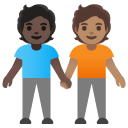


Appearance varies by platform and device. Google Noto, Twemoji, and OpenMoji are open-source.