🧑🏾🤝🧑🏿
The Emoji
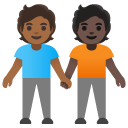
People Holding Hands: Medium-dark Skin Tone, Dark Skin Tone
U+1F9D1 U+1F3FE U+200D U+1F91D U+200D U+1F9D1 U+1F3FF · :people_holding_hands_mediumdark_skin_tone_dark_skin_tone:
Trend 58
Meaning layers
- interpretation
- Used to show solidarity, friendship, allyship, or a couple vibe between two people, often celebrating melanin representation and Black/Brown unity. Sometimes used as a casual 'we're together' or 'we ride together' symbol.
- tiktok usage
- Appears in videos celebrating Black and Brown friendships, couples content, GRWM videos with a bestie, or POC solidarity content. Often paired with affirmations like 'representation matters'.
- irony level
- 2 / 10
Platform meanings
- meaning
- Represents friendship goals, Black and Brown couple content, or solidarity between two people. Often used in videos about found family, diaspora bonds, or melanin-rich relationships.
- trend usage
- Paired with trending sounds about love, friendship, or Black joy. Frequently in duet videos and stitch reactions celebrating Brown and Black relationships.
- hashtags
- #BlackLove#MelaninPoppin#BrownGirlMagic#RepresentationMatters#FriendshipGoals
- virality score
- 62 / 100
Cultural meanings
🇺🇸
Western / Gen-Z
Celebrated as a representation of Black and Brown love and solidarity; Gen Z in Western contexts uses it specifically to acknowledge skin tone diversity and signal inclusive, melanin-positive values.
🇵🇰
Pakistan & India
Used to represent close same-sex friendships or family bonds; the skin tone specificity resonates with South Asian users who identify with darker complexions and value having accurate representation.
🌍
Middle East
Interpreted primarily as a friendship or brotherhood/sisterhood symbol; darker-skinned communities in the Middle East, including South Asian migrant workers and African diaspora, may use it to signal cultural kinship.
🌐
Global Neutral
Universally understood as two people sharing a bond — friendship, partnership, or love — with the skin tones adding a layer of specific identity representation valued globally.
🇧🇩
Bangladesh
Used among friends of similar darker complexions to celebrate bonds, sometimes carrying pride in a context where colorism makes darker skin representation meaningful.
🇱🇰
Sri Lanka
Resonates with users who have darker complexions and feel underrepresented; used in friendship and family contexts, especially among Tamil and Sinhalese communities with darker skin tones.
🇨🇳
China
Skin tone modifiers are less culturally emphasized in China; this emoji is primarily read as a general friendship or partnership symbol rather than a statement about skin tone identity.
🇯🇵
Japan
Interpreted as a neutral friendship or couple emoji; Japanese users are less likely to emphasize the skin tone aspect, focusing instead on the gesture of holding hands as a symbol of closeness.
🇰🇷
South Korea
Primarily read as a friendship or couple symbol; the skin tone specificity is less culturally foregrounded, though K-pop fan communities globally may use it to celebrate diverse fan friendships.
🇹🇼
Taiwan
Used as a general symbol of close friendship or romantic partnership; the skin tone modifier carries less cultural weight compared to the gesture itself in Taiwanese social media contexts.
🇭🇰
Hong Kong
Interpreted similarly to mainland China and Taiwan — the holding hands gesture is the primary signifier of closeness, with skin tone modifiers being secondary in local cultural reading.
🇵🇭
Philippines
Used to celebrate friendship and love; Filipinos who identify with darker skin tones (morena/moreno identity) may find particular resonance in using this emoji as a representation of their specific beauty standard.
🇮🇩
Indonesia
Used among close friends and couples; in a diverse archipelago nation with wide skin tone variation, users of darker complexions appreciate the skin tone specificity as a form of representation.
🇹🇭
Thailand
Primarily read as a friendship or couple emoji; the darker skin tones carry less cultural symbolism in a context where colorism unfortunately still influences beauty standards, making its use a subtle form of counter-narrative.
🇻🇳
Vietnam
Used as a friendship and togetherness symbol; the skin tone modifier is less emphasized culturally, though younger Vietnamese users influenced by global Gen Z culture may use it more intentionally for representation.
🇲🇾
Malaysia
Used in multicultural contexts to celebrate bonds across racial communities; Malaysia's diverse Malay, Indian, and other communities with darker skin tones may use this to celebrate shared identity.
🇸🇦
Saudi Arabia
Interpreted as a friendship or solidarity symbol; darker-skinned Saudis and the large South Asian and African migrant communities may use it to celebrate bonds and shared cultural identity.
🇦🇪
UAE
Used in the UAE's cosmopolitan, multicultural context to celebrate diverse friendships and partnerships, particularly among the large South Asian, African, and Arab diaspora communities.
🇪🇬
Egypt
Used to represent friendship and togetherness; Nubian Egyptians and darker-skinned communities in Upper Egypt may find particular cultural resonance in this emoji as a form of visible representation.
🇹🇷
Turkey
Primarily read as a friendship or partnership symbol; communities of African or South Asian descent in Turkey may use it more specifically to signal cultural solidarity and identity.
🇮🇷
Iran
Used as a general sign of friendship or love; darker-skinned Iranians, particularly from southern regions, and Afro-Iranian communities may appreciate the skin tone representation, though its use is more casual than political.
🇳🇬
Nigeria
Widely embraced and celebrated — Nigeria's vibrant social media culture sees this emoji as a natural representation of Nigerians' own skin tones, used joyfully in friendship, romance, and community content.
🇿🇦
South Africa
Carries significant cultural weight in the post-apartheid context — used to celebrate Black joy, Ubuntu (community spirit), and bonds between Black South Africans, often with deep pride.
🇬🇧
UK & Ireland
Used within Black British and Irish communities of African and Caribbean descent to celebrate bonds; also used in multicultural friendship contexts to signal representation and inclusivity.
🇫🇷
France
Used in Afro-French and Black French communities to celebrate bonds, particularly resonant given ongoing French debates about race, representation, and the Black diaspora experience in France.
🇩🇪
Germany
Used within Afro-German communities and among POC in Germany to celebrate friendship and love; also appears in diversity and inclusion-focused content amid Germany's growing multicultural discourse.
🇪🇸
Spain & Italy
Used among Afro-Spanish, Afro-Italian, and immigrant communities with darker skin tones to celebrate bonds; also used in anti-racism advocacy contexts in countries where racial visibility is increasingly discussed.
🇧🇷
Brazil
Deeply resonant in Brazil — one of the world's largest African diaspora populations uses this emoji to celebrate Black Brazilian love, afro-descendant community bonds, and resistance to colorism.
🇲🇽
Mexico
Used among Afro-Mexican communities (Afro-Mexicanos) and Indigenous communities with darker skin tones to celebrate bonds; gaining visibility as Mexico's Black identity movement grows.
🌎
Latin America
Resonates across Latin America's Afro-descendant communities in Colombia, Venezuela, Peru, Ecuador, and beyond; used to celebrate Afro-Latino bonds, love, and solidarity in contexts where Black representation is often marginalized.
🇦🇺
Australia & NZ
Used among Aboriginal Australian, Torres Strait Islander, and Pacific Islander communities, as well as African diaspora communities, to celebrate cultural bonds and representation with accurate skin tone visibility.
How its meaning shifted
- 2010
This emoji did not exist in 2010 — skin tone modifiers and multi-person holding hands combinations were not yet part of Unicode, and representation of darker skin tones in emoji was entirely absent.
- 2015
Skin tone modifiers were introduced in Unicode 8.0 (2015), but mixed-tone holding hands combinations were not yet available; users had limited options for representing diverse pairings.
- 2020
The specific medium-dark and dark skin tone combination for holding hands was added around 2019-2020 (Unicode 12.0), and its usage grew rapidly in the context of BLM movements, Black joy content, and diversity representation advocacy.
- 2026
Fully normalized as a representation tool for darker-skinned users; used casually in everyday friendship and relationship content while retaining cultural significance in representation and community pride contexts, with high usage on TikTok and Instagram.
See it on every platform
Compare with
Adjacent emojis
Share & embed
Frequently asked
01What does the 🧑🏾🤝🧑🏿 People Holding Hands: Medium-dark Skin Tone, Dark Skin Tone emoji mean?
Two people holding hands, depicted with medium-dark and dark skin tones respectively, representing partnership, unity, friendship, or romantic connection between individuals of these specific skin tones.
02What does 🧑🏾🤝🧑🏿 mean on TikTok?
Represents friendship goals, Black and Brown couple content, or solidarity between two people. Often used in videos about found family, diaspora bonds, or melanin-rich relationships.
03What does 🧑🏾🤝🧑🏿 mean on WhatsApp?
Sent between close friends of darker skin tone to say 'we're together' or 'I got you'. Also used as a simple greeting in group chats to signal presence and warmth.
04What does 🧑🏾🤝🧑🏿 mean in Gen-Z slang?
Used to show solidarity, friendship, allyship, or a couple vibe between two people, often celebrating melanin representation and Black/Brown unity. Sometimes used as a casual 'we're together' or 'we ride together' symbol.
05Is the 🧑🏾🤝🧑🏿 emoji safe to use?
Represents friendship, partnership, love, solidarity, and human connection between two darker-skinned individuals in a positive and affirming way.
06What does 🧑🏾🤝🧑🏿 mean in texting?
The choice of matching or similar dark skin tones in this emoji carries psychological weight around representation and visibility — users feel seen when they can accurately depict their relationships with appropriate skin tones.
07What is the shortcode for 🧑🏾🤝🧑🏿?
The shortcode for People Holding Hands: Medium-dark Skin Tone, Dark Skin Tone is :people_holding_hands_mediumdark_skin_tone_dark_skin_tone:
08What does 🧑🏾🤝🧑🏿 mean in dating?
Sent to hint at wanting a romantic connection, used similarly to holding hands in real life — a step beyond friendship but softer than love emojis. Often used between partners of darker skin tones to represent their specific pairing.
Safety & usage
- Safe meaning
- Represents friendship, partnership, love, solidarity, and human connection between two darker-skinned individuals in a positive and affirming way.
- Caution
- No inherently toxic usage patterns identified; in rare cases may be used mockingly in racist contexts, but this is not a common or defining use case.
No significant content warnings. Occasionally the skin tone specificity is the subject of dismissive or racist commentary online, but the emoji itself carries no harmful connotations.
How it looks across platforms


Appearance varies by platform and device. Google Noto, Twemoji, and OpenMoji are open-source.