🧑🏾🤝🧑🏼
The Emoji
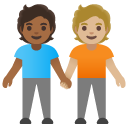
People Holding Hands: Medium-dark Skin Tone, Medium-light Skin Tone
U+1F9D1 U+1F3FE U+200D U+1F91D U+200D U+1F9D1 U+1F3FC · :people_holding_hands_mediumdark_skin_tone_mediumlight_skin_tone:
Trend 52
Meaning layers
- interpretation
- Used to show solidarity, friendship, or a wholesome bond between two people of different backgrounds. Often signals 'we're in this together' energy or celebrates diversity without making a big deal of it.
- tiktok usage
- Appears in duet videos, 'found my person' content, diversity-positive storytelling, and friendship appreciation posts.
- irony level
- 2 / 10
Platform meanings
- meaning
- Represents friendship, unity, or romantic partnership between people of different skin tones; used in heartfelt or celebratory content.
- trend usage
- Appears in 'my bestie and I' videos, interracial couple TikToks, diversity storytimes, and wholesome friendship duets.
- hashtags
- #diversefriendship#holdinghandsvibes#interracialcouple#unitycheck#wegohard
- virality score
- 55 / 100
Cultural meanings
🇺🇸
Western / Gen-Z
Widely used without much second thought to show friendship, solidarity, or romantic partnership across racial lines; seen as a positive, normalized symbol of diversity.
🇵🇰
Pakistan & India
Carries meaning of cross-community friendship or harmony; can be used to symbolize Hindu-Muslim unity or friendship across caste/religious divides in progressive contexts.
🌍
Middle East
Interpreted as a symbol of friendship or brotherhood/sisterhood across backgrounds; in conservative contexts, the mixed skin tones may be more notable than the gesture itself.
🌐
Global Neutral
Universally understood as two people holding hands in friendship or partnership, with the skin tone variation adding a subtle message of diversity and inclusion.
🇧🇩
Bangladesh
Used to represent friendship or solidarity, sometimes symbolizing unity between different communities or regions within the country.
🇱🇰
Sri Lanka
Can symbolize Sinhalese-Tamil unity or general cross-ethnic friendship in a country with a history of ethnic tension — carries hopeful, reconciliation energy.
🇨🇳
China
The skin tone variation is less culturally loaded; primarily read as two friends or partners holding hands, a warm and wholesome symbol.
🇯🇵
Japan
Seen as a cute, friendly symbol of connection; the different skin tones may be interpreted as an international friendship, which holds positive connotations given Japan's global pop culture reach.
🇰🇷
South Korea
Used to represent close friendship (especially in K-culture's strong friendship narrative); the diverse skin tones may signal global or international connection.
🇹🇼
Taiwan
Interpreted positively as a symbol of diverse friendship or partnership; Taiwan's progressive values make the mixed skin tones a celebrated detail.
🇭🇰
Hong Kong
In Hong Kong's cosmopolitan context, the mixed skin tones are natural and unremarkable — simply a symbol of close friendship or partnership.
🇵🇭
Philippines
Widely used to celebrate friendship across different backgrounds; the Philippines' multicultural history makes this emoji feel relatable and warm.
🇮🇩
Indonesia
Represents friendship or unity; in Indonesia's diverse archipelago context, it can symbolize unity across the country's many ethnic groups.
🇹🇭
Thailand
Used warmly for friendship or partnership; the mixed skin tones may symbolize Thai-foreigner friendships, common in Thailand's tourism-heavy culture.
🇻🇳
Vietnam
Primarily seen as a friendship symbol; the skin tone mixing is less culturally loaded and more aesthetic in Vietnamese digital culture.
🇲🇾
Malaysia
Particularly resonant in Malaysia's multiracial society — can symbolize Malay-Chinese-Indian friendship and national unity (a 1Malaysia concept echo).
🇸🇦
Saudi Arabia
The holding hands gesture between what may be perceived as unrelated adults can be culturally sensitive; more appropriate when interpreted as friendship between women or family.
🇦🇪
UAE
In the UAE's highly multicultural context, this emoji is natural and widely used to represent the country's diverse expat-local social fabric.
🇪🇬
Egypt
Used to represent friendship or brotherhood; the mixed skin tones resonate in Egypt's African-Arab identity and its connections to sub-Saharan Africa.
🇹🇷
Turkey
Seen as a symbol of friendship or partnership; Turkey's position as a cultural bridge between East and West gives the diverse skin tones an appealing resonance.
🇮🇷
Iran
Used among younger, progressive Iranians to signal open-mindedness and multicultural values; less common in traditional contexts.
🇳🇬
Nigeria
Widely used to celebrate diverse friendships and cross-ethnic or cross-tribal solidarity in Africa's most populous and diverse nation.
🇿🇦
South Africa
Carries deep symbolic resonance in post-apartheid South Africa, where mixed-race friendship and partnership are celebrated as national achievements.
🇬🇧
UK & Ireland
Common in diverse urban contexts like London; used naturally to celebrate multicultural friendships and relationships in one of the world's most ethnically diverse cities.
🇫🇷
France
Used to represent friendship and partnership; in France's colorblind republic ideology, the skin tone variation may be seen as a positive nod to France's multicultural reality.
🇩🇪
Germany
Resonates positively in Germany's increasingly diverse society; used to signal openness, integration success, and cross-cultural friendship.
🇪🇸
Spain & Italy
Used warmly for friendship and partnership; as Southern Europe grapples with immigration debates, this emoji can carry a quietly progressive message.
🇧🇷
Brazil
Highly resonant in Brazil's famously mixed-race society; the diverse skin tones feel natural and celebratory, reflecting Brazil's mestiçagem cultural identity.
🇲🇽
Mexico
Used to represent friendship and solidarity; Mexico's diverse heritage and strong cultural identity make this a warm, inclusive symbol.
🌎
Latin America
Across Latin America's racially diverse landscape, this emoji represents friendship, mestizo identity, and cross-cultural solidarity warmly.
🇦🇺
Australia & NZ
Used naturally in multicultural cities like Sydney and Auckland; resonates with First Nations reconciliation themes and diverse immigrant communities.
How its meaning shifted
- 2010
Emoji skin tone modifiers did not yet exist; the concept of this specific emoji combination was unavailable. General hand-holding emoji existed in a single default tone.
- 2015
Skin tone modifiers were introduced in Unicode 8.0; early adoption was limited and mixed-tone combinations were technically complex and rarely used.
- 2020
Saw significant uptick during the global BLM movement and COVID solidarity era; mixed skin tone hand-holding emojis became a visual shorthand for racial solidarity and unity.
- 2026
Normalized across platforms as a standard representation of diverse friendship and partnership; no longer specifically 'political' but simply inclusive and everyday.
See it on every platform
Adjacent emojis
- Often confused with
- handshake medium dark medium lightpeople huggingcouple with heart
- Can replace
- handshakered heartpeople hugging
Share & embed
Frequently asked
01What does the 🧑🏾🤝🧑🏼 People Holding Hands: Medium-dark Skin Tone, Medium-light Skin Tone emoji mean?
Two people holding hands, with the left person having a medium-dark skin tone and the right person having a medium-light skin tone, representing partnership, unity, and human connection across skin tones.
02What does 🧑🏾🤝🧑🏼 mean on TikTok?
Represents friendship, unity, or romantic partnership between people of different skin tones; used in heartfelt or celebratory content.
03What does 🧑🏾🤝🧑🏼 mean on WhatsApp?
Sent between close friends of different backgrounds to express solidarity or 'we're good together' energy.
04What does 🧑🏾🤝🧑🏼 mean in Gen-Z slang?
Used to show solidarity, friendship, or a wholesome bond between two people of different backgrounds. Often signals 'we're in this together' energy or celebrates diversity without making a big deal of it.
05Is the 🧑🏾🤝🧑🏼 emoji safe to use?
A wholesome, inclusive symbol of friendship, partnership, and human connection across different skin tones.
06What does 🧑🏾🤝🧑🏼 mean in texting?
The holding hands gesture universally signals trust and safety. The mixed skin tones add a layer of inclusive symbolism, evoking psychological comfort around diversity and acceptance.
07What is the shortcode for 🧑🏾🤝🧑🏼?
The shortcode for People Holding Hands: Medium-dark Skin Tone, Medium-light Skin Tone is :people_holding_hands_mediumdark_skin_tone_mediumlight_skin_tone:
08What does 🧑🏾🤝🧑🏼 mean in dating?
Can subtly signal romantic interest in someone of a different background or ethnicity; used in early-stage flirting to hint at openness and inclusion.
Safety & usage
- Safe meaning
- A wholesome, inclusive symbol of friendship, partnership, and human connection across different skin tones.
- Caution
- Can be weaponized sarcastically in racist online spaces to mock interracial relationships or used ironically to deride performative diversity efforts.
Generally safe for all audiences. In rare cases, the interracial subtext may attract negative reactions in culturally conservative or overtly racist online spaces. Not inherently provocative.
How it looks across platforms


Appearance varies by platform and device. Google Noto, Twemoji, and OpenMoji are open-source.