💆
The Emoji
Person Getting Massage
U+1F486 · :person_getting_massage:
Trend 58
Meaning layers
- interpretation
- Used to express exhaustion, stress relief, needing a break, or sarcastically wishing you were somewhere relaxing instead of dealing with life.
- tiktok usage
- Appears in 'self-care' content, burnout commentary, and 'I deserve this' energy videos; often used when someone is overwhelmed.
- irony level
- 6 / 10
Platform meanings
- meaning
- Represents needing a break, self-care rituals, spa aesthetics, or ironic relaxation in the middle of chaos.
- trend usage
- Used in 'soft life' trends, burnout storytimes, wellness routines, and 'treating myself' content.
- hashtags
- #selfcare#softlife#spaday#treatyourself#burnout
- virality score
- 62 / 100
Cultural meanings
🇺🇸
Western / Gen-Z
Used ironically to signal burnout or genuine self-care; heavily tied to 'soft life' and wellness aesthetics on social media.
🇵🇰
Pakistan & India
Used sincerely to reference head massages, which are culturally significant and common in households; also used for spa or parlor visits.
🌍
Middle East
Associated with hammam spa culture and traditional wellness rituals; used genuinely for relaxation and pampering content.
🌐
Global Neutral
Universally understood as relaxation or spa-related; a safe, broadly interpreted wellness emoji.
🇧🇩
Bangladesh
Used in the context of traditional oil head massages common in family settings; also appears in beauty salon or parlor contexts.
🇱🇰
Sri Lanka
Tied to Ayurvedic wellness traditions and head oil massage culture; used for both traditional and modern spa references.
🇨🇳
China
Associated with traditional Chinese massage culture (按摩); used in wellness, TCM, and relaxation contexts without significant irony.
🇯🇵
Japan
Linked to professional massage therapy and onsen/spa culture; used sincerely and in self-care or relaxation posts.
🇰🇷
South Korea
Connected to Korea's strong beauty and wellness culture; used in spa day posts, skincare routines, and self-care content on social media.
🇹🇼
Taiwan
Used in wellness and self-care contexts; common in posts about traditional massage or modern spa experiences.
🇭🇰
Hong Kong
Associated with spa and wellness culture in an urban burnout context; used to signal needing relaxation in a high-stress city.
🇵🇭
Philippines
Used for spa day posts, hilot (traditional Filipino massage) references, and general relaxation or self-care content.
🇮🇩
Indonesia
Linked to traditional Javanese massage culture; used sincerely in wellness, spa, and self-care contexts.
🇹🇭
Thailand
Strongly associated with Thai massage, one of Thailand's most recognized cultural exports; used proudly and frequently in wellness content.
🇻🇳
Vietnam
Used in spa and wellness contexts; also associated with traditional Vietnamese massage practices and relaxation tourism.
🇲🇾
Malaysia
Used for spa visits, traditional massage references, and self-care content; commonly appears in lifestyle and wellness posts.
🇸🇦
Saudi Arabia
Associated with luxury spa culture; used in high-end lifestyle content with emphasis on wellness and pampering.
🇦🇪
UAE
Linked to Dubai and Abu Dhabi's thriving luxury spa industry; used in affluent lifestyle and wellness content.
🇪🇬
Egypt
Connected to hammam culture and traditional wellness; used for spa visits or expressing a need to relax and unwind.
🇹🇷
Turkey
Strongly associated with the iconic Turkish hammam tradition; used proudly in wellness, tourism, and self-care contexts.
🇮🇷
Iran
Tied to traditional bathhouse (hammam) culture and therapeutic massage; used for wellness and relaxation references.
🇳🇬
Nigeria
Used to express wanting to be pampered or needing a break; also appears in content about spa visits among the growing wellness community.
🇿🇦
South Africa
Used in wellness and self-care content; associated with spa culture and taking a mental health break in urban contexts.
🇬🇧
UK & Ireland
Used ironically or sincerely for spa days, treating yourself, and 'I desperately need this' energy; fits into British self-deprecating wellness humor.
🇫🇷
France
Associated with beauty and wellness culture; used for spa content, bien-être (wellbeing) posts, and self-care references.
🇩🇪
Germany
Used straightforwardly for massage, wellness, and relaxation content; Germany's strong spa (Wellness) culture makes it a natural fit.
🇪🇸
Spain & Italy
Tied to relaxation and la dolce vita aesthetics; used for spa days, wellness posts, and 'taking it easy' messaging.
🇧🇷
Brazil
Used in self-care and beauty content; Brazil's strong wellness industry and massage culture make it frequently used and relatable.
🇲🇽
Mexico
Used for spa day posts and self-care content; also appears in ironic posts about needing stress relief from daily chaos.
🌎
Latin America
Broadly used for wellness, relaxation, and self-care content across Latin American countries; also appears in humorous burnout contexts.
🇦🇺
Australia & NZ
Used for spa days, wellness content, and ironically after stressful situations; fits into the 'treat yourself' and mental health awareness cultural dialogue.
How its meaning shifted
- 2010
Used almost exclusively in its literal sense to communicate actual massage appointments, spa days, or physical wellness activities.
- 2015
Began appearing in self-care and beauty content on early Instagram; still largely literal but gaining use as a relaxation symbol.
- 2020
Exploded in usage tied to pandemic burnout, mental health awareness, and self-care culture; began being used ironically to signal overwhelming stress.
- 2026
Firmly embedded in burnout culture, soft life aesthetics, and wellness discourse; used both sincerely and with heavy irony depending on platform and context.
See it on every platform
Compare with
Emoji combinations
Adjacent emojis
- Often confused with
- person bowingnail polishface with head bandage
Share & embed
Frequently asked
01What does the 💆 Person Getting Massage emoji mean?
A person receiving a head or face massage, typically depicted with eyes closed and hands pressing on the temples or head.
02What does 💆 mean on TikTok?
Represents needing a break, self-care rituals, spa aesthetics, or ironic relaxation in the middle of chaos.
03What does 💆 mean on WhatsApp?
Signals stress relief, needing a break, or that you're exhausted and want to be pampered.
04What does 💆 mean in Gen-Z slang?
Used to express exhaustion, stress relief, needing a break, or sarcastically wishing you were somewhere relaxing instead of dealing with life.
05Is the 💆 emoji safe to use?
A wellness and relaxation emoji used for spa, self-care, and stress relief content.
06What does 💆 mean in texting?
Reflects a deep cultural desire for rest and physical relief from stress; signals burnout culture and the need to decompress from modern life demands.
07What is the shortcode for 💆?
The shortcode for Person Getting Massage is :person_getting_massage:
08What does 💆 mean in dating?
Can be used flirtatiously to hint at giving or receiving a massage, implying physical intimacy or pampering a partner.
Safety & usage
- Safe meaning
- A wellness and relaxation emoji used for spa, self-care, and stress relief content.
- Caution
- Rarely used in negative contexts; can occasionally be used passive-aggressively to dismiss someone's concerns by implying they need to 'calm down.'
Generally safe and benign; minimal misuse risk. In rare cases may be used in adult contexts to hint at sensual massage, but this is uncommon and contextual.
How it looks across platforms
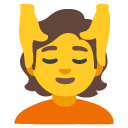


Appearance varies by platform and device. Google Noto, Twemoji, and OpenMoji are open-source.