🛌🏻
The Emoji
Person In Bed: Light Skin Tone
U+1F6CC U+1F3FB · :person_in_bed_light_skin_tone:
Trend 68
Meaning layers
- interpretation
- Symbolizes being chronically in bed, mental health rest days, 'bed rotting' culture, refusing to get up, or the modern glorification of doing absolutely nothing. Also used to flex a lazy day guilt-free.
- tiktok usage
- Heavily used in 'bed rotting' trend videos, morning routine failures, and 'I haven't left my bed in 3 days' content. Often paired with text like 'healing' or 'self-care'.
- irony level
- 6 / 10
Platform meanings
- meaning
- Represents the 'bed rotting' lifestyle, mental health days, and the aesthetic of doing nothing productive. Light skin tone version most commonly used by lighter-skinned creators for personal identification.
- trend usage
- Featured in 'bed rotting day' POVs, 'I didn't leave my bed' story times, GRWM (get ready with me) failures, and sleep disorder awareness content.
- hashtags
- #bedrotting#donothing#restday#cozybed#mentalHealthDay
- virality score
- 72 / 100
Cultural meanings
🇺🇸
Western / Gen-Z
Central to 'bed rotting' culture — a reclaimed, ironic celebration of doing nothing, reframed as radical rest and self-care against hustle culture norms.
🇵🇰
Pakistan & India
Used literally to indicate illness, rest, or sleep. Also used playfully among younger urban users to express laziness or avoid social plans without offense.
🌍
Middle East
Primarily used literally for sleep, rest, or illness. In younger social media circles, increasingly adopted to express laziness or avoidance of obligations.
🌐
Global Neutral
Universally understood as representing sleep or being in bed. The light skin tone modifier makes it slightly more personal but does not significantly alter the core meaning.
🇧🇩
Bangladesh
Used straightforwardly to communicate being asleep, sick, or resting. Among younger users on Facebook and WhatsApp, it signals unavailability or tiredness.
🇱🇰
Sri Lanka
Interpreted literally as sleeping or resting. Used in family WhatsApp groups to announce bedtime and in peer chats to express being too tired to engage.
🇨🇳
China
Associated with staying in bed and resisting productivity — resonates strongly with the 'tang ping' (lying flat) movement among youth rejecting overwork culture.
🇯🇵
Japan
Connected to 'neet' culture and 'hikikomori' discourse online, but used casually to mean sleep or rest. Appears in tweets about 'futon gravity' — being unable to leave bed.
🇰🇷
South Korea
Resonates with the 'shibal biyong' (YOLO spending) and anti-hustle sentiment among younger Koreans. Used to signal rejection of the intense work culture norm.
🇹🇼
Taiwan
Used casually for sleep and rest with no heavy cultural baggage. Younger Taiwanese users adopt it in the context of slow-living and self-care social media trends.
🇭🇰
Hong Kong
Straightforward sleep or rest meaning. Among younger users on Instagram and Threads, associated with recovering from the city's fast-paced lifestyle.
🇵🇭
Philippines
Used very literally and warmly in group chats to say goodnight or announce rest. Also appears in 'hugot' (emotional) posts about loneliness in bed.
🇮🇩
Indonesia
Used to express being tired, sick, or in lazy mode. Common in WhatsApp and Twitter/X posts, especially paired with 'rebahan' (lying down) culture content.
🇹🇭
Thailand
Associated with rest and self-care. Used by younger Thais on Twitter/X in contexts about mental health breaks or the Thai concept of 'sanuk' (fun and ease).
🇻🇳
Vietnam
Used literally for sleep and rest in messaging apps. Among Vietnamese Gen Z, increasingly used in the context of anti-grind culture discussions on TikTok.
🇲🇾
Malaysia
Appears in casual chats to mean sleep or resting. Also used in the context of 'lepak' (hanging out doing nothing) culture — embracing a relaxed lifestyle.
🇸🇦
Saudi Arabia
Used primarily to communicate rest, sleep, or illness. During Ramadan, may indicate sleeping during the day, which is culturally very common.
🇦🇪
UAE
Used literally in multicultural digital contexts. Among younger Emiratis and expats, connects to wellness and luxury rest aesthetics popular in Dubai social media.
🇪🇬
Egypt
Used to indicate sleep, rest, or afternoon naps — a culturally important rest practice. Common in WhatsApp status updates during midday hours.
🇹🇷
Turkey
Connected to afternoon nap culture ('öğle uykusu') and used casually to announce rest. Among younger Turks, adopted in anti-hustle ironic meme formats.
🇮🇷
Iran
Used straightforwardly for sleep and rest in messaging. Among Iranian youth on Instagram, sometimes used ironically to represent escapism or avoidance of stress.
🇳🇬
Nigeria
Used to mean sleep, rest, or avoiding drama. 'I'm in bed 🛌🏻' is a common phrase to exit group chats or decline plans without confrontation.
🇿🇦
South Africa
Casual sleep or rest indicator. Among South African youth, also used in the context of 'load shedding' — napping during power outages is a relatable meme.
🇬🇧
UK & Ireland
Used to express 'staying in bed all day' energy, heavily tied to British 'duvet day' culture. Common in tweets about grey weather being perfect bed weather.
🇫🇷
France
Represents rest and the valued French concept of 'ne rien faire' (doing nothing). Used casually for sleep announcements and lazy Sunday morning culture.
🇩🇪
Germany
Used practically to communicate sleep or rest. Among younger Germans, also appears in discussions about work-life balance and the right to disconnect.
🇪🇸
Spain & Italy
Strongly associated with siesta culture and afternoon rest. Used warmly and frequently to announce nap time, with no negative connotation attached.
🇧🇷
Brazil
Used casually for sleep and rest. Among Brazilian youth on Twitter/X and TikTok, tied to 'preguiça' (laziness) humor and relatable self-deprecating content.
🇲🇽
Mexico
Used to communicate rest, avoiding plans, or general tiredness. Also appears in memes about choosing bed over social obligations, especially on weekends.
🌎
Latin America
Across Latin America, used for sleep, rest, and 'I'm not going out' declarations. Connected to the laid-back lifestyle values celebrated across the region.
🇦🇺
Australia & NZ
Used casually for sleep or 'chucking a sickie' (calling in sick) contexts. Popular in weekend posts about not leaving bed despite good outdoor weather.
How its meaning shifted
- 2010
Emoji did not yet exist in this form. Sleep concepts were conveyed with 💤 or 😴. The bed emoji category was not yet standardized in Unicode.
- 2015
Newly introduced emoji used almost entirely literally — to signal going to sleep, being in bed sick, or hotel/lodging. No ironic or cultural layer yet established.
- 2020
Gained traction during COVID-19 lockdowns when staying in bed became a universal reality. Mental health awareness amplified its use as a symbol of rest and shutdown.
- 2026
Fully embedded in 'bed rotting' cultural lexicon. Used across Gen Z content as a lifestyle symbol, ironic productivity rejection, and mental health rest signifier across all major platforms.
See it on every platform
Compare with
Adjacent emojis
- Opposite
- person runningalarm clocksunrise
- Often confused with
- hotelperson in lotus positioncoffin
- Can replace
- sleeping facezzzcouch and lamp
Share & embed
Frequently asked
01What does the 🛌🏻 Person In Bed: Light Skin Tone emoji mean?
A person lying in bed, depicted with light skin tone, representing sleep, rest, or bedtime. The light skin tone modifier (🏻) applies a Fitzpatrick scale Type 1-2 complexion.
02What does 🛌🏻 mean on TikTok?
Represents the 'bed rotting' lifestyle, mental health days, and the aesthetic of doing nothing productive. Light skin tone version most commonly used by lighter-skinned creators for personal identification.
03What does 🛌🏻 mean on WhatsApp?
Telling someone you're in bed, going to sleep, or too tired to respond. Very commonly used as a 'goodnight' indicator or 'I'm not coming out tonight' message.
04What does 🛌🏻 mean in Gen-Z slang?
Symbolizes being chronically in bed, mental health rest days, 'bed rotting' culture, refusing to get up, or the modern glorification of doing absolutely nothing. Also used to flex a lazy day guilt-free.
05Is the 🛌🏻 emoji safe to use?
Represents sleep, rest, illness recovery, lazy days, or mental health breaks. Completely benign in the vast majority of contexts.
06What does 🛌🏻 mean in texting?
Reflects a culturally growing normalization of rest as resistance — tied to burnout culture, depression awareness, and the 'bed rotting' psychological coping mechanism where withdrawal from stimuli is reframed as self-care.
07What is the shortcode for 🛌🏻?
The shortcode for Person In Bed: Light Skin Tone is :person_in_bed_light_skin_tone:
08What does 🛌🏻 mean in dating?
Can carry a subtle suggestive undertone when sent late at night, implying an invitation or thinking about someone while in bed. Often paired with 👀 or 😏 for flirty implication.
Safety & usage
- Safe meaning
- Represents sleep, rest, illness recovery, lazy days, or mental health breaks. Completely benign in the vast majority of contexts.
- Caution
- When sent unsolicited in romantic or sexual contexts late at night, it can carry an implicit sexual invitation. Can also be used to mock or belittle someone perceived as lazy.
Generally very safe emoji. The rare concern is late-night unsolicited use in dating contexts where it may imply an inappropriate invitation, but this requires clear contextual misuse.
How it looks across platforms
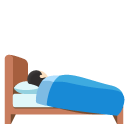


Appearance varies by platform and device. Google Noto, Twemoji, and OpenMoji are open-source.