🛌🏽
The Emoji
Person In Bed: Medium Skin Tone
U+1F6CC U+1F3FD · :person_in_bed_medium_skin_tone:
Trend 68
Meaning layers
- interpretation
- Used to express exhaustion, laziness, depression naps, the desire to stay in bed all day, or avoiding responsibilities. A staple in 'bed rotting' culture where doing nothing is a lifestyle flex.
- tiktok usage
- Paired with 'bed rotting' content, mental health check-ins, and 'I haven't left my bed in 3 days' relatability posts. Common in 'day in my life' videos where the whole day is literally the bed.
- irony level
- 6 / 10
Platform meanings
- meaning
- Represents the 'bed rot' lifestyle, extreme tiredness, or the refusal to be a functional human. Medium skin tone makes it more personally identifiable for users with that complexion.
- trend usage
- Used in 'bed rotting' trend videos, 'this is me on weekends' clips, GRWM-but-I-don't videos, and mental health awareness content about rest vs. avoidance.
- hashtags
- #bedrotting#tiredgirlera#restday#donotdisturb#nothingday
- virality score
- 72 / 100
Cultural meanings
🇺🇸
Western / Gen-Z
Emblematic of 'bed rotting' culture and the broader Gen Z rejection of hustle culture. Worn as a badge of honor for prioritizing rest and mental health over productivity.
🇵🇰
Pakistan & India
Used to signal rest after a long day, illness recovery, or as a goodnight message in family and friend group chats. Less ironic, more literal usage compared to Western Gen Z.
🌍
Middle East
Commonly used in late-night conversations which are culturally normal in many Middle Eastern countries. Signals winding down after social gatherings or family evenings.
🌐
Global Neutral
Universally understood as representing sleep, rest, or being in bed. The medium skin tone is seen as a neutral representation usable by a wide range of people globally.
🇧🇩
Bangladesh
Used literally in messaging apps to indicate going to sleep or resting. Also appears in contexts of illness or recovery, often sent with prayers or well-wishes.
🇱🇰
Sri Lanka
Primarily used in WhatsApp and Facebook to indicate tiredness or bedtime. In younger circles, also adopted for expressing laziness in a humorous, relatable way.
🇨🇳
China
Less commonly used compared to native Chinese emoji alternatives, but understood as a rest/sleep symbol on international platforms like WeChat's international version or Twitter.
🇯🇵
Japan
Japan has rich sleeping culture icons (like 'inemuri' — sleeping in public), and this emoji is used casually for rest. The medium skin tone may feel less personally representative given dominant lighter-tone defaults.
🇰🇷
South Korea
Used among younger Koreans on platforms like KakaoTalk and Twitter to express exhaustion from work or study culture ('빨리 자야지'). Resonates with the growing anti-overwork discourse.
🇹🇼
Taiwan
Used in casual messaging for goodnight or tired expressions. Taiwanese youth on Dcard and PTT use it in relatable posts about staying up too late and needing rest.
🇭🇰
Hong Kong
Appears in WhatsApp and Telegram among Hong Kong users as a late-night symbol, often in contexts of long work hours and exhaustion from demanding schedules.
🇵🇭
Philippines
Very common in group chats as a goodnight emoji. Filipino users on Facebook and Messenger frequently combine it with prayer emojis for 'good night, God bless' messages.
🇮🇩
Indonesia
Used widely on WhatsApp and Twitter (X) to signal bedtime or tiredness. Indonesian Gen Z uses it humorously for 'males gerak' (too lazy to move) content.
🇹🇭
Thailand
Appears in LINE app and Twitter chats for sleep and rest. Thai users often combine it with cute stickers and goodnight messages in close friend groups.
🇻🇳
Vietnam
Used on Zalo and Facebook to indicate rest or sleep. Vietnamese users in younger demographics use it in the context of studying late and finally going to bed.
🇲🇾
Malaysia
Common in WhatsApp goodnight messages and Facebook posts about rest. Malaysian users use it for both literal sleep announcements and humorous tiredness expressions.
🇸🇦
Saudi Arabia
Used in late-night conversation endings, often combined with moon emojis. Given the culturally late sleeping schedules in Saudi Arabia, this emoji appears frequently past midnight.
🇦🇪
UAE
Used similarly to Saudi Arabia with late-night social context. Expat communities in the UAE use the medium skin tone version as a more personally relatable representation.
🇪🇬
Egypt
Appears in WhatsApp and Facebook messages as a goodnight signal. Egyptian humor culture also adapts it for 'I give up, going to bed' sarcasm in political or social commentary.
🇹🇷
Turkey
Used on Twitter and WhatsApp for expressing fatigue and bedtime. Turkish users blend it into meme culture around exhaustion from daily life challenges and political fatigue.
🇮🇷
Iran
Used on Telegram and Instagram (despite restrictions) to signal rest or late-night conversations wrapping up. Medium skin tone is moderately relatable for Iranian users.
🇳🇬
Nigeria
Popular on WhatsApp and Twitter as a goodnight signal. Nigerian Twitter uses it in humorous threads about 'after all the stress today, I deserve rest' narratives.
🇿🇦
South Africa
Used across WhatsApp groups and Twitter for rest and sleep contexts. South African users blend it into both serious tiredness expressions and humorous meme content.
🇬🇧
UK & Ireland
Used with classic British understatement — 'think I'll have a little lie down 🛌🏽' — often in ironic contexts after mildly stressful events. Common in group chats for lazy Sunday energy.
🇫🇷
France
French users employ this emoji for the culturally valued concept of rest and leisure. 'La sieste' (nap) culture makes this emoji positively associated with quality of life.
🇩🇪
Germany
Used more literally in German messaging culture for sleep or rest announcements. Less meme-adapted than Anglo contexts, though younger Germans use it for burnout humor.
🇪🇸
Spain & Italy
Associated with the cherished siesta culture in Spain and the Italian 'dolce far niente' (sweetness of doing nothing). Positively loaded and used without guilt for rest signaling.
🇧🇷
Brazil
Brazilian users on WhatsApp and Twitter use it liberally for laziness humor, sleep announcements, and 'cansada demais' (too tired) posts. Very relatable in the context of tropical heat and long workdays.
🇲🇽
Mexico
Common in WhatsApp goodnight messages and in meme culture about the exhaustion of daily hustle. Mexican Gen Z uses it in bed-rotting adjacent content on TikTok.
🌎
Latin America
Broadly used across Latin America for sleep and rest contexts, often with warm goodnight messages. The humor around laziness and exhaustion is universal and widely embraced.
🇦🇺
Australia & NZ
Used casually for tiredness and bedtime in Australian and New Zealand chat culture. 'Absolutely cooked, off to bed 🛌🏽' is a stereotypically relatable usage in these communities.
How its meaning shifted
- 2010
Emoji did not yet exist in this form. Sleep was represented by 'zzz' text or basic moon emojis. Skin tone modifiers were not yet part of Unicode standards.
- 2015
Recently introduced with Unicode 7.0 (2014) and skin tone modifiers via Unicode 8.0 (2015). Early usage was predominantly literal — sleep, hotels, illness recovery — with minimal ironic or meme application.
- 2020
Usage expanded significantly during COVID-19 lockdowns when 'staying in bed all day' became a global shared experience. Associated with quarantine fatigue, mental health struggles, and the emerging 'cozy' content trend.
- 2026
Deeply embedded in 'bed rotting' culture, anti-hustle discourse, and mental health normalization conversations. The skin tone variant is actively chosen by users for self-representation in an increasingly emoji-diverse digital landscape.
See it on every platform
Compare with
Adjacent emojis
- Often confused with
- person lying downspacoffin
- Can replace
- sleeping facezzznight with stars
Share & embed
Frequently asked
01What does the 🛌🏽 Person In Bed: Medium Skin Tone emoji mean?
A person lying in bed, depicted with medium skin tone, typically shown from the side with a pillow and blanket. Represents sleeping, resting, or being in bed.
02What does 🛌🏽 mean on TikTok?
Represents the 'bed rot' lifestyle, extreme tiredness, or the refusal to be a functional human. Medium skin tone makes it more personally identifiable for users with that complexion.
03What does 🛌🏽 mean on WhatsApp?
Indicates the sender is in bed, tired, about to sleep, or already asleep. Commonly sent as a goodnight signal or when canceling plans due to exhaustion.
04What does 🛌🏽 mean in Gen-Z slang?
Used to express exhaustion, laziness, depression naps, the desire to stay in bed all day, or avoiding responsibilities. A staple in 'bed rotting' culture where doing nothing is a lifestyle flex.
05Is the 🛌🏽 emoji safe to use?
Represents sleep, rest, tiredness, recovery from illness, hotel stays, or lazy days. Universally benign in most contexts.
06What does 🛌🏽 mean in texting?
The bed is psychologically associated with both restoration and escapism. Using this emoji can signal anything from healthy rest to depressive withdrawal, making it emotionally ambiguous but deeply relatable across mental health spectrums.
07What is the shortcode for 🛌🏽?
The shortcode for Person In Bed: Medium Skin Tone is :person_in_bed_medium_skin_tone:
08What does 🛌🏽 mean in dating?
Can carry suggestive implications depending on context — sending this to a romantic interest late at night is often a subtle or not-so-subtle invitation. Medium skin tone adds a layer of personal identification.
Safety & usage
- Safe meaning
- Represents sleep, rest, tiredness, recovery from illness, hotel stays, or lazy days. Universally benign in most contexts.
- Caution
- In certain late-night messaging contexts, particularly between strangers or in flirtatious exchanges, it can be used as a low-key suggestive invitation. In mental health contexts, frequent use may signal depression or avoidance behaviors.
Generally safe for all audiences. Context-dependent suggestiveness should be considered in dating or adult platforms. Not inherently inappropriate but can carry implicit meaning in intimate conversations.
How it looks across platforms
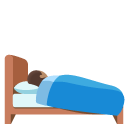


Appearance varies by platform and device. Google Noto, Twemoji, and OpenMoji are open-source.