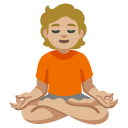
🧘🏼
The Emoji
Person In Lotus Position: Medium-light Skin Tone
U+1F9D8 U+1F3FC · :person_in_lotus_position_mediumlight_skin_tone:
Trend 65
Meaning layers
- interpretation
- Used ironically to signal 'not my problem,' unbothered energy, or fake zen. Also genuinely used in wellness and self-care contexts. Signals a vibe of 'I'm above the drama' or 'I'm doing my healing era.'
- tiktok usage
- Appears in 'that girl' aesthetic content, morning routine videos, and ironically when someone pretends to be unbothered. Also used in mental health and therapy-era content.
- irony level
- 5 / 10
Platform meanings
- meaning
- Represents wellness content, morning routines, mental health journeys, or ironic unbothered energy in chaotic situations.
- trend usage
- Used in 'that girl' era videos, 'healing arc' content, and mindfulness TikTok. Also appears sarcastically in drama response videos.
- hashtags
- #mindfulness#thatgirl#wellnesstok#healingarc#morningroutine
- virality score
- 62 / 100
Cultural meanings
🇺🇸
Western / Gen-Z
Primarily used as either a genuine wellness and self-care signal or ironically to perform unbothered energy and spiritual superiority. Core to the 'healing era' and 'that girl' aesthetic vocabulary.
🇵🇰
Pakistan & India
Culturally resonant due to deep-rooted yoga and meditation traditions. Used genuinely for spiritual practice, yoga content, and wellness but may also be associated with Hindu spiritual symbolism in some contexts.
🌍
Middle East
Generally understood as a yoga or relaxation emoji. Used in wellness contexts but less spiritually loaded than in South Asian cultures. Gaining traction among younger urban populations interested in fitness and mindfulness.
🌐
Global Neutral
Universally recognized as representing meditation, calm, and yoga. Largely free of controversial interpretations across most global contexts.
🇧🇩
Bangladesh
Understood primarily as a yoga or exercise emoji. Wellness use is growing among urban youth. Less spiritually charged than in neighboring India.
🇱🇰
Sri Lanka
Resonates with both Buddhist meditation traditions and modern yoga culture. Used sincerely in spiritual and wellness content, particularly among Buddhist communities and yoga practitioners.
🇨🇳
China
Associated with yoga fitness culture which is popular especially among urban women. Spiritual connotations are generally downplayed in favor of physical wellness and stress relief framing.
🇯🇵
Japan
Used in wellness, mindfulness, and yoga contexts, which have strong followings in Japan. May also connect to Zen Buddhist aesthetics, appreciated as a calm and harmonious symbol.
🇰🇷
South Korea
Popular in the context of the Korean wellness trend, yoga culture, and self-care aesthetics. Frequently used by younger women in lifestyle and health content on Instagram and KakaoTalk.
🇹🇼
Taiwan
Used in yoga and wellness contexts, often by younger urban demographics. Has positive spiritual and health connotations, especially in mindfulness and alternative health communities.
🇭🇰
Hong Kong
Associated with yoga studios, wellness apps, and mindfulness culture popular among the professional class. Used as a coping symbol in times of collective stress.
🇵🇭
Philippines
Primarily understood as yoga or meditation. Growing use in wellness and self-care content, particularly on TikTok and Instagram among younger Filipinos.
🇮🇩
Indonesia
Used in fitness and wellness contexts. Given Indonesia's majority Muslim population, the spiritual yoga connotations are often neutralized into a general 'relaxation' or 'exercise' meaning.
🇹🇭
Thailand
Resonates with Buddhist meditation culture. Used genuinely for spiritual practice content, yoga tourism, and wellness. Thailand's meditation retreat culture gives this emoji added cultural weight.
🇻🇳
Vietnam
Primarily used as a wellness and yoga symbol among younger urban users. Less spiritual in common usage, more associated with trendy fitness culture and self-care.
🇲🇾
Malaysia
Used in wellness and fitness contexts. Spiritual yoga connotations may be minimized in Muslim-majority communities, where it reads more as general relaxation or exercise.
🇸🇦
Saudi Arabia
Understood as a general wellness or exercise symbol. Yoga is practiced privately and its spiritual associations are generally de-emphasized. Used in wellness and fitness content by younger Saudis.
🇦🇪
UAE
Popular in Dubai and Abu Dhabi's cosmopolitan wellness culture. Used freely in yoga, mindfulness, and spa content by a diverse, internationally influenced population.
🇪🇬
Egypt
Primarily read as a yoga or relaxation symbol. Spiritual dimensions are usually downplayed. Used in wellness circles and by Egyptian youth interested in global fitness trends.
🇹🇷
Turkey
Used in yoga, wellness, and self-care content among younger urban Turks. Spiritual connotations are often secondary to its fitness and relaxation associations.
🇮🇷
Iran
Yoga is practiced and appreciated, so this emoji is used in fitness and wellness contexts, though spiritual interpretations vary. Used mostly by younger urban demographics on Instagram.
🇳🇬
Nigeria
Used in wellness, fitness, and self-care content among young urban Nigerians. Often paired with motivational content and the growing mindfulness movement in Nigerian cities.
🇿🇦
South Africa
Used in yoga and wellness contexts. Popular in Cape Town and Johannesburg wellness communities. Both genuinely and ironically deployed among younger South Africans.
🇬🇧
UK & Ireland
Used genuinely in wellness content and ironically in British humor to mock wellness culture or signal passive-aggressive calm. 'Doing a little meditation' humor is a familiar comedic trope.
🇫🇷
France
Associated with bien-être (wellbeing) culture and yoga's growing French following. Used in wellness content but sometimes ironically in commentary on the wellness industry's excesses.
🇩🇪
Germany
Used in Achtsamkeit (mindfulness) and wellness contexts. Germans use it sincerely in self-improvement and health content. Less ironic usage than in UK or US Gen Z culture.
🇪🇸
Spain & Italy
Linked to yoga, wellness retreats, and the Mediterranean wellness lifestyle. Used genuinely and aesthetically, often in summer or vacation self-care content.
🇧🇷
Brazil
Popular in yoga and wellness content. Brazil has a large and passionate yoga community. Also used ironically with Brazilian humor around pretending to be calm during chaotic national moments.
🇲🇽
Mexico
Used in wellness and yoga content, with growing mindfulness culture in Mexican cities. Also used humorously to suggest someone is trying very hard to stay calm.
🌎
Latin America
Generally associated with yoga, wellness, and self-care across Latin America. Urban youth use it in lifestyle content, while ironic usage reflects regional humor around toxic positivity.
🇦🇺
Australia & NZ
Used genuinely in yoga and wellness content and ironically in Australian humor to mock wellness culture or respond to stressful situations with fake zen. Common in morning routine and beach lifestyle content.
How its meaning shifted
- 2010
Emoji not yet standardized. Meditation and yoga content relied on text or generic symbols. No cultural emoji shorthand for mindfulness existed.
- 2015
Emoji introduced and used primarily literally — yoga practitioners, wellness bloggers, and spiritual communities adopted it straightforwardly for meditation content.
- 2020
Usage exploded during COVID-19 as mental health, mindfulness apps, and home yoga routines surged globally. Also began developing ironic 'unbothered' meme use during a period of collective anxiety.
- 2026
Deeply embedded in both sincere wellness culture (healing era, that girl aesthetic) and ironic internet culture (choosing peace memes, fake zen humor). One of the defining self-care era emojis of the 2020s.
See it on every platform
Compare with
Adjacent emojis
- Often confused with
- person kneelingwoman in steamy roomfolded hands
- Can replace
- green heartherbsun
Share & embed
Frequently asked
01What does the 🧘🏼 Person In Lotus Position: Medium-light Skin Tone emoji mean?
A person sitting cross-legged in the lotus meditation position, hands resting on knees, with medium-light skin tone modifier applied. Represents meditation, mindfulness, yoga, and spiritual practice.
02What does 🧘🏼 mean on TikTok?
Represents wellness content, morning routines, mental health journeys, or ironic unbothered energy in chaotic situations.
03What does 🧘🏼 mean on WhatsApp?
Signals calmness, that someone is meditating or at peace, or that they are unbothered by a situation.
04What does 🧘🏼 mean in Gen-Z slang?
Used ironically to signal 'not my problem,' unbothered energy, or fake zen. Also genuinely used in wellness and self-care contexts. Signals a vibe of 'I'm above the drama' or 'I'm doing my healing era.'
05Is the 🧘🏼 emoji safe to use?
Meditation, yoga, mindfulness, calm, wellness, spiritual practice, self-care, relaxation.
06What does 🧘🏼 mean in texting?
Signals a desire for peace, emotional regulation, or withdrawal from stress. Can represent genuine mindfulness practice or a performative display of emotional resilience and detachment from chaos.
07What is the shortcode for 🧘🏼?
The shortcode for Person In Lotus Position: Medium-light Skin Tone is :person_in_lotus_position_mediumlight_skin_tone:
08What does 🧘🏼 mean in dating?
Low flirt utility — sometimes used to project a calm, spiritual personality as an attractive trait. Occasionally signals 'I'm grounded and emotionally available.'
Safety & usage
- Safe meaning
- Meditation, yoga, mindfulness, calm, wellness, spiritual practice, self-care, relaxation.
- Caution
- Can be used to signal spiritual bypass — dismissing others' genuine problems with toxic positivity. Rarely used in explicitly harmful contexts.
Occasionally weaponized in passive-aggressive communication to signal superiority or dismissiveness. No NSFW associations. Cultural sensitivity should be noted when yoga symbols are used in contexts that trivialize South Asian or Buddhist spiritual heritage.
How it looks across platforms


Appearance varies by platform and device. Google Noto, Twemoji, and OpenMoji are open-source.